


Five Reasons the Junghans Max Bill Watch Belongs in Every Minimalist's Collection

Some watches follow trends. The Junghans Max Bill watch never bothered me. Based on the Bauhaus principle of “form follows function,” it has spent sixty years proving that it is restraint, rather than decoration, that makes a design endure. Here are five reasons it deserves a place in any minimalist collection.
1. A Bauhaus Master Designed It
The watch takes its name from Max Bill, an architect and product designer who studied under Vassily Kandinsky at the Bauhaus school in Dessau. When he started designing watches for Junghans in the early 1960s, he used the same discipline he used for architecture: no ornamentation, no wasted lines. Most minimalist watches borrow the esthetic; this one was built by someone who helped define it.
2. The Design Still Holds Up
Notice both what is and what is not on the dial. The numerals are evenly spaced, the hands are slim batons, and the negative space is left generous rather than filled in. Decades after its premiere, the piece still reads as contemporary because it was never tied to a passing trend in the first place.
3. There’s a Version for Every Minimalist
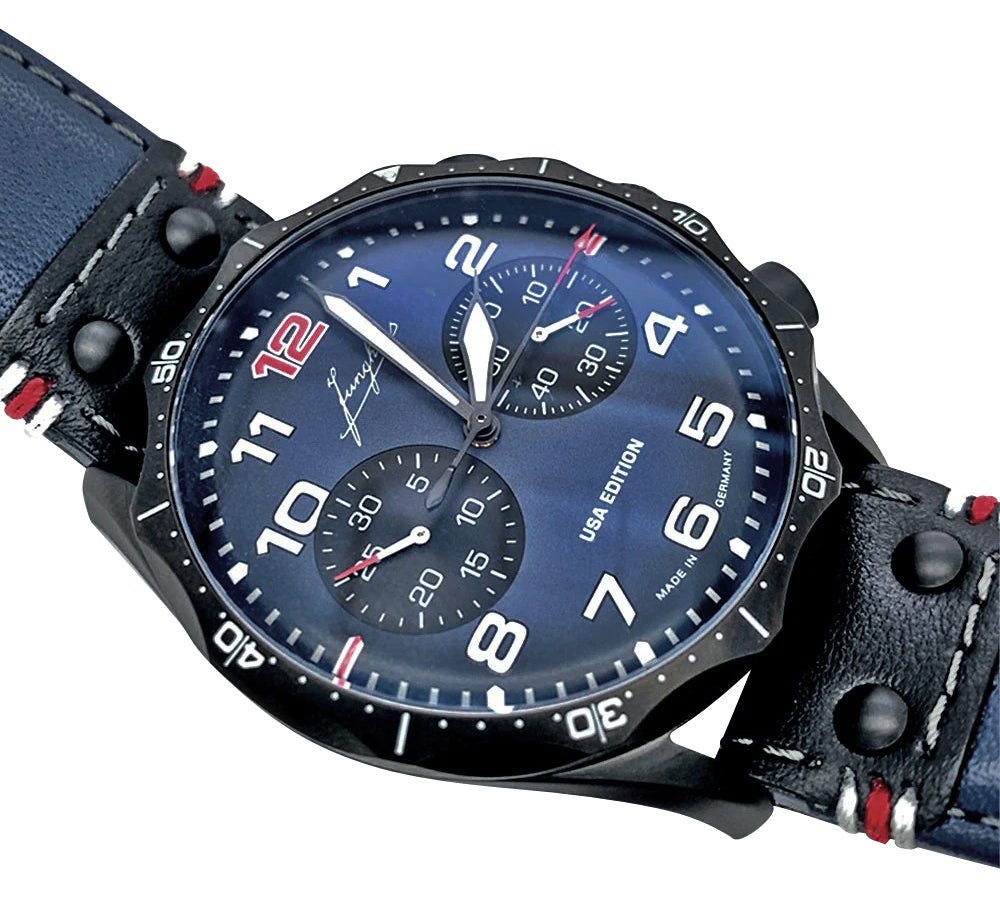
The Junghans Max Bill collection is not just one watch; it is a family of watches. For purists who appreciate the ritual of winding a mechanical movement, there are hand-wound versions. Automatic references add a self-winding caliber and sometimes a date window without disturbing the symmetry of the dial. The Chronoscope includes a chronograph but maintains the same sober typography. Whatever you select, the collection scales in complexity up or down without losing its core design language.
4. Materials Match the Standard
Minimalism is only effective when you do it properly. The cases are made of matte or polished stainless steel; high-end crystals are scratch-resistant sapphire; and the automatic versions are powered by Junghans’ in-house J800 caliber, with a solid power reserve for daily wear. It’s a design that photographs well and performs as if it were built by people who know their stuff.
5. It Pairs With Nearly Everything
A real minimalist watch should work as hard as your favorite white shirt. On leather it sits comfortably with tailored workwear, while on a Milanese mesh bracelet it blends seamlessly into smart-casual weekend looks. There’s no loud branding on the dial, so it never competes with the rest of your outfit—it just reads intentional.
Final Thoughts
It’s not that this watch is minimalist because it’s featureless; it’s minimalist because each feature was purposefully selected. It’s that blend of design pedigree and everyday practicality that’s allowed the Junghans Max Bill watch to keep earning a place in collections based on clean, considered style. To compare references, face to face,
Watches & Beyond has a good selection of Junghans watches to choose from, and you’ll be sure to find a model that fits your daily rotation.
FAQs
What makes it different from other minimalist watches?
It was designed by a working Bauhaus artist, not styled after Bauhaus principles later—a direct design lineage most minimalist watches don’t have.
Is it automatic or hand-wound?
Both. There are hand-wound, automatic, or chronograph (Chronoscope) versions, so you can choose the mechanism that suits how you want to wear it.
What case sizes are available?
Sizes range from classic proportions of around 34mm for smaller references to larger automatic and chronograph models approaching 40mm.
Does it suit both casual and formal outfits?
Sure. The clean dial and simple case shape easily transition between tailored and casual settings, especially when on a leather strap for dressier occasions.


