

Depression Glass: A Beginner’s Guide to Collecting Vintage Glassware

Depression glass is the affordable, mass-produced glassware that filled American kitchens during the 1920s and 1930s. Factories churned out depression glass in cheerful colors like pink, green, and amber, often giving pieces away free with cereal, flour, or movie tickets. Despite its humble origins, depression glass has become one of the most collected types of vintage glassware today. Walk into any antique mall and you’ll likely spot a shelf of it glowing under the lights.
A Brief History of Depression Glass
The story of depression glass begins with the Great Depression itself. As money grew scarce, manufacturers like Hocking Glass, Jeannette Glass, and Hazel-Atlas found a clever way to keep factories running: produce glassware cheaply and sell it for pennies. Some depression glass pieces even came as free promotional gifts, a marketing trick that helped struggling families stretch their budgets. You can read more about this era in the Smithsonian’s overview of Depression-era consumer culture. By the end of the 1930s, dozens of companies had released their own lines, each with distinct colors and molded patterns.
How to Identify Depression Glass
Spotting real depression glass takes a bit of practice. Genuine pieces often show mold seams, tiny bubbles, or slight imperfections from the fast production process. Hold a piece up to natural light and check for a soft, slightly uneven shine rather than the crisp clarity of modern glass. Collectors often identify depression glass by its pattern name, such as Cherry Blossom, Mayfair, or American Sweetheart. If you’re unsure whether a piece is authentic, this detailed resource from the Corning Museum of Glass explains common manufacturing marks from the period.
Popular Depression Glass Colors and Patterns
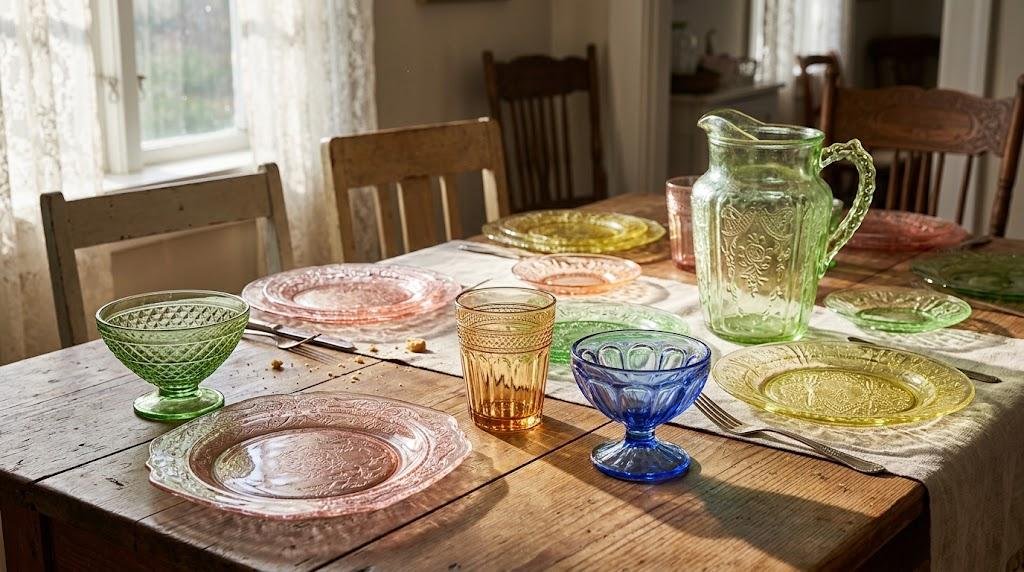
Color is one of the easiest ways to fall in love with depression glass. Pink and green are the most common shades, but collectors also prize amber, cobalt blue, and delicate opalescent whites. Each color of depression glass tends to attract a different kind of collector, since rarer shades like cobalt blue often command higher prices. Pattern names add another layer of charm; a single pattern might include dinner plates, cups, bowls, and even candy dishes. If you want to browse real listings and current prices, check out our guide to collecting vintage glassware for more detail.
How to Care for Depression Glass
Because depression glass is thinner and more delicate than modern glassware, it needs gentle handling. Hand-wash each piece in warm, soapy water instead of using a dishwasher, since heat and harsh detergents can cause cracking. Store depression glass away from direct sunlight, which can fade certain colors over time. Wrap pieces individually in soft cloth before stacking them, since depression glass chips easily at the edges. With a little care, these fragile treasures can last for generations.
Where to Buy and Collect Depression Glass
Estate sales, flea markets, and local antique shops remain some of the best places to find depression glass at reasonable prices. Online marketplaces like eBay’s depression glass category and specialty auction sites also offer a huge selection, though prices can vary widely based on rarity and condition. Joining a collectors’ club is another great way to learn, trade, and swap stories with people who share your passion for this hobby. Whether you’re drawn to the history, the color, or the thrill of the hunt, it offers a rewarding way to connect with the past.


