

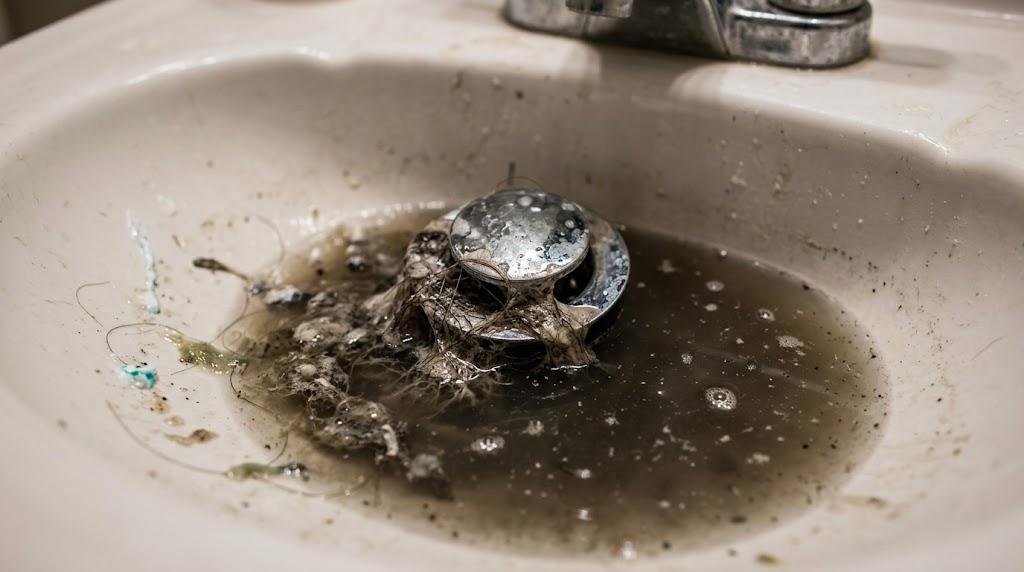

A clogged drain rarely happens overnight. It builds up slowly, one small habit at a time, until the water in your sink or shower just won’t go down anymore. In the kitchen, a clogged drain is usually the result of grease, oil, and food scraps that cling to the inside of the pipe and harden over time. In the bathroom, a clogged drain is almost always caused by hair, soap residue, and skin cells that tangle together into a dense mass. Once that buildup narrows the pipe enough, even a small amount of debris can trigger a full clogged drain. Understanding the cause of your specific clogged drain is the first step toward fixing it properly instead of just masking the symptom for a week.
Signs You’re Dealing With a Clogged Drain
Most people don’t notice a clogged drain until it’s already inconvenient. Water pooling around your feet in the shower, a sink that drains in slow motion, or a gurgling sound coming from the pipes are all early warnings. A sulfuric or musty smell rising from the drain is another classic sign, since trapped organic matter starts to decompose inside the pipe. If you notice more than one fixture backing up at the same time, your clogged drain problem might not be isolated to a single sink. According to the EPA’s guidance on household plumbing maintenance, slow drains and recurring backups are often an early indicator of a larger issue in the home’s waste line, not just a one-off clogged drain.
Simple DIY Fixes for a Clogged Drain
Before calling in a professional, there are a few safe methods worth trying on a clogged drain. A plunger works well for sinks, tubs, and even some toilets, using suction to dislodge whatever is blocking the pipe. For a clogged drain in the kitchen, a mixture of baking soda and vinegar, followed by hot (not boiling) water, can help break down grease without damaging your pipes the way harsh chemicals sometimes do. A drain snake or a simple bent wire hanger can physically pull out hair clogs in a bathroom sink or tub. If you’ve got standing water, start by removing as much as you can with a cup or small container so your fix has a better chance of actually reaching the clogged drain itself. The folks at This Old House have a solid breakdown of which method suits which type of blockage.
Why You Should Think Twice About Chemical Drain Cleaners
It’s tempting to reach for a bottle of chemical cleaner the moment you spot a clogged drain, but these products come with real downsides. They’re corrosive, which means repeated use can wear down older pipes, especially in homes with outdated plumbing. They’re also harmful if they splash back while you’re working, and they’re not great for the environment once they’re flushed into the water system. A clogged drain caused by hair or solid debris often won’t respond to a chemical cleaner anyway, since there’s nothing for the chemicals to dissolve. If you do use one, always follow the label directions closely and never mix products, since certain combinations can create dangerous fumes.
Preventing a Clogged Drain Before It Starts
The easiest way to deal with a clogged drain is to avoid getting one in the first place. In the kitchen, let grease cool and throw it in the trash instead of pouring it down the sink. A simple mesh strainer over your kitchen and bathroom drains catches food scraps and hair before they ever become a problem. Running hot water through your kitchen sink after each use helps keep grease from settling and hardening along the pipe walls. Scheduling a quick monthly check of your slowest-draining fixtures also helps you catch a developing clogged drain before it turns into a full blockage. These habits take only seconds but save you from dealing with a stubborn clogged drain down the road.
When to Call a Professional Plumber
Sometimes a clogged drain is more than a quick home fix can handle. If you’ve tried plunging, natural solutions, and a drain snake without success, there may be a deeper blockage, a collapsed pipe section, or tree root intrusion further down the line. A clogged drain that keeps coming back within days of clearing it is also a sign that something bigger is going on beneath the surface. Professional plumbers use tools like motorized drain augers and hydro-jetting equipment that reach much farther into your pipes than anything available at a hardware store. Trying to force a persistent clogged drain open yourself can sometimes make things worse, especially with older or fragile piping, so knowing when to step back and call for help is just as important as knowing how to fix it yourself.
Living With Fewer Clogged Drain Headaches
A clogged drain is one of those small household problems that feels bigger than it is in the moment. With a bit of regular maintenance, the right tools on hand, and an understanding of what’s actually causing the blockage, most clogged drain issues are manageable without a major repair bill. Pay attention to the early warning signs, lean on gentle DIY methods first, and don’t hesitate to bring in a professional when a clogged drain won’t quit. Taking care of your pipes now means fewer surprises — and fewer flooded bathroom floors — later.


