

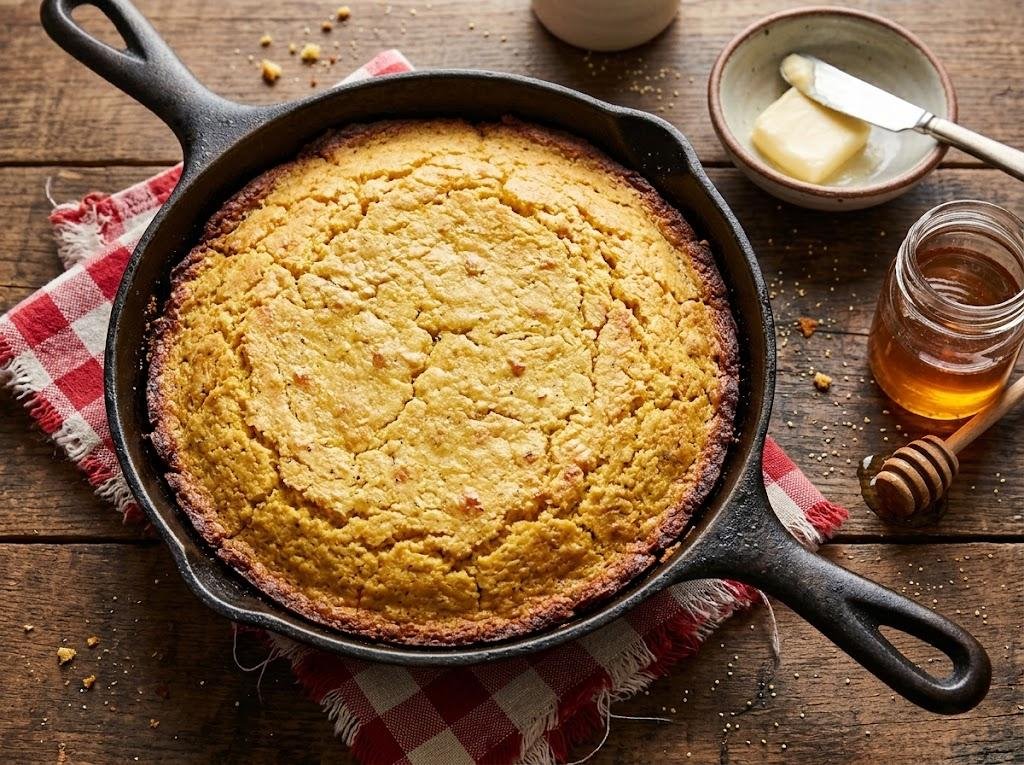

What Is Cornpone?
Cornpone is one of the oldest foods in Southern American cooking, and also one of the simplest. At its heart, cornpone is just cornmeal, water, salt, and a little fat, shaped by hand into small ovals and cooked until the outside turns golden and crisp. There’s no egg, no milk, and no sugar in traditional cornpone — ingredients that show up in almost every modern cornbread recipe. That bare-bones approach is part of why cornpone has survived for generations. It was food made from whatever was in the pantry, and it still satisfies people today the same way it did two centuries ago.
The History Behind Cornpone
Cornpone has roots that stretch back to Native American cooking traditions, long before European settlers arrived in the American South. Early cornpone recipes relied on ground corn because wheat flour was scarce or too expensive for many households. Over time, cornpone became a staple across the rural South, eaten at nearly every meal. Enslaved cooks and working-class families leaned on cornpone because it was cheap, filling, and could be cooked over an open fire or in a simple skillet. That history is worth remembering whenever cornpone shows up on a modern table — it’s a dish tied closely to survival, resourcefulness, and regional identity.
How Cornpone Differs From Cornbread
People often use cornpone and cornbread interchangeably, but they aren’t quite the same thing. Standard cornbread usually includes eggs, milk or buttermilk, and sometimes a touch of sugar, giving it a softer, cake-like texture. Cornpone, by contrast, is denser, drier, and more rustic. It’s shaped into small hand-formed cakes rather than poured into a pan, and it’s typically fried or baked without any sweetener at all. If you’ve only ever had sweet, fluffy cornbread, a plate of cornpone can feel like a different dish entirely — plainer, but with a satisfying, almost toasted corn flavor that holds its own.
How to Make Cornpone at Home
Making cornpone doesn’t require special equipment or hard-to-find ingredients. Mix stone-ground cornmeal with hot water and a pinch of salt until the batter is thick enough to hold its shape. Some cooks add a spoonful of bacon grease or butter for flavor and a crisper crust. Shape the mixture into small oval cakes with your hands, then fry them in a hot, well-greased skillet until both sides are deeply browned, or bake them in the oven on a greased sheet. The result should be crisp on the outside and tender in the middle. For more background on cornmeal and how it’s milled for recipes like this one, this guide from the National Corn Growers Association is a solid reference.
Serving Cornpone the Traditional Way
Cornpone was traditionally served alongside hearty, simple meals — pinto beans, collard greens, fried fish, or a bowl of pot likker left over from cooking vegetables. It works well as a utensil of sorts, since its dense texture holds up to scooping and dunking without falling apart. Some families still crumble leftover cornpone into buttermilk for a quick snack, a combination that might sound unusual but has deep roots in Southern food culture. If you’re building out a full menu of regional dishes on your site, it’s worth linking this piece to our guide to classic Southern side dishes so readers can explore related recipes in one place.
Why People Still Love Cornpone Today
Despite its plain ingredient list, cornpone hasn’t disappeared from Southern kitchens. Home cooks keep making it because it’s inexpensive, quick, and genuinely good when done right. There’s also a growing interest in old-fashioned, scratch-made foods, and cornpone fits right into that movement. It doesn’t need a special occasion or a long ingredient list — just decent cornmeal and a hot skillet. For anyone curious about traditional American foods, cornpone is a good place to start: easy to make, rich in history, and still a satisfying thing to eat on a weeknight.


