

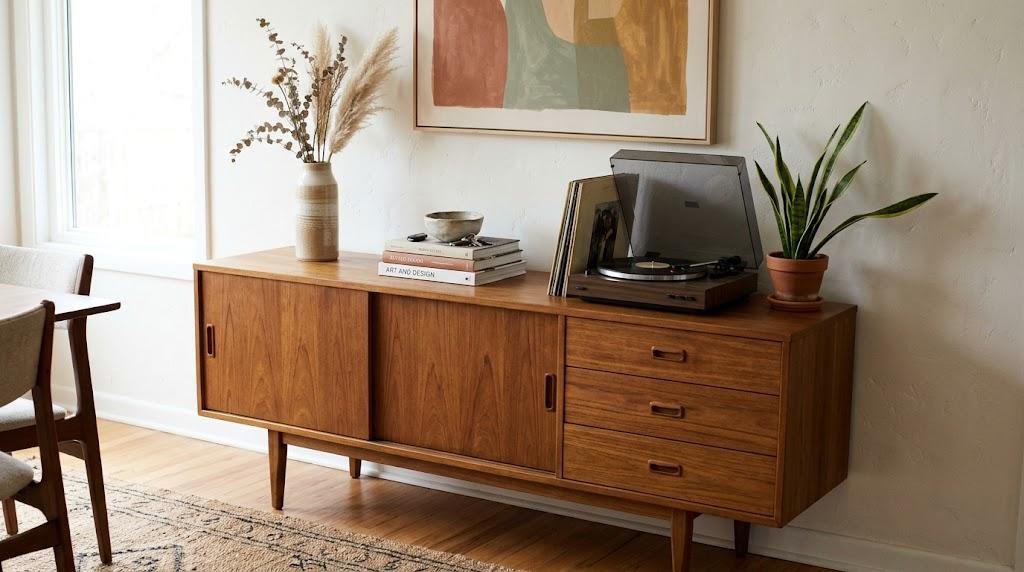

What Exactly Is a Sideboard
If you’ve ever stood in a furniture showroom wondering what separates a sideboard from a buffet or a credenza, you’re not alone. A sideboard is a long, low cabinet typically placed against a wall in a dining room or living space, used for storing dishes, linens, serving pieces, and anything else you don’t want cluttering your table. Most sideboards combine cabinets, drawers, or a mix of both, and many double as a serving surface during dinner parties. According to Wikipedia’s entry on sideboards, the piece has roots in 18th-century English dining rooms, where it was used to display silverware and serve food.
Why People Add a Sideboard to Their Home
A sideboard isn’t just a storage box. It solves a real problem: dining rooms rarely come with enough built-in storage, and a sideboard fills that gap while adding visual presence to the room. Beyond the dining room, a sideboard works well in a living room as a media console, in an entryway as a drop-zone for keys and mail, or in a home office as extra filing space. Because a sideboard sits lower and wider than most cabinets, it also helps anchor a room without overwhelming it, which is why interior designers often recommend one as a focal piece.
Choosing the Right Size Sideboard
Before buying a sideboard, measure the wall space you have in mind. A sideboard that’s too large will crowd a room, while one that’s too small will look lost. As a general rule, leave at least a few inches of breathing room on either side, and make sure there’s enough clearance for doors or drawers to open fully. Height matters too — a sideboard that’s too tall can block sightlines in an open-plan space, while one that’s too short might not give you the counter space you wanted for serving. If you’re shopping online, keep a tape measure handy and check listed dimensions carefully, since a sideboard’s proportions vary a lot between styles.
Picking a Sideboard Style That Fits Your Space
A sideboard comes in far more styles than people expect. A mid-century sideboard usually has tapered legs, clean lines, and warm wood tones, while a traditional sideboard leans toward ornate detailing, carved panels, and darker finishes. For smaller or more modern spaces, a minimalist sideboard with flat fronts and hidden hardware can keep the room feeling open. If you already have other furniture pieces you love, try to match the sideboard’s finish and hardware to what’s already in the room rather than treating it as a standalone statement piece. Sites like Architectural Digest regularly feature sideboard styling ideas if you want visual inspiration before deciding.
Materials That Affect a Sideboard’s Durability
The material a sideboard is built from affects both its price and how long it lasts. Solid wood sideboards tend to be the most durable and can often be refinished over time, but they also come with a higher price tag. Engineered wood or veneer sideboards are more budget-friendly and can still look great, though they’re more sensitive to moisture and heavy wear. Metal-accented sideboards are popular in industrial or modern interiors and tend to hold up well in high-traffic rooms. Whatever material you choose, it’s worth checking how the sideboard was finished, since a poor finish can show scratches and water rings much faster.
Storage Features Worth Looking For
Not all sideboard storage is created equal. Some sideboards offer adjustable shelving inside the cabinets, which is useful if you’re storing tall items like platters or vases. Others come with felt-lined drawers specifically designed for silverware, which protects it from scratching over time. If you plan to use your sideboard for linens or table runners, look for one with deep drawers rather than shallow ones. A sideboard with a mix of open and closed storage also gives you the flexibility to display a few decorative pieces while keeping everything else out of sight.
Styling a Sideboard Once It’s in Place
Once your sideboard is set up, styling it well makes a real difference in how the room feels. A common approach is the rule of three: group a lamp, a stack of books, and a piece of art or a small plant on top of the sideboard rather than lining everything up in a row. Leaving some empty space on the surface keeps it from feeling cluttered, especially if the sideboard also needs to function as a serving area during meals. For more layout ideas, our guide to arranging dining room furniture walks through how to balance a sideboard with a table and seating.
Where to Buy a Sideboard
You can find a sideboard at most furniture retailers, but it’s worth comparing a few before committing, since pricing and quality vary widely. Local furniture makers often build custom sideboards to fit unusual wall dimensions, which is worth considering if you have an awkward space. If you’re shopping secondhand, vintage sideboards from the mid-century era are widely available and often cheaper than new pieces of similar quality — just inspect the joints and hardware carefully before buying. For general furniture care tips that apply to a sideboard as well as other wood furniture, The Spruce has a solid maintenance guide worth bookmarking.
Final Thoughts on Buying a Sideboard
A sideboard is one of those furniture pieces that quietly does a lot of work in a room — it stores what you need, hides what you don’t want visible, and adds character to a wall that would otherwise sit empty. Take your time measuring the space, pick a style that matches the rest of your room, and choose a sideboard built from materials that suit how hard it will be used. Get those three things right, and your sideboard will likely outlast several other furniture trends in your home.


