


What Crabgrass Actually Is
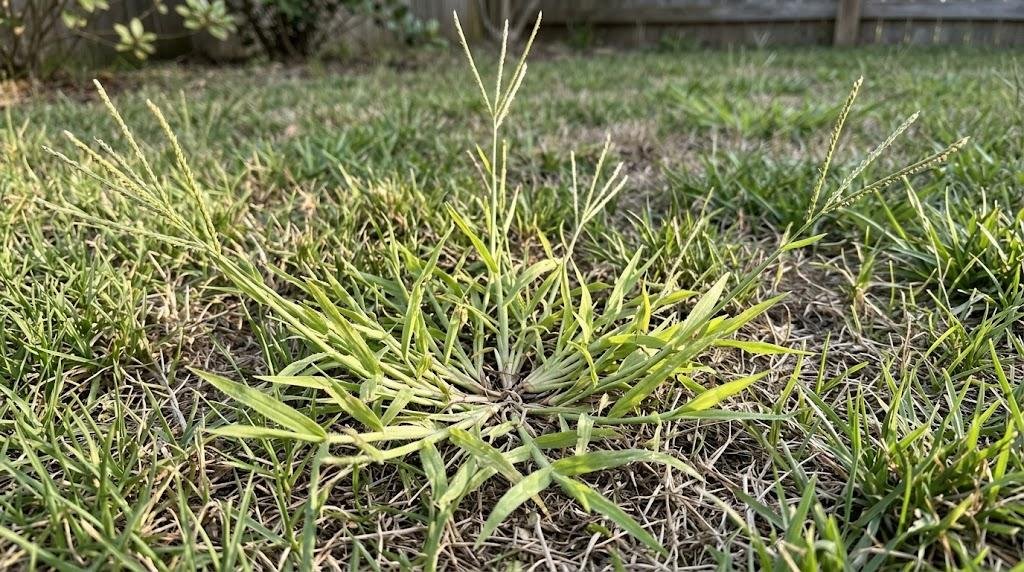
If you’ve ever looked down at your lawn in midsummer and noticed pale green clumps sprawling low across the grass, you were probably looking at crabgrass. Crabgrass is a fast-growing annual weed that thrives in hot weather and loves any patch of soil where the regular grass has thinned out. Unlike your lawn grass, crabgrass grows in a low, spreading pattern that can look almost star-shaped from above, with thick stems that radiate out from a central point. It’s one of the most common lawn complaints homeowners bring up, and once you know what crabgrass looks like, you’ll start spotting it everywhere.
Why Crabgrass Shows Up in the First Place
Crabgrass doesn’t invade a healthy, thick lawn out of nowhere. It’s opportunistic. Crabgrass seeds sit dormant in the soil, sometimes for years, waiting for the right conditions: warm soil, sunlight, and bare or thin patches where there’s less competition. That’s why crabgrass tends to pop up along driveway edges, in worn foot paths, or in spots where the lawn struggled the previous season. If you’ve recently dealt with drought stress, heavy foot traffic, or mowing your grass too short, you’ve essentially rolled out a welcome mat for crabgrass. Understanding this is the first step to actually solving the problem instead of just treating the symptom every summer.
How to Tell Crabgrass Apart from Regular Grass
A lot of people confuse crabgrass with other common lawn weeds, so it helps to know the specific traits. Crabgrass has a lighter, almost yellowish-green color compared to most turf grasses, and its blades are wider and coarser to the touch. As it matures, crabgrass sends out thick stems that lie flat and fan out from the center, which is where it gets its “crab” nickname. By late summer, mature crabgrass plants produce seed heads that look like thin fingers branching off a central stalk. If you pull up a suspected patch and see this flat, sprawling growth habit rather than an upright blade pattern, you’re almost certainly dealing with crabgrass.
The Best Way to Prevent Crabgrass Before It Starts
Prevention is far easier than removal, and the key tool is timing. Crabgrass seeds germinate when soil temperatures reach around 55 to 60°F for several consecutive days, usually in early-to-mid spring depending on your climate. Applying a pre-emergent herbicide before that window closes is the single most effective way to stop crabgrass before it ever breaks the surface. Beyond chemical prevention, the real long-term fix is a thicker, healthier lawn. Mowing at a taller height, watering deeply but infrequently, and overseeding bare patches in fall all reduce the open soil that crabgrass needs to establish itself. For a full season-by-season routine, check out our lawn care calendar guide to see exactly when to fertilize and aerate so your grass can outcompete weeds like crabgrass naturally.
How to Get Rid of Crabgrass That’s Already Growing
Once crabgrass has matured, pre-emergent products won’t touch it, since those only work on seeds before they sprout. At that point, you’re looking at post-emergent herbicides labeled specifically for crabgrass control, or manual removal for smaller lawns. If you catch crabgrass early, while the clumps are still small, hand-pulling is actually quite effective, especially after rain when the soil is soft and the whole root comes up easily. For larger infestations, a targeted post-emergent treatment applied while crabgrass is young will give you the best results; mature, seed-producing crabgrass is much tougher to kill and far more likely to spread before you catch it. Whatever method you choose, treat it before late summer, since every mature crabgrass plant can drop thousands of seeds that turn into next year’s problem.
Keeping Crabgrass from Coming Back
Getting rid of crabgrass once is only half the job. Because crabgrass seeds can remain viable in the soil for years, a single season of neglect can undo all your progress. The most reliable long-term approach combines a spring pre-emergent application with the cultural practices that keep your lawn dense: proper mowing height, consistent watering, and overseeding thin areas before crabgrass gets the chance to move in. If your lawn has struggled with crabgrass for multiple seasons in a row, it’s also worth testing your soil, since compacted or nutrient-poor soil tends to produce the thin, patchy grass that crabgrass finds so easy to exploit. You might also find it helpful to read our guide to common lawn weeds to make sure you’re not mistaking a different invader for crabgrass and treating it the wrong way.
The Bottom Line on Crabgrass
Crabgrass is stubborn, but it’s not unbeatable. The lawns that stay crabgrass-free year after year aren’t necessarily using stronger chemicals — they’re just timing their prevention correctly and keeping their grass thick enough that crabgrass never gets an opening. Pay attention to when your soil warms up in spring, keep your lawn well-fed and properly mowed, and deal with any crabgrass you do see while it’s still small. Do that consistently, and crabgrass stops being an annual headache and becomes a rare, easily-handled nuisance instead. For more on the science behind this common weed, Digitaria, the crabgrass genus, on Wikipedia is a solid starting point.


