

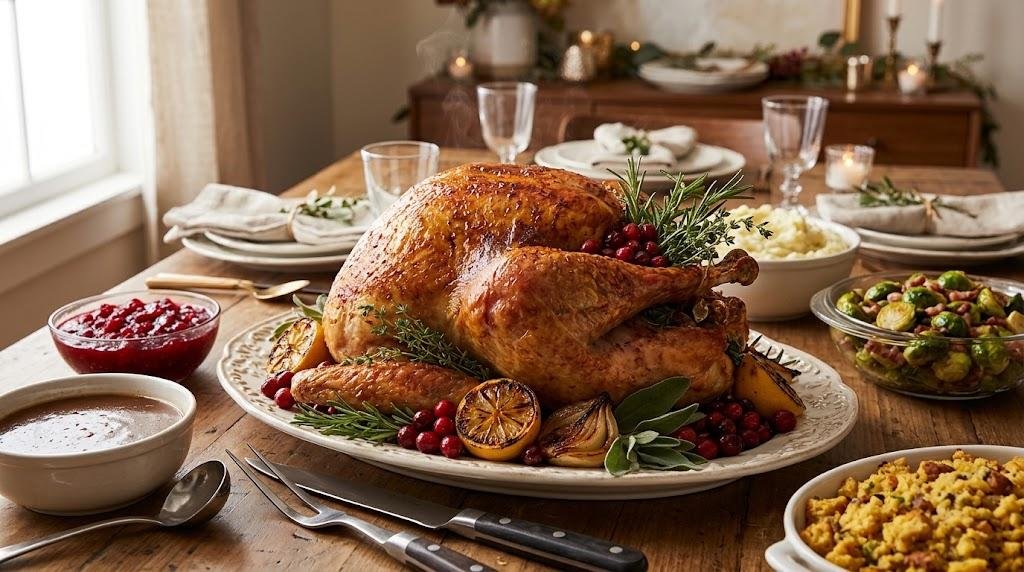

Why This Turkey Recipe Works Every Time
If you’ve ever pulled a dry, bland bird out of the oven, this turkey recipe is here to fix that. The method leans on a simple butter rub, a hot start, and a few temperature checks instead of complicated brining steps or hours of basting. You don’t need special equipment, and you don’t need to wake up before sunrise. The secret to this turkey recipe is patience in two places: letting the butter sit under the skin so it bastes the meat from the inside, and letting the turkey rest before you carve it. Skip either step and you’ll lose the juiciness you worked for.
Ingredients You’ll Need
Keep the shopping list short. You’ll want a 12–14 pound turkey, a stick of softened butter, fresh herbs like thyme and rosemary, a head of garlic, one lemon, a yellow onion, and a couple of carrots and celery stalks for the roasting pan. Salt and black pepper do most of the seasoning work, so don’t skip them. Before starting the turkey recipe, gather everything on the counter so you’re not hunting through the fridge with butter on your hands. If you want a few more side dish ideas to round out the table, check our complete holiday menu guide for pairings that work well with roast turkey.
How to Prepare the Turkey
Pat the turkey completely dry with paper towels, inside and out. Wet skin steams instead of browning, so this step matters more than people expect. Mix the softened butter with chopped herbs, minced garlic, salt, and pepper, then gently loosen the skin over the breast and legs with your fingers. Push most of the butter mixture under the skin and rub the rest over the outside. Stuff the cavity with lemon halves, onion quarters, and a few garlic cloves for extra flavor. This part of the turkey recipe takes the most hands-on time, but it’s also the most forgiving step in the whole process.
Step-by-Step Roasting Instructions
Set the turkey breast-side up on a bed of carrots, celery, and onion in a roasting pan, which keeps the bottom from scorching and adds flavor to your gravy later. Roast at 450°F for the first 30 minutes to jump-start browning, then drop the oven to 350°F for the remainder of the cooking time. Tent the breast loosely with foil once it reaches a deep golden color so it doesn’t overcook while the thighs catch up. Plan on roughly 13 minutes per pound total. Every oven runs a little differently, so this turkey recipe treats time as a guideline and temperature as the real test.
Checking for Doneness Safely
A thermometer is the only reliable way to know your turkey is done, and guessing by color or by how the juices run is not worth the risk. Insert it into the thickest part of the thigh, avoiding the bone, and pull the bird once it reads 165°F. The USDA’s guide to safe turkey cooking temperatures is a good reference if you want more detail on food safety during the holidays. Getting this right protects both your guests and the texture of the meat, since an undercooked turkey is unsafe and an overcooked one turns dry and stringy.
Serving and Carving Your Turkey
Let the turkey rest for at least 20 minutes before you touch a knife to it. Cutting too soon lets all those juices spill onto the cutting board instead of staying in the meat. Remove the legs and wings first, then slice the breast meat against the grain in even strips. Arrange everything on a warm platter and spoon a little of the pan drippings over the top for shine and extra flavor. This resting step is easy to forget when everyone’s hungry, but it’s what separates an average turkey recipe from one people ask you to repeat every year.
Tips for the Best Turkey Recipe Results
A few small habits make a bigger difference than most people assume. Buy a turkey that’s fully thawed, since a partially frozen bird cooks unevenly and throws off your timing. Season generously, because turkey is a large piece of meat that needs more salt than most home cooks use. Save the drippings for gravy instead of discarding them, and don’t skip the resting time no matter how good it smells. Follow this turkey recipe step by step the first time, then adjust the herbs or aromatics to match your own taste once you know how your oven behaves.


