

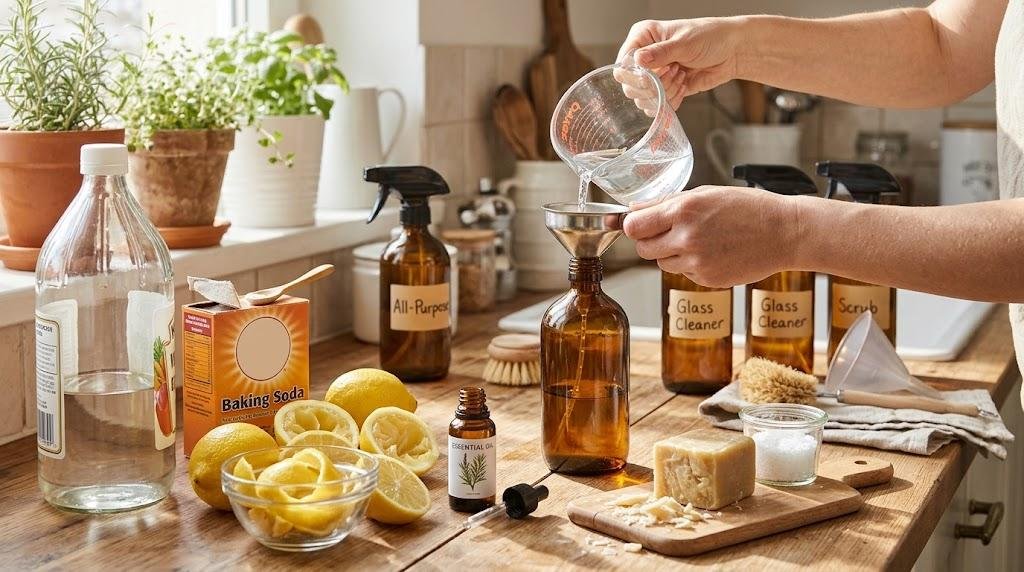

How to Make Natural Cleaning Products at Home
If you’ve ever read the back of a cleaning spray bottle and felt a little uneasy about the ingredient list, you’re not alone. Learning how to make natural cleaning products is one of the simplest changes you can make at home. It costs less, it smells better, and you already know what’s in it. This guide walks through exactly how to make natural cleaning products using things you probably already have in your kitchen.
Why Bother Learning How to Make Natural Cleaning Products
Most commercial cleaners rely on synthetic fragrances and harsh chemicals that can irritate skin, lungs, and eyes, especially for kids and pets who spend more time close to the floor. Once you understand how to make natural cleaning products, you control exactly what touches your countertops and your hands. You also stop paying for water and marketing dressed up as a “miracle formula.” A bottle of vinegar costs a fraction of a name-brand spray and does nearly the same job.
There’s also a quieter benefit: fewer bottles. Once you know how to make natural cleaning products, you can reuse the same spray bottles for months, refilling instead of tossing plastic into the recycling bin every few weeks.
The Core Ingredients Behind Every Recipe
You don’t need a long shopping list. Nearly every homemade recipe for how to make natural cleaning products starts with the same five staples:
White vinegar cuts grease and breaks down mineral buildup, which is why it’s the backbone of so many homemade formulas. Baking soda handles scrubbing and odor without scratching most surfaces. Castile soap (liquid or bar) acts as your gentle, plant-based detergent. Lemon or citrus peels add fragrance and a mild degreasing boost. Essential oils, like tea tree or lavender, bring scent and a touch of antibacterial power.
With just these on hand, you can cover almost every room in the house. If you want to go deeper on ingredient science, this breakdown from the EWG on cleaning product chemicals is worth a read before you start mixing.
All-Purpose Spray: The Easiest Place to Start
The all-purpose spray is usually the first recipe people try when they start learning how to make natural cleaning products, and for good reason — it’s fast and forgiving.
Mix one cup of white vinegar, one cup of water, and ten to fifteen drops of your chosen essential oil in a spray bottle. Shake before each use. This works well on counters, stovetops, and sinks. Avoid it on natural stone like marble or granite, since the acidity in vinegar can etch the surface over time.
Glass and Mirror Cleaner Without the Streaks
A common worry with homemade recipes is streaking, but this one solves that. Combine one cup of water, a quarter cup of white vinegar, and a tablespoon of cornstarch in a spray bottle. Shake well, since the cornstarch settles. Spray lightly and wipe with a microfiber cloth or old newspaper for a streak-free shine. This is one of the easier wins once you’ve learned how to make natural cleaning products for the rest of the house.
Scrubbing Paste for Tubs, Tiles, and Grout
For tougher jobs, baking soda does the heavy lifting. Mix baking soda with a small amount of liquid castile soap until it forms a thick paste, then add a few drops of tea tree oil for extra odor control. Apply with a damp sponge, let it sit for a few minutes on stained grout or a dull tub, then scrub and rinse. This paste is one of the most requested parts of how to make natural cleaning products because it genuinely replaces abrasive commercial scrubs.
Floor Cleaner That Works on Most Surfaces
For sealed wood, tile, or vinyl floors, combine a half cup of white vinegar, a gallon of warm water, and a few drops of lemon essential oil in a bucket. Mop as usual. Skip this one on unsealed hardwood, where moisture and vinegar can damage the finish over time. If you’re unsure about your flooring, the National Wood Flooring Association’s cleaning guidance is a reliable outside reference before you mop.
Storage and Labeling Tips
Once you’ve got a few batches going, label every bottle with contents and the date mixed, since homemade cleaners don’t have the shelf-stabilizers that store-bought ones do. Most mixtures last two to three weeks before the scent fades or the mixture separates. Keep them out of direct sunlight, which breaks down essential oils faster.
If this is your first attempt at how to make natural cleaning products, start with just the all-purpose spray and the scrubbing paste. Once those become part of your routine, add the others one at a time. For more step-by-step home projects like this, check out our cleaning and home-care guides for related recipes and seasonal tips.
Learning how to make natural cleaning products isn’t about perfection — it’s about swapping one bottle at a time for something simpler, cheaper, and a little kinder to the air in your home.


