How Does the ISO 27001 Audit Process Work?
An ISO 27001 audit examines whether an ISMS complies with ISO/IEC 27001. Normally, it is a process of nine stages, including: planning the scope of ISMS, performing a gap analysis, analyzing the security risk, installing controls, conducting the internal audit, performing a management review, an external Stage 1 and Stage 2 audit, tackling any nonconformities and obtaining certification. Post-certification, there are ongoing surveillance audits along with a recertification audit once every three years.
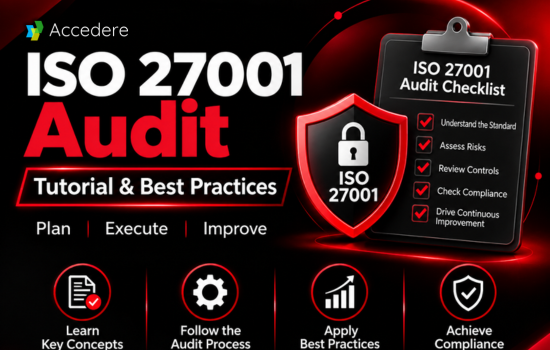
ISO 27001 Audit Process Checklist
- Define the ISMS scope: Identify the systems, departments, locations, and information assets covered by the ISMS.
- Conduct a gap analysis: Compare existing security practices with ISO 27001 requirements.
- Assess information security risks: Identify threats, vulnerabilities, and risks that need treatment.
- Prepare documentation: Maintain security policies, risk assessments, the risk treatment plan, and Statement of Applicability (SoA).
- Implement security controls: Apply relevant controls for access management, incident response, data protection, and business continuity.
- Conduct an internal audit: Evaluate ISMS conformity and identify nonconformities.
- Complete management review: Review audit findings, risk status, security performance, and improvement needs.
- Complete Stage 1 audit: Allow the certification auditor to review documentation and assess readiness.
- Complete Stage 2 audit: Provide evidence that the ISMS is implemented and operating effectively.
- Address audit findings: Investigate nonconformities, implement corrective actions, and provide supporting evidence.
- Obtain certification: The certification body reviews the results and makes the certification decision.
- Maintain compliance: Monitor controls, conduct periodic internal audits, and prepare for surveillance and recertification audits.
What Should Be Included in an ISO 27001 Checklist?
An ISO 27001 checklist is a tool that helps organisations to assess their preparedness systematically before an external certification audit. A good checklist should include the mandatory ISMS requirements as well as the security controls that were determined applicable through the organization’s risk assessment.
- ISMS scope: Are the organisational and technical boundaries well defined?
- Context: Did the organization identify the pertinent internal and external issues?
- Leadership: Are information security roles assigned?
- Risk assessment: Are information security risks identified and assessed?
- Risk treatment: Are treatment decisions recorded?
- Statement of Applicability: Are applicable controls identified and justified?
- Security policies: Written, approved and reviewed policies?
- Access Control: Are user access rights reviewed periodically?
- Incident Management: Are security incidents identified, reported and handled?
- Supplier security: Are risks from third parties assessed for security?
- Business continuity: Do you have sufficient resilience and recovery measures in place?
- Internal audit: Has an independent entity performed an internal review of the ISMS?
- Management review: Has ISMS performance been reviewed by senior management?
- Corrective action: Do you track and resolve audit findings?
The checklist should always be customized for the organization’s business model, technology environment, risk profile and scope of the ISMS.