

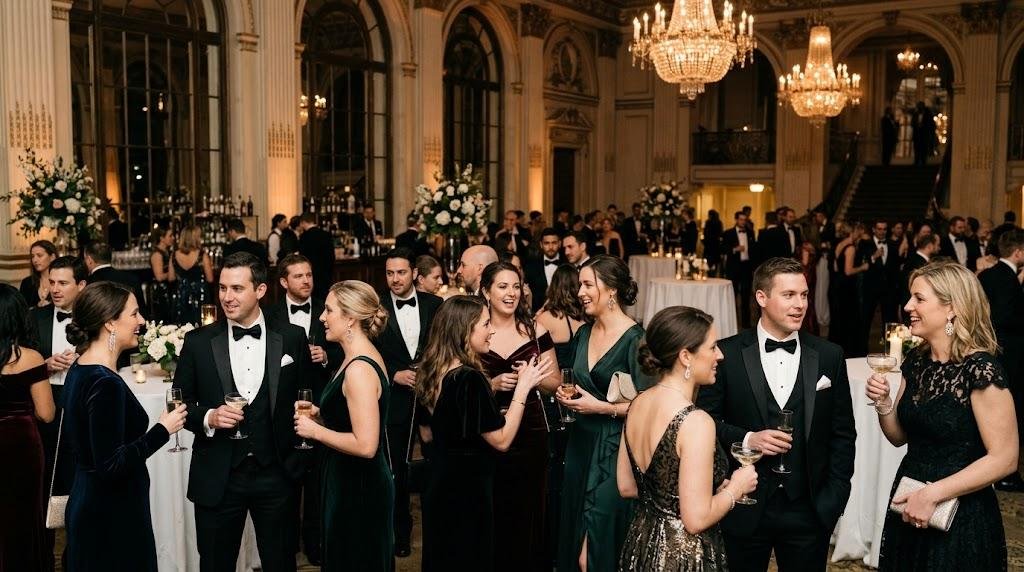

Getting an invitation that says “black tie” can feel intimidating if you’ve never had to dress for one before. The black tie dress code is one of the most recognizable formal wear standards, and once you understand it, dressing for the occasion becomes simple rather than stressful. This guide walks you through exactly what the black tie dress code means, what to wear, and how to avoid the mistakes that trip up most guests.
What Does the Black Tie Dress Code Mean?
The black tie dress code is a formal style of dress, traditionally reserved for evening events like weddings, galas, and award ceremonies. It sits just below white tie in formality, but it’s still a step above a standard suit. When an invitation specifies the black tie dress code, hosts are asking guests to dress with a certain level of elegance and consistency, rather than leaving outfit choices entirely open.
Understanding the history helps too. According to Gentleman’s Gazette, the black tie dress code originated in the late 19th century as a more relaxed alternative to white tie, and it has remained largely unchanged in its essentials ever since. That consistency is part of why the black tie dress code still feels timeless at formal events today.
Black Tie Dress Code for Men
For men, the black tie dress code almost always means a tuxedo. A proper tuxedo jacket is usually black or midnight blue, with satin lapels in either a peak or shawl style. It’s paired with matching trousers that have a satin stripe down the side.
Underneath, a white dress shirt with a pleated front or a plain bib front works best, closed with a black bow tie rather than a long necktie. A cummerbund or waistcoat is traditional, and patent leather shoes finish the look. Following the black tie dress code closely here means avoiding a standard business suit, even a dark one, since it reads as less formal than what the occasion calls for.
If you’d like more guidance on building out a complete look, our men’s formal wear checklist covers everything from cufflinks to the right pocket square fold.
Black Tie Dress Code for Women
For women, the black tie dress code is a little more flexible, but it still has clear boundaries. A floor-length evening gown is the most traditional choice, though a chic, formal cocktail dress is usually acceptable as well, depending on how strictly the event interprets the black tie dress code.
Fabrics like silk, satin, velvet, and chiffon suit the formality of the occasion, while bold colors and classic black are both appropriate. Accessories should lean elegant rather than casual: fine jewelry, a clutch, and heels complete the outfit. The Emily Post Institute notes that while hemlines and silhouettes have evolved over the decades, the underlying expectation of polished, formal dressing under the black tie dress code hasn’t changed much at all.
Common Black Tie Dress Code Mistakes to Avoid
Even with good intentions, people often get the black tie dress code wrong in a few predictable ways:
Wearing a regular business suit instead of a tuxedo is probably the most common mistake men make, since it undercuts the formality the black tie dress code requires. Choosing a long necktie instead of a bow tie is another frequent slip.
For women, showing up in daytime or office-appropriate attire misreads the occasion, since the black tie dress code calls for evening-specific fabrics and styling. Casual shoes, especially sneakers or sandals, clash with the formality expected as well.
Finally, ignoring the invitation’s cues is a mistake in itself. If a card specifies the black tie dress code, hosts have usually put real thought into the event’s formality, and dressing down can feel out of place once you arrive.
Black Tie Dress Code vs. Other Formal Dress Codes
It helps to see where the black tie dress code sits among other formal standards. White tie is more formal still, requiring a tailcoat, white waistcoat, and white bow tie — it’s reserved for state dinners and the most ceremonial occasions.
“Black tie optional” or “black tie preferred” loosens the rules slightly, giving guests room to wear a dark suit if a tuxedo isn’t available. True to its name, though, the black tie dress code itself doesn’t leave much room for interpretation; it’s a specific, well-defined standard rather than a loose suggestion.
Cocktail attire, by comparison, is noticeably more relaxed, allowing shorter dresses and suits without the structured formality the black tie dress code demands. Knowing these distinctions makes it much easier to dress appropriately the moment you see the words on an invitation.
Final Tips for Nailing the Black Tie Dress Code
Fit matters more than almost anything else when dressing for the black tie dress code. A well-tailored tuxedo or gown will always look more appropriate than an expensive piece that doesn’t fit properly, so it’s worth getting key pieces altered.
It’s also worth trying on your outfit well before the event, not the night before, so there’s time to fix anything that doesn’t sit right. Pay attention to small details too — a scuffed shoe or a wrinkled shirt can undercut an otherwise well-chosen black tie dress code outfit.
Ultimately, the black tie dress code rewards guests who plan a little ahead. With the right pieces and a bit of attention to fit and detail, dressing for a black tie dress code event becomes far less daunting — and honestly, pretty enjoyable once you’ve got the basics down.


