

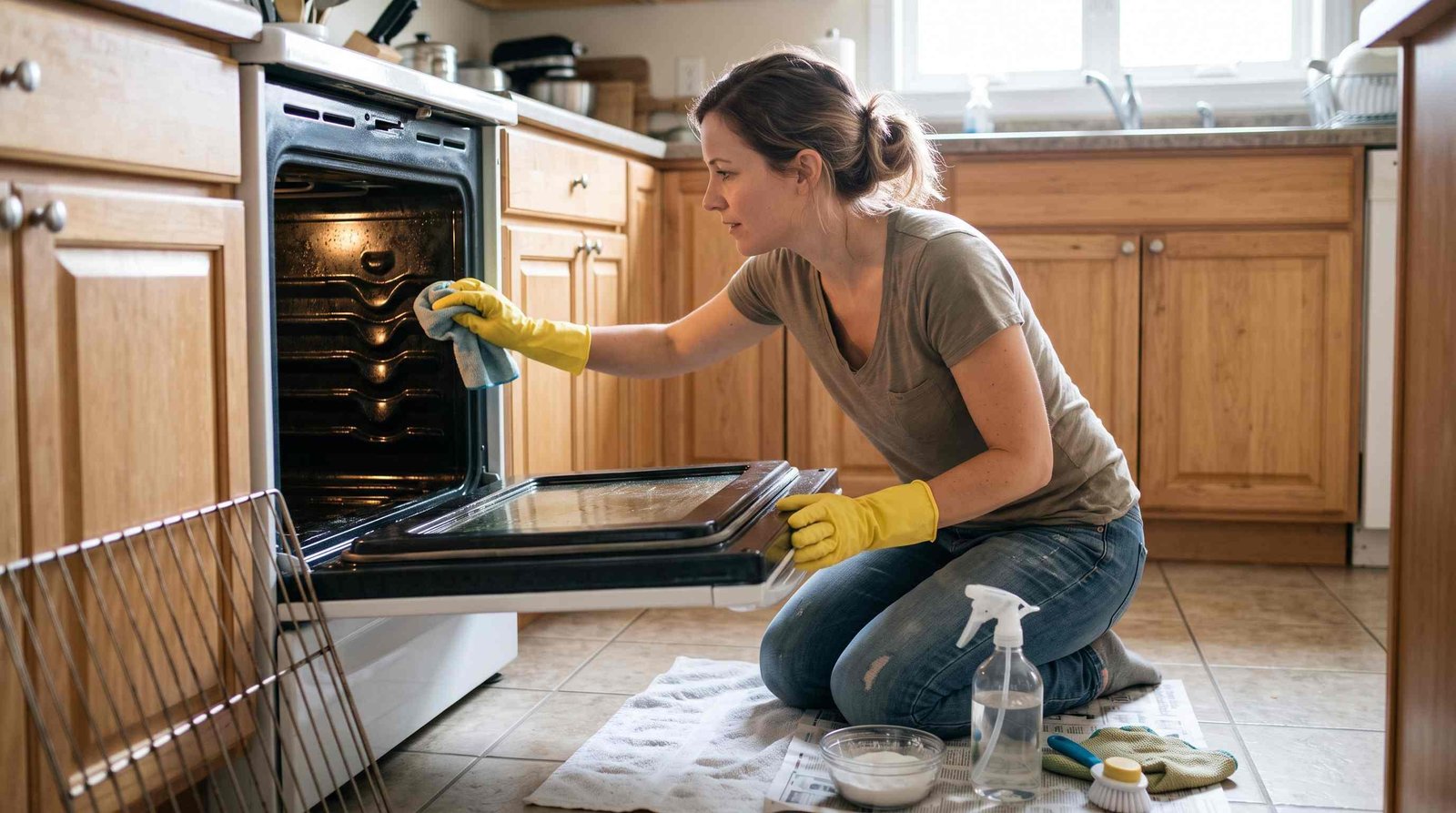

If you’ve ever opened your oven door and been hit with a cloud of smoke or a burnt smell, you already know why learning how to clean oven surfaces properly matters. A dirty oven doesn’t just look bad — it can affect how your food tastes and even create a small fire hazard over time. The good news is that cleaning your oven doesn’t require harsh chemicals or a professional service. With a little patience and a few household items, you can get it looking (and smelling) like new.
This guide walks you through exactly how to clean oven interiors, racks, and glass doors, step by step, using methods that are safe for your kitchen and gentle on your budget.
Why You Should Clean Your Oven Regularly
Grease and food residue build up every time you bake, roast, or broil. Over weeks, this turns into a stubborn layer that smokes when heated and makes your oven work harder to maintain temperature. Knowing how to clean oven surfaces on a regular basis — ideally once a month for frequent cooks — keeps your appliance running efficiently and extends its lifespan.
A clean oven also means safer cooking. Burnt-on grease is flammable, and a buildup near the heating element can become a real risk. Taking twenty minutes every few weeks is far easier than dealing with a thick, baked-on mess later.
What You’ll Need Before You Start
You don’t need anything fancy. A box of baking soda, white vinegar, a spray bottle, dish soap, a sponge, and some old towels will cover most of the job. If you want a checklist you can print and keep in your kitchen drawer, we’ve put together a printable cleaning supplies checklist on our site that covers this and other kitchen tasks.
Avoid oven cleaners with strong fumes if you can, especially if you have pets, kids, or sensitive airways at home. The baking soda and vinegar method below works just as well without the harsh smell.
How to Clean Oven Racks and Removable Parts
Start by removing the racks and any other removable parts. Soak them in a bathtub or large sink filled with warm water and a few tablespoons of dish soap for at least an hour — longer if they’re heavily soiled. This step is often the one people skip, but it makes a huge difference in how to clean oven components without scrubbing until your arms ache.
After soaking, use a non-abrasive sponge or an old toothbrush to work loose any remaining grime from the corners and edges. Rinse thoroughly and set aside to dry while you move on to the interior.
How to Clean Oven Interior Naturally
This is the core of learning how to clean oven interiors without chemical sprays. Mix about half a cup of baking soda with a few tablespoons of water to form a thick paste. Spread it generously over the base, walls, and top of the oven interior, avoiding the heating elements. Let it sit for at least 12 hours, or overnight for best results.
Once the paste has dried and absorbed grease, wipe it away with a damp cloth. For stubborn spots, spray a little white vinegar over the dried baking soda — the fizzing reaction helps lift residue that’s clinging to the surface. According to Good Housekeeping’s cleaning guide, this combination is one of the most effective non-toxic methods for appliance cleaning, and it avoids the fumes associated with commercial oven cleaners.
How to Clean Oven Glass Doors
Glass doors trap grease between cooking sessions and often look worse than the rest of the oven. The same baking soda paste works here too. Apply it to the inside of the glass, let it sit for 15–20 minutes, then wipe with a damp cloth before buffing with a dry one to avoid streaks.
If there’s a stubborn film that won’t budge, a mix of equal parts water and vinegar in a spray bottle can help break it down. The EPA’s Safer Choice program has useful resources on cleaning products that are both effective and safer for indoor air quality, which is worth a look if you want to compare ingredients before buying anything pre-made.
Tips to Keep Your Oven Clean Longer
Once you’ve gone through the full process, a few small habits will keep your oven cleaner for longer. Use a baking sheet or foil to catch drips from pies, casseroles, and roasts. Wipe up spills while the oven is still warm (not hot) rather than letting them bake on during the next use. And consider doing a quick baking soda wipe-down every couple of weeks instead of waiting for grime to build up.
If you’re also tackling other kitchen appliances, our guide to deep-cleaning your kitchen covers the stovetop, microwave, and fridge using similar natural methods.
Final Thoughts
Once you understand how to clean oven surfaces properly, it becomes a simple, low-effort task rather than a dreaded chore. Baking soda and vinegar handle most of the heavy lifting, your racks get a proper soak, and the glass door ends up streak-free. Build it into your monthly routine, and you’ll never have to deal with that burnt-smoke smell again.


