

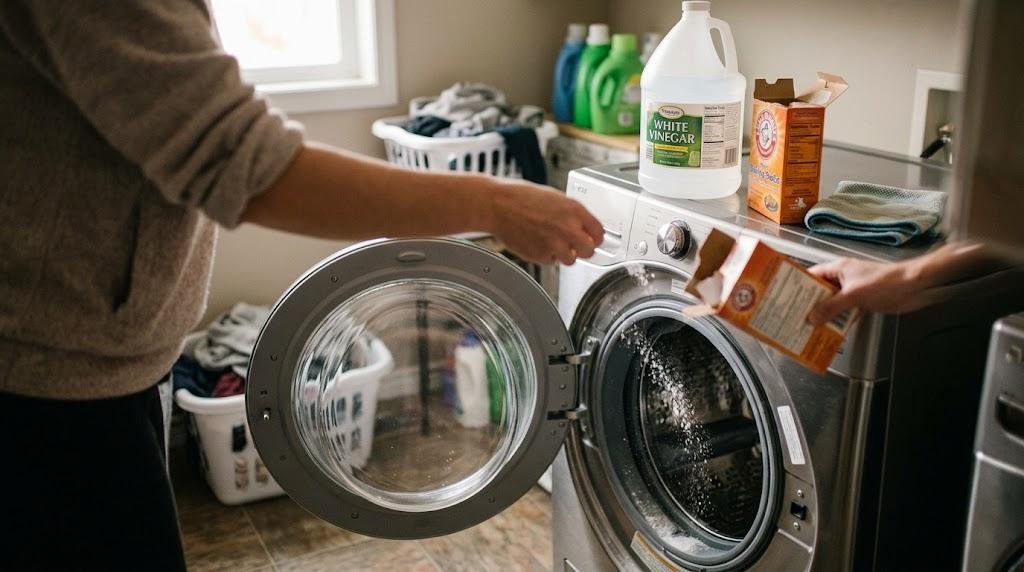

If your clothes come out of the wash smelling musty instead of fresh, your machine is probably the problem, not your detergent. Every wash cycle leaves behind a thin film of soap scum, fabric softener, lint, and moisture, and that combination is exactly what mold and bacteria need to grow. Learning how to clean washing machine with vinegar and baking soda gives you a cheap, chemical-free way to break that cycle without buying a single specialty product. Both ingredients are already sitting in most kitchens, and together they cut through grime while neutralizing the smells that store-bought cleaners often just mask.
What You’ll Need Before You Start
You don’t need anything fancy for this. Grab two cups of distilled white vinegar, half a cup of baking soda, a microfiber cloth or old toothbrush, and a bowl of warm water. If your machine has a removable detergent drawer or filter, keep a small bucket nearby too, since a bit of water usually drips out when you pull those parts loose. Once you have these on hand, the actual cleaning takes less than thirty minutes, most of which is just waiting for the machine to run.
Step-by-Step: How to Clean Washing Machine With Vinegar and Baking Soda (Top-Load Machines)
Start by setting your washer to the largest load size and the hottest water setting, then let the drum fill without adding any clothes. Pour in two cups of vinegar and let the machine agitate for about a minute so it mixes through the water, then pause the cycle and let it sit for an hour. This soak loosens mineral deposits and dissolves the soap film clinging to the drum walls. After the hour is up, let the cycle finish completely. Next, sprinkle half a cup of baking soda directly into the empty drum, run a full hot cycle again, and the fizzing reaction will scrub away whatever the vinegar soak softened. This two-part approach is really the core of how to clean washing machine with vinegar and baking soda, and it works well on almost any standard top-loader.
Step-by-Step: How to Clean Washing Machine With Vinegar and Baking Soda (Front-Load Machines)
Front-loaders trap more moisture around the door gasket, so they need a slightly different approach. Pour the two cups of vinegar directly into the detergent dispenser rather than the drum, then run the hottest, longest cycle your machine offers, ideally one labeled “sanitize” or “deep clean.” Once that finishes, mix the baking soda with a little warm water to form a loose paste, wipe it around the inside of the drum and the door seal with your cloth, and run a second hot rinse cycle. Doing this every month is a reliable way to handle how to clean washing machine with vinegar and baking soda on a front-load unit without ever needing a commercial descaler.
Cleaning the Rubber Seal, Dispenser, and Filter
The drum itself isn’t the only culprit behind bad smells. Pull back the rubber gasket around a front-loader’s door and you’ll likely find a layer of grime, hair, and standing water hiding in the folds. Wipe this area thoroughly with a vinegar-dampened cloth, working into every crease, then dry it with a towel so moisture doesn’t just build back up overnight. Remove the detergent drawer if your machine allows it, soak it in warm water with a splash of vinegar, and scrub any residue loose with your toothbrush before sliding it back in. If your washer has a lint filter near the bottom front panel, clear it out too, since a clogged filter can cause the same musty smell that this whole cleaning routine is meant to fix.
How Often Should You Repeat This Cleaning Method
For most households, running through how to clean washing machine with vinegar and baking soda once a month is enough to keep odor and buildup under control. If you wash cloth diapers, gym clothes, or pet bedding often, or if you live somewhere humid, cutting that down to every two to three weeks will make a noticeable difference. Between full cleanings, simply leaving the door or lid open after each wash so the drum can air out goes a long way toward preventing the moisture buildup that causes problems in the first place.
Extra Tips That Make This Method Even More Effective
A few small habits make this cleaning method work even better over time. Switch to using less detergent than the bottle recommends, since most people use more than necessary and excess soap is one of the biggest contributors to residue buildup. Stick to cold or warm washes for everyday loads and save hot water for the monthly cleaning cycle itself. It also helps to dry your laundry promptly after each wash rather than leaving damp clothes sitting in the drum, since that trapped moisture is prime territory for mildew.
When to Call a Professional Instead
Vinegar and baking soda handle everyday buildup well, but they won’t fix a mechanical issue like a failing pump, a cracked drum bearing, or chronic drainage problems. According to the <a href="https://www.epa.gov/mold/mold-course-chapter-2" target="_blank" rel="noopener">EPA’s guidance on mold growth</a>, persistent moisture problems that household cleaning can’t resolve usually point to a ventilation or plumbing issue worth having a technician look at. If your machine still smells musty after two or three cleaning cycles, or if you notice standing water that won’t drain, that’s a sign to call for a repair rather than repeating the same routine.
Final Thoughts on How to Clean Washing Machine With Vinegar and Baking Soda
Once you’ve gone through it a couple of times, the whole process becomes second nature, and it’s a far cheaper habit than restocking specialty washing machine cleaner every few months. If you’re trying to stay on top of household routines like this one, a simple <a href="https://thebdpage.com/checklist-maker">checklist tool</a> can help you schedule a monthly reminder so the task never slips through the cracks. And if you want to get the vinegar-to-water ratios exactly right for a bigger or smaller drum, thebdpage.com’s <a href="https://thebdpage.com/unit-converter">unit converter tool</a> makes quick work of scaling the measurements up or down. Keeping this one simple habit on your calendar is really all it takes to keep your washing machine — and everything that comes out of it — smelling the way it should.


