

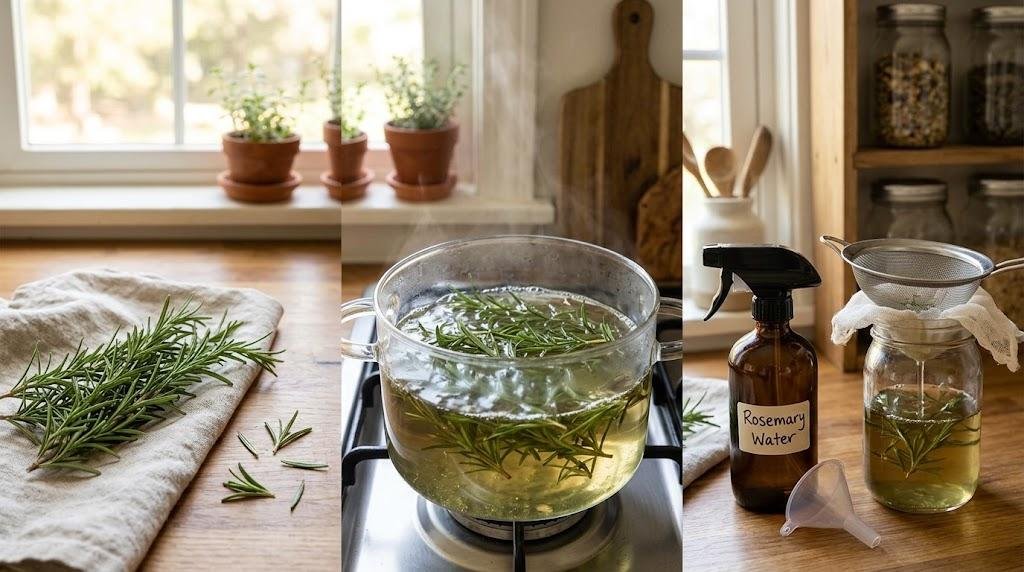

How to Make Rosemary Water for Hair
This guide covers how to make rosemary water for hair in under 20 minutes.
If you’ve been scrolling through hair care videos lately, you’ve probably seen people swear by one simple ritual: spraying rosemary water on their scalp every day. It sounds almost too easy, but there’s real appeal behind it, and learning how to make rosemary water for hair takes only a few minutes and a handful of ingredients you likely already have.
What Rosemary Water Does for Your Hair
Rosemary has been used for centuries in traditional remedies, and modern interest in it comes from its ability to boost circulation when massaged into the scalp. Better blood flow to hair follicles may support stronger growth over time, which is why so many people now search for how to make rosemary water for hair rather than buying another bottle of scalp serum. A 2015 study published in SkinMed even compared rosemary oil to minoxidil for hair thickness, and the results were promising enough that rosemary has stuck around as a trusted natural option (SkinMed study on rosemary oil).
Rosemary water also has mild antioxidant and anti-inflammatory properties. That can calm an itchy, flaky scalp, and it leaves hair smelling fresh without any added fragrance. None of this makes rosemary water a miracle cure, but it’s a gentle, low-cost addition to a routine, and that’s exactly why how to make rosemary water for hair is such a popular question right now.
How to Make Rosemary Water for Hair at Home
The classic method only needs two ingredients: rosemary and water. Here’s the simplest way to make rosemary water for hair using a stovetop.
Start with two to three sprigs of fresh rosemary, or two tablespoons of dried rosemary, and two cups of water. Bring the water to a boil, then add the rosemary and lower the heat so it simmers gently for 10 to 15 minutes. The longer it simmers, the stronger the final rinse becomes, so adjust the time to how concentrated you want it. Once done, let the pot sit covered until it cools to room temperature. Strain out the sprigs with a fine mesh sieve or cheesecloth, then pour the liquid into a clean spray bottle.
This stovetop method is the most common answer when people ask how to make rosemary water for hair, mostly because it’s fast and needs no special equipment.
How to Make Rosemary Water for Hair Without Heat
If boiling feels like too much effort, there’s a cold-steep way to learn how to make rosemary water for hair that works just as well over time. Place a handful of rosemary sprigs in a glass jar, cover them completely with cold water, and seal the jar. Let it sit in the refrigerator for 24 to 48 hours so the oils infuse into the water.
This approach is milder and keeps more of rosemary’s delicate compounds intact, since nothing gets exposed to high heat. Either method works, so choosing between them usually comes down to how much time you have on hand.
How to Use Rosemary Water on Your Hair
Once you know how to make rosemary water for hair, the next question is simple: how do you actually use it? Applying it correctly is the easy part. Pour the finished liquid into a spray bottle and mist it directly onto your scalp, focusing on areas where hair feels thin or the scalp feels tight. Massage it in with your fingertips for a minute or two to help it absorb and encourage circulation.
You can leave it on without rinsing, or use it as a final rinse after shampooing. Many people apply it three to four times a week, either on dry hair before bed or on damp hair right after a shower. Consistency matters more than quantity, so a light near-daily habit tends to work better than one heavy application a month.
If you’re curious about other budget-friendly routines, our guide to simple at-home beauty swaps walks through a few more kitchen ingredients worth keeping around.
Storing Your Rosemary Water
Knowing how to make rosemary water for hair is only half the job — storing it properly keeps it effective. Because this is a water-based infusion with no preservatives, it won’t last indefinitely. Store it in the refrigerator and use it within a week to ten days for the freshest results. If you notice any change in smell, color, or clarity, toss it and make a fresh batch instead of risking irritation from liquid that’s gone off.
Labeling the bottle with the date you made it is a small habit that saves guesswork later, especially if you keep more than one hair product in the fridge.
Tips for Better Results
A few small tweaks make how to make rosemary water for hair even more effective. Fresh rosemary tends to produce a stronger, more fragrant water than dried rosemary, so use fresh sprigs when you can. Adding a few sprigs of mint or a small piece of ginger to the pot can boost circulation benefits further, since both are known for stimulating the scalp in similar ways.
Patch-test on a small section of scalp first, since even natural ingredients can occasionally cause irritation. Once it agrees with you, knowing how to make rosemary water for hair means you’ll rarely need to buy another scalp product again.
Final Thoughts on How to Make Rosemary Water for Hair
Learning how to make rosemary water for hair is one of the easiest additions to any hair routine, and it costs next to nothing compared to store-bought scalp treatments. Whether you simmer it on the stove or let it steep slowly in the fridge, the result is the same: a fragrant, gentle rinse that may support a healthier scalp over time. Give it a few weeks before judging the results, since natural remedies like this tend to work gradually rather than overnight.


