

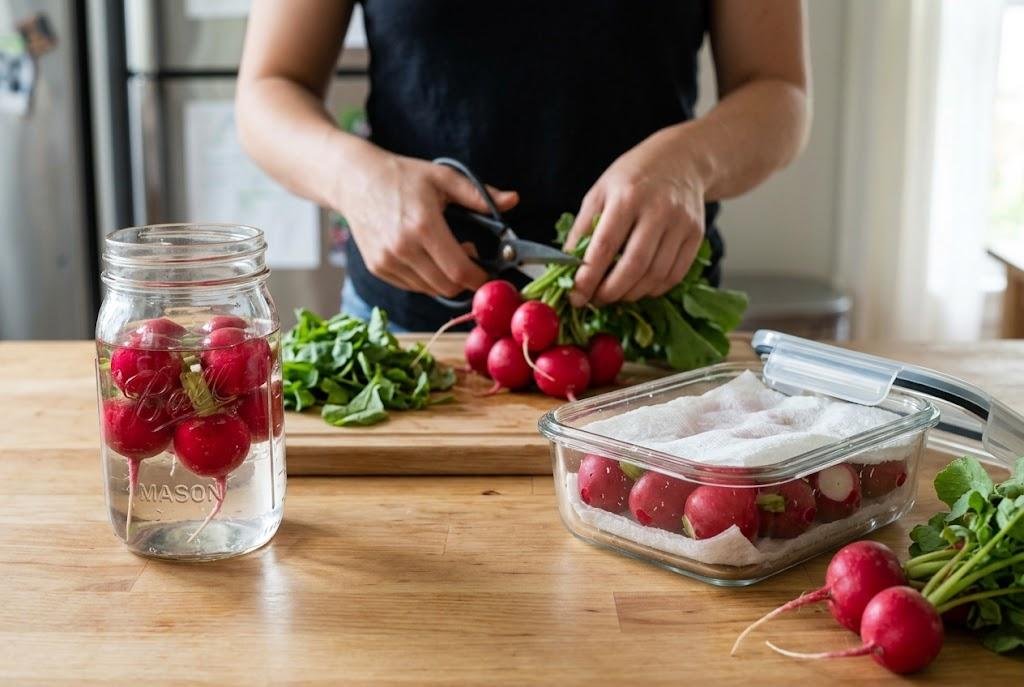

If you’ve ever pulled a bag of radishes from your fridge only to find them limp and rubbery, you already know why knowing how to store radishes properly makes such a difference. Radishes are mostly water, which is exactly what gives them that satisfying crunch, but it’s also why they wilt so fast once they’re exposed to warm air or left loose in a drawer. The good news is that storing radishes correctly isn’t complicated. Once you understand how to store radishes the right way, you can keep them fresh for two to four weeks instead of two to four days. For more ideas on keeping your produce fresh longer, check out our guide to storing root vegetables on this site.
Start With the Greens
One of the biggest mistakes people make when figuring out how to store radishes is leaving the leafy tops attached. Those green leaves are still alive and pulling moisture out of the radish bulb, which speeds up wilting. The first step in how to store radishes successfully is to twist or cut off the greens as soon as you get them home, leaving about a quarter inch of stem. Don’t throw the greens away, though. They’re edible and work well sautéed or tossed into soups. If you want a few ideas, our radish greens recipe roundup has some easy ones worth trying.
The Best Way to Store Radishes in the Fridge
Once the greens are off, the next part of how to store radishes is all about moisture control. Radishes want a humid environment, but they don’t want to sit in standing water. Rinse the bulbs gently, pat them dry, and place them in a container or resealable bag lined with a slightly damp paper towel. Store them in the crisper drawer of your refrigerator, which is designed to hold extra humidity. This simple method is the most reliable way to keep radishes fresh and is the technique most home cooks use when learning how to store radishes for the long term. Stored this way, radishes typically stay crisp for two to three weeks.
Storing Radishes in Water
Another popular approach to how to store radishes is submerging the trimmed bulbs in a container of cold water in the fridge, changing the water every couple of days. This method keeps radishes extremely crisp and is especially useful if you plan to eat them within a week or so. Some people find the water method restores a bit of crunch to radishes that have already started to soften. It’s a great trick when you want radishes ready to snack on or toss into a salad without extra prep time.
Can You Freeze Radishes?
Freezing isn’t the usual answer to how to store radishes, since their high water content means they turn mushy once thawed. However, if you have a large harvest and don’t mind a change in texture, blanching sliced radishes for one to two minutes before freezing can help preserve them for cooked dishes like soups or stir-fries. They won’t be crisp enough for salads afterward, but they’ll still add flavor. If freezing interests you, our freezing vegetables basics guide walks through the blanching process step by step.
Storing Whole Radish Plants From the Garden
If you’re pulling radishes straight from your garden, how to store radishes starts in the soil. Radishes left in the ground too long after they mature can turn woody or split, so timing your harvest matters. Once pulled, brush off excess dirt rather than washing immediately, since added moisture before storage can encourage rot. Trim the greens, let the bulbs air out for a short while in a shaded spot, and then move them into the fridge using the damp paper towel method described earlier. Gardeners often ask how to store radishes long-term, and curing them briefly before refrigeration helps extend their shelf life.
Signs Your Radishes Have Gone Bad
Even with the best approach to how to store radishes, they won’t last forever. Look out for a soft, spongy texture, dark spots, or a slimy surface, all of which mean it’s time to toss them. A little softness at the very tip is normal and can sometimes be trimmed away, but a strong sulfur smell or sliminess throughout means the radish has spoiled. Trusting your senses is usually enough to tell when radishes are no longer good to eat.
Quick Recap on How to Store Radishes
To summarize the best practices for how to store radishes: remove the greens right away, keep the bulbs slightly damp but not soaking, use a breathable container or bag in the crisper drawer, and consider the water-storage method if you plan to eat them within a week. Whether you’re storing a store-bought bunch or a garden harvest, these small steps make a noticeable difference. According to the USDA’s guidelines on vegetable storage (external, DoFollow), keeping root vegetables cool and moderately humid is one of the most effective ways to extend their shelf life, which lines up exactly with the methods above. Once you get into the habit, how to store radishes becomes second nature, and you’ll waste far less produce.


