

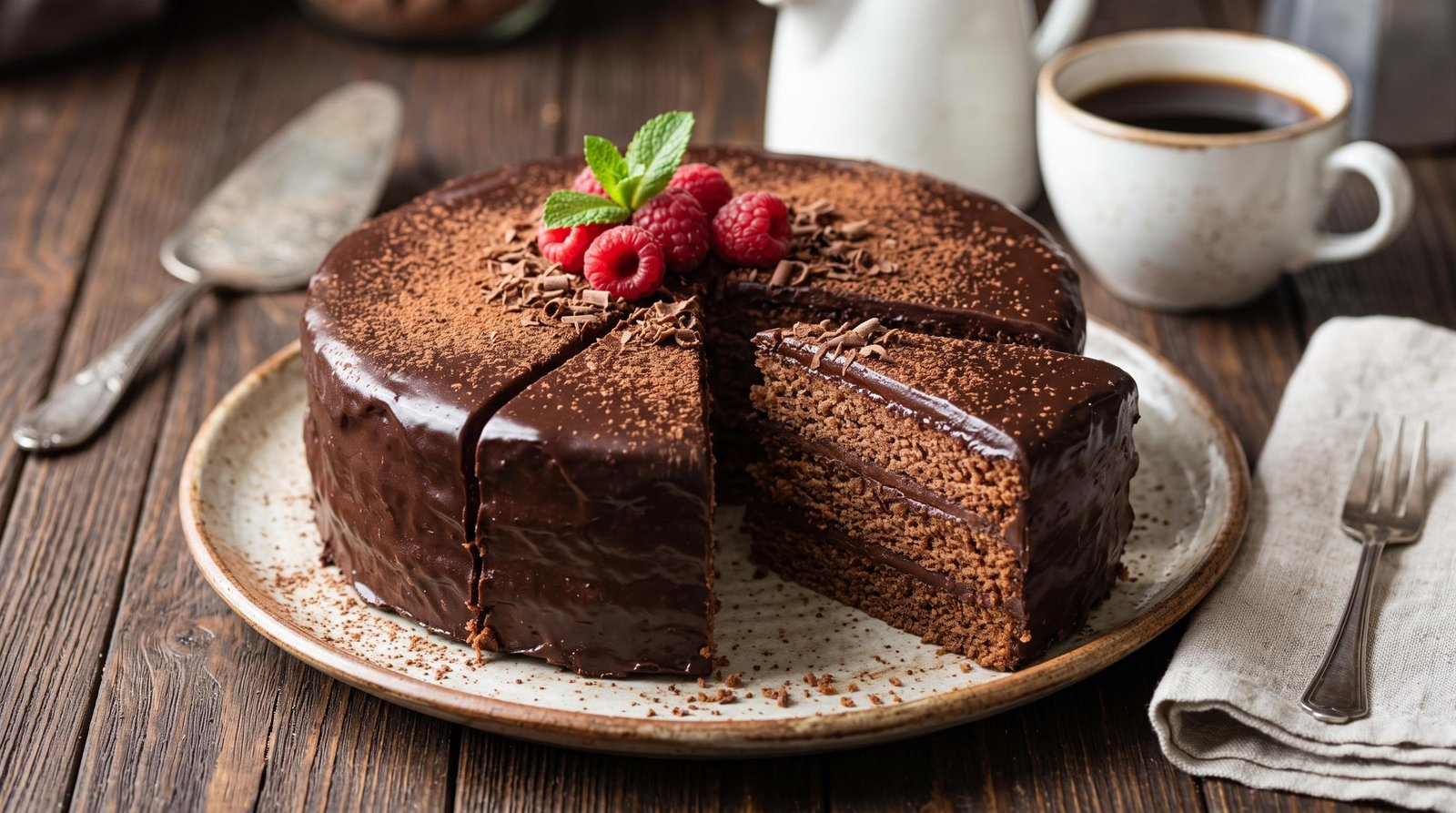

If you’ve ever stood in front of a bakery case wondering why one cake is called a torte and another is just a cake, you’re not alone. A torte is a dense, rich dessert, usually made with very little flour and a lot of ground nuts, breadcrumbs, or eggs instead. The word itself comes from German and Central European baking traditions, and it’s used to describe a dessert that’s layered, elegant, and meant to be savored in small slices rather than devoured in big wedges.
The History Behind the Torte
The torte has roots in Austria, Germany, and Hungary, where home bakers and professional pastry chefs refined it over generations. One of the most famous examples, the Sacher torte, was created in Vienna in the 1830s and remains a symbol of Austrian baking to this day. You can read more about its fascinating backstory on Britannica’s entry on the torte, which traces how the dessert spread across Europe and eventually the world.
Unlike a simple sponge cake, a torte was often reserved for special occasions. Its dense texture and rich fillings made it a showpiece dessert at celebrations, and that tradition has carried through to how people bake and serve a torte today.
What Makes a Torte Different From a Regular Cake
The biggest difference between a torte and a standard cake comes down to ingredients and structure. A torte typically uses little to no flour, relying instead on finely ground almonds, hazelnuts, or walnuts to hold everything together. This gives the torte its signature dense, almost fudgy crumb, which is very different from the light, airy texture you’d expect from a classic layer cake.
Another hallmark of a torte is the number of thin layers involved. Where a cake might have two or three layers, a torte often has several delicate layers separated by jam, buttercream, ganache, or mousse. This layering is part of what makes slicing into a torte feel like such an event.
Popular Torte Recipes You Should Try
If you’re new to baking a torte, a few classic recipes are worth exploring. The Sacher torte pairs chocolate cake with apricot jam and a glossy chocolate glaze. The Dobos torte, a Hungarian favorite, stacks thin sponge layers with chocolate buttercream and tops them with a caramel layer that adds a satisfying crunch. The Linzer torte, meanwhile, is more of a tart-like torte, built on a nutty, cinnamon-spiced dough and filled with raspberry or red currant jam.
Each of these recipes shows a different side of what a torte can be, from rich and chocolatey to fruity and spiced, so there’s a version to suit almost any taste.
Tips for Baking the Perfect Torte at Home
Baking a torte at home is more forgiving than it looks, as long as you keep a few things in mind. Bring your eggs to room temperature before you start, since this helps them whip up properly and gives the torte its structure without needing much flour. Grind your nuts finely and evenly, because large chunks can throw off the texture you’re going for.
Resist the urge to overmix the batter once your dry ingredients go in. A torte batter is delicate, and overmixing can knock out the air that helps it rise slightly during baking. Finally, let each layer cool completely before you start assembling, so your fillings don’t melt or slide.
Serving and Storing Your Torte
A torte is usually served in thin slices, often with a cup of coffee or tea alongside it, since the dessert itself is rich enough to stand on its own. Many people find that a torte actually tastes better a day after baking, once the layers have had time to settle and the flavors have melded together.
As for storage, keep your torte in the refrigerator if it includes a buttercream, mousse, or cream filling, and let it come back to room temperature for about twenty minutes before serving so the flavors can fully come through. A well-wrapped torte will usually keep well for three to four days.
Final Thoughts on Mastering the Torte
Once you understand what sets a torte apart, from its nut-based structure to its thin, elegant layers, it becomes a lot less intimidating to bake. Whether you start with a classic Sacher torte or try your hand at a fruity Linzer torte, you’ll quickly see why this dessert has remained a favorite across generations. If you enjoyed this guide, take a look at more dessert recipes on our blog for other bakes worth trying next.


