

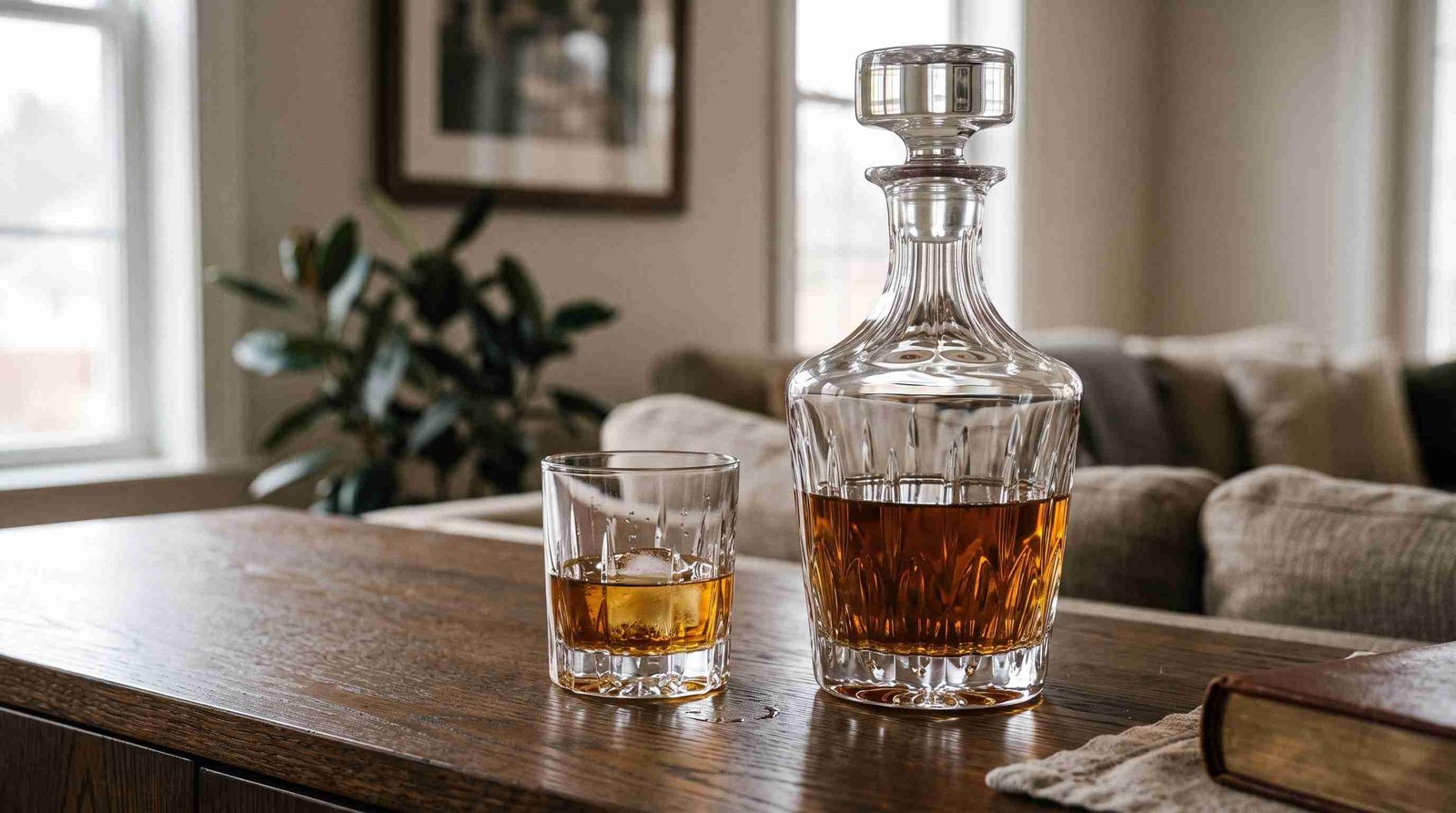

A decanter is simply a vessel you pour wine into before you drink it, and at first glance that sounds unnecessary. If the wine is already in a bottle, why move it somewhere else? The answer comes down to air. The moment wine meets oxygen, it starts to open up — tight aromas loosen, sharp edges soften, and flavors that were hiding in the glass start to show themselves. A decanter speeds that process along because it exposes far more surface area than the narrow neck of a bottle ever could. Pour a bold red into a decanter and give it twenty minutes, and you’ll often notice the difference before you even taste it, just from the way the aroma fills the room.
The Difference Between Decanting and Just Pouring a Glass
People sometimes assume that swirling a glass of wine does the same job as using a decanter, and it helps a little, but it’s not really comparable. A glass holds a small amount of liquid with a small amount of exposed surface. A decanter holds the entire bottle, fully exposed, for as long as you want. That’s a meaningful difference, especially for young, tannic reds that need real time to unwind. If you’ve ever opened a bottle that tasted harsh and closed at first, then noticed it tasted completely different an hour later, you’ve already experienced what a decanter does — just slower, and by accident rather than on purpose.
Does Every Bottle Actually Need a Decanter?
Not every bottle benefits equally, and this is where a lot of people overcomplicate things. Big, young, tannic reds — Cabernet Sauvignon, Syrah, Nebbiolo, young Bordeaux blends — tend to improve the most from time in a decanter, because they have the most “rough edges” to smooth out. Lighter reds and most whites usually don’t need it, since their flavors are already fairly open. There’s one special case worth knowing: older bottles with sediment. Here a decanter isn’t really about aeration at all — it’s about pouring slowly and steadily so the sediment stays behind in the bottle instead of ending up in your glass. That’s a very different job from aerating a young red, but it’s still the decanter doing the work.
How Long Should Wine Actually Sit in a Decanter?
This is the question almost everyone asks, and the honest answer is: it depends on the wine, so taste as you go. A lighter, more delicate red might only need fifteen to twenty minutes before it starts to taste looser and more expressive. A dense, young, structured red can sometimes benefit from sitting in a decanter for one to two hours, occasionally longer. The safest approach is to pour a small taste right after decanting, then taste again every thirty minutes or so. You’ll notice the wine’s personality shift in real time, and you can stop whenever it tastes the way you want it to. There’s no universal timer that works for every bottle, which is honestly part of the fun of using a decanter regularly — you start to develop a feel for it.
Choosing a Decanter: Shape Really Does Matter
Walk into any shop and you’ll see decanters in wildly different shapes, and that variety isn’t just about aesthetics. A wide-bottomed decanter with a large surface area is built for aeration — it’s meant for young, powerful reds that need maximum air contact in a short amount of time. A tall, narrower decanter with a smaller surface area is gentler, and it’s often better suited to wines that just need a little softening rather than a dramatic transformation. If you’re buying your first decanter, a mid-sized, wide-bottomed shape is the most versatile choice, since it handles the widest range of wines reasonably well. You don’t need five decanters in your cabinet; one good, well-shaped decanter will cover almost everything you drink.
Caring for a Decanter Without Breaking It
A decanter is one of those objects that feels fragile and expensive right up until the moment you’re trying to clean it, and then it suddenly feels very fragile indeed. Avoid dish soap if you can — it leaves a film that’s hard to rinse out of the narrow neck and can affect the smell of your next pour. Warm water, a gentle swirl, and a long-handled brush designed for decanters will usually do the job. For stubborn residue or that cloudy film that builds up over time, a mix of warm water and white vinegar, left to sit for a few minutes, works well without any harsh chemicals. Dry your decanter upside down on a stand rather than leaving it to air-dry sitting flat, since trapped moisture is what usually causes the musty smell people complain about.
Is a Decanter Worth It for a Casual Wine Drinker?
You don’t have to be a serious collector to get something out of using a decanter. Even if you’re just opening a bottle on a Tuesday night, giving it a few minutes in a decanter before pouring can noticeably improve the experience, especially with reds that have been sitting in a cool shop or a delivery van for who knows how long. It’s also just a pleasant ritual — there’s something satisfying about watching wine catch the light as it pours. If you want a deeper dive into which glass shapes pair best with a decanted wine, our guide to choosing the right wine glass is a natural next read, and if you’re curious about storage in general, this piece on keeping opened bottles fresh covers the other half of the puzzle. (Swap in your actual internal links here.)
The Simple Case for Keeping a Decanter on Hand
At the end of the day, a decanter isn’t a complicated piece of equipment, and you don’t need to treat it like one. It’s a tool for giving wine a little more air and a little more time, and both of those things tend to make wine taste better. Whether you’re opening something special or just want your weeknight bottle to taste its best, having a decanter within reach means you’re never more than a few minutes away from a noticeably improved glass. For more background on the history and design of decanters, Wikipedia’s overview is a solid starting point, and Wine Folly has a good practical breakdown of when decanting helps most. Once you start using a decanter regularly, it’s hard to go back to skipping the step.


