

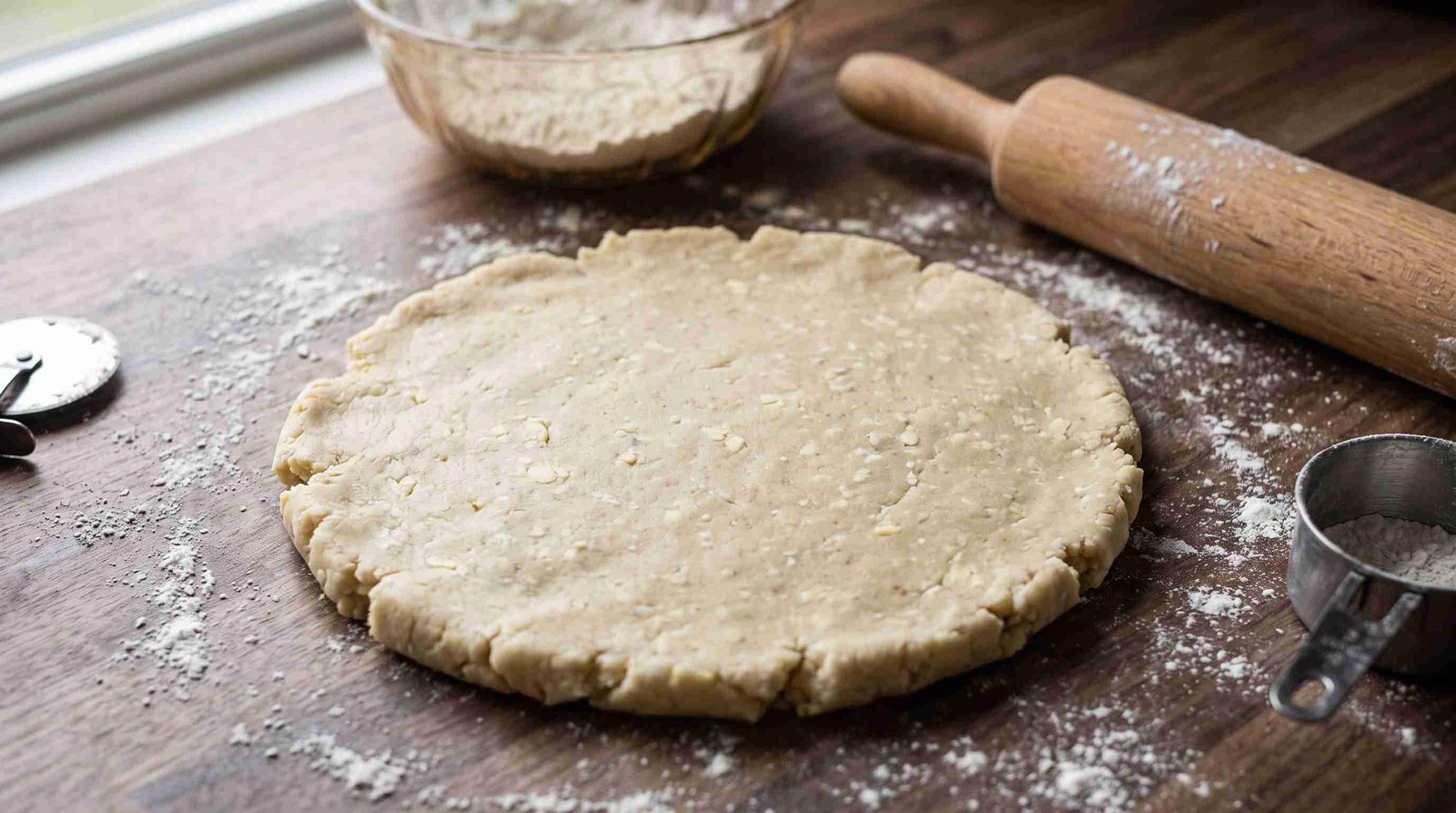

If you’ve ever wondered what gives French tarts and quiches that impossibly flaky, buttery base, the answer is pate brisee. Pate brisee is a simple pastry dough made from flour, cold butter, a pinch of salt, and just enough water to bring it together. Unlike sweeter pastry doughs, pate brisee is meant to be neutral, which is why it works for both savory dishes like quiche and sweet ones like fruit tarts. Once you understand pate brisee, a whole world of French baking opens up.
Why Pate Brisee Works So Well
The magic of pate brisee comes down to one thing: cold butter. When small, cold chunks of butter are worked into flour, they create thin layers of fat that melt in the oven, leaving behind pockets of steam. Those pockets are what make pate brisee flaky instead of dense. This is also why most bakers warn against overworking the dough. The moment pate brisee starts to feel warm or sticky, the butter softens too much, and the texture suffers. A little restraint goes a long way here.
The Ingredients Behind a Great Pate Brisee
A classic pate brisee needs very little: flour, unsalted butter, salt, and ice water. Some versions include a touch of sugar, but traditional pate brisee leans savory by default. The ratio that most bakers rely on is roughly two parts flour to one part butter, with just enough ice water to bind everything. Using cold ingredients isn’t a suggestion with pate brisee, it’s the whole point. Even the flour benefits from a short stay in the fridge if your kitchen runs warm.
How to Make Pate Brisee at Home
Making pate brisee is easier than most people expect, even if the name sounds intimidating. Start by cutting cold butter into small cubes and tossing them with flour and salt. Using your fingertips or a pastry cutter, work the butter into the flour until the mixture looks like coarse crumbs with a few pea-sized pieces still visible. Add ice water a tablespoon at a time, mixing gently until the dough just holds together. Shape the pate brisee into a disc, wrap it tightly, and chill it for at least an hour before rolling. That resting period lets the gluten relax and the butter firm back up, which makes the dough much easier to roll without tearing.
Once chilled, roll the pate brisee on a lightly floured surface, working from the center outward. Keep an eye on thickness, since an even pate brisee bakes more evenly and avoids soggy or burnt spots. For a deeper look at rolling and shaping techniques, King Arthur Baking’s pastry guide is a great resource if you want to compare methods.
Common Mistakes to Avoid
The most common mistake with pate brisee is handling it too much. Every extra minute of kneading warms the butter and pushes the dough toward tough instead of flaky. Another frequent issue is skipping the chilling step. Pate brisee that goes straight into the oven without resting tends to shrink and lose its shape. Adding too much water is another pitfall, since it makes the dough sticky and harder to roll cleanly. If your pate brisee ever feels unmanageable, the fix is almost always more chilling time, not more flour.
It also helps to blind bake pate brisee when the filling is wet, like in a quiche or custard tart. Lining the shell with parchment and pie weights keeps the base from puffing up or collapsing while it sets. Once you’ve got that step down, pate brisee becomes a dependable base for almost anything you want to bake.
Ways to Use Pate Brisee
One of the best things about pate brisee is how versatile it is. On the savory side, it’s the classic base for quiche lorraine, vegetable tarts, and galettes filled with cheese or roasted vegetables. On the sweet side, pate brisee holds up beautifully under fruit tarts, custard pies, and even rustic hand pies. Because the dough itself is mild, it never competes with the filling, it simply supports it. If you’re building out your own baking library, our guide to French pastry basics is a good next stop, and our tart filling ideas post pairs nicely with any pate brisee shell.
Final Thoughts
Pate brisee might sound like an advanced French technique, but it’s really just butter, flour, water, and a little patience. Once you’ve made it a few times, you’ll notice how much better it tastes than anything store-bought, and how much more control you have over texture and flavor. Keep the ingredients cold, don’t rush the chilling step, and pate brisee will reward you with the kind of flaky, golden crust that makes a dish feel special.


