

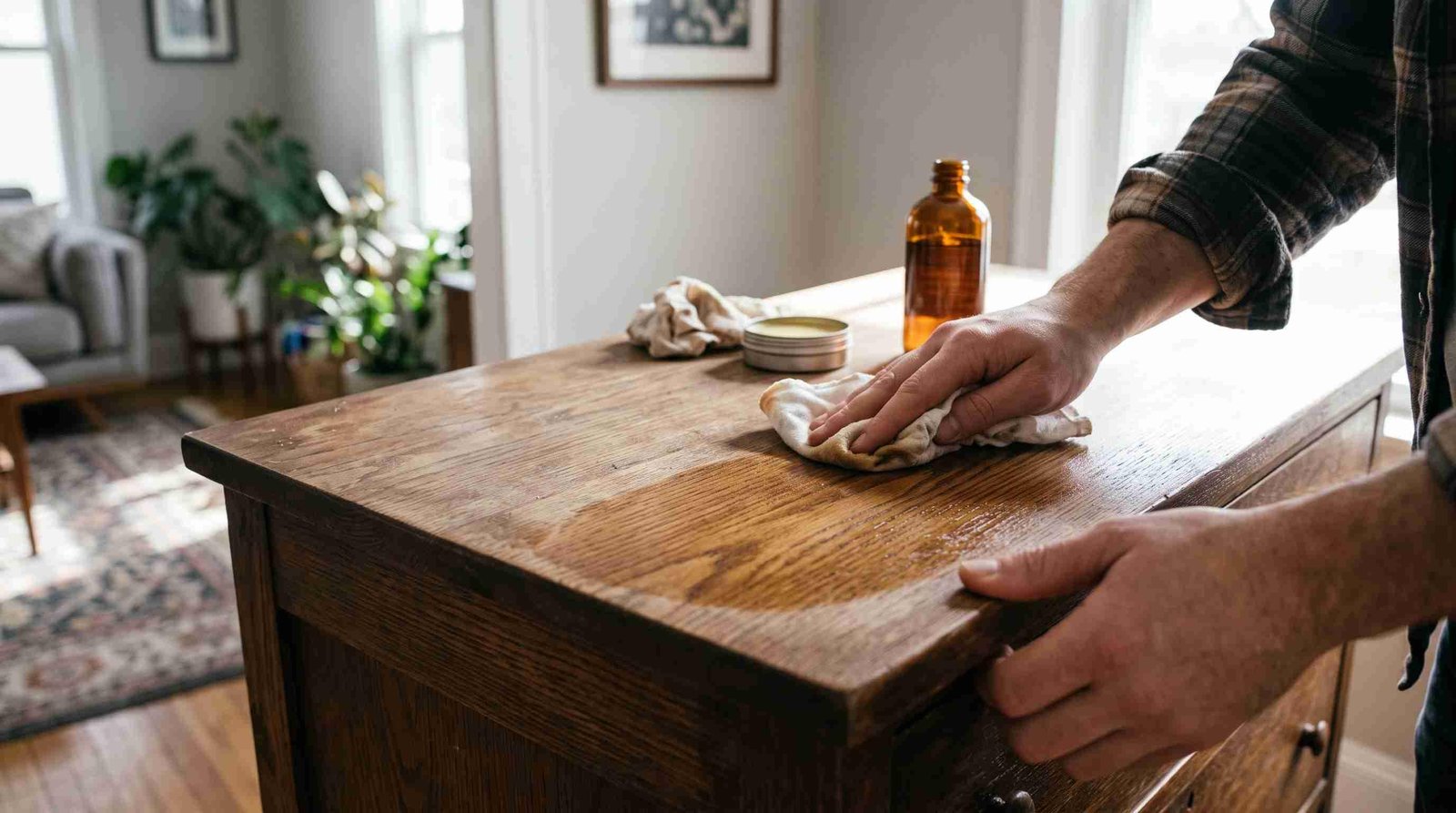

Wood furniture ages every single day, even when it sits quietly in a corner of your living room. Dust settles, sunlight fades the finish, and small scratches build up over time. Learning how to polish wood furniture is one of the easiest ways to slow that process down. A good polishing routine brings back the natural glow of the wood and protects it from future wear. It also costs far less than refinishing or replacing a piece you already love. If you want your tables, chairs, and cabinets to look their best for years, this guide walks you through exactly how to polish wood furniture the right way.
What You Need Before You Start
Before you begin, gather a few simple supplies. You will need a soft microfiber cloth, a second cloth for buffing, a wood-safe cleaner, and a quality furniture polish. Avoid rough fabrics like old towels, since they can scratch delicate finishes. A soft-bristle brush also helps for carved details or corners that collect dust. Once you have these items ready, you are set up to learn how to polish wood furniture without any guesswork. Skipping this preparation step is one of the most common reasons people end up disappointed with the results.
How to Polish Wood Furniture Step by Step
Start by dusting the surface thoroughly with a dry microfiber cloth. This removes loose grit that could scratch the wood once you add any liquid product. Next, wipe the piece down with a damp cloth and a mild wood cleaner, then dry it completely before moving on. This is the stage where most people wonder how to polish wood furniture without leaving streaks behind, and the answer is patience. Apply a small amount of polish to your cloth rather than pouring it directly onto the wood. Work in the direction of the grain using gentle, even strokes. Let the polish sit for the time stated on the label, then buff the surface with a clean, dry cloth until it shines. Following these steps is the simplest way to learn how to polish wood furniture consistently, piece after piece, without damaging the finish.
[Image suggestion — alt text: “Hands using a cloth to show how to polish wood furniture”]
Choosing the Right Polish for Every Piece
Not every wood finish responds the same way to every product. Oil-based polishes work well on older furniture with a natural, unsealed finish, while wax-based products suit pieces that already have a protective coat. Silicone-based sprays offer a quick shine but can build up over time and make future polishing harder. Reading the label and testing a small, hidden area first will save you from costly mistakes. According to the care guidance from This Old House, matching the product to the finish type matters more than the brand you choose. Picking the right polish is half the battle when you want to know how to polish wood furniture successfully and keep it looking consistent across your whole home.
[Image suggestion — alt text: “Bottles of wood polish used to learn how to polish wood furniture correctly”]
Common Mistakes to Avoid
Many people apply too much product at once, thinking more polish means more shine. In reality, a thin, even layer works better and prevents a sticky residue from forming. Others skip the dusting step entirely, which traps grit under the cloth and causes fine scratches. Using the wrong cloth, scrubbing too hard, or polishing in direct sunlight are also common issues that affect the final result. If you have struggled with streaky or dull furniture before, avoiding these mistakes is the real secret behind how to polish wood furniture properly every time. For more ideas on keeping your home looking fresh between deep cleans, check out our home cleaning tips and our furniture care guide for related advice.
How Often Should You Polish Wood Furniture
Most wood furniture benefits from polishing every three to six months, though pieces in high-traffic rooms may need it more often. Daily dusting keeps grime from building up between sessions, so you are not always starting from scratch. Kitchen tables and entryway furniture usually need more frequent care because they face more contact and spills. Bedroom or living room pieces that see less handling can often go longer between treatments. Paying attention to how your furniture looks and feels is the best guide for timing, rather than following a strict calendar. Knowing how to polish wood furniture on the right schedule keeps your pieces protected without over-treating them.
Final Thoughts
Caring for wood furniture does not have to feel complicated or time-consuming once you understand the basics. With the right supplies, a bit of patience, and a consistent routine, anyone can learn how to polish wood furniture like a professional. Your tables, chairs, and cabinets will reward the effort with a warm, lasting shine that makes the whole room feel more inviting. Start with one piece this week, see the difference for yourself, and build the habit from there.


