

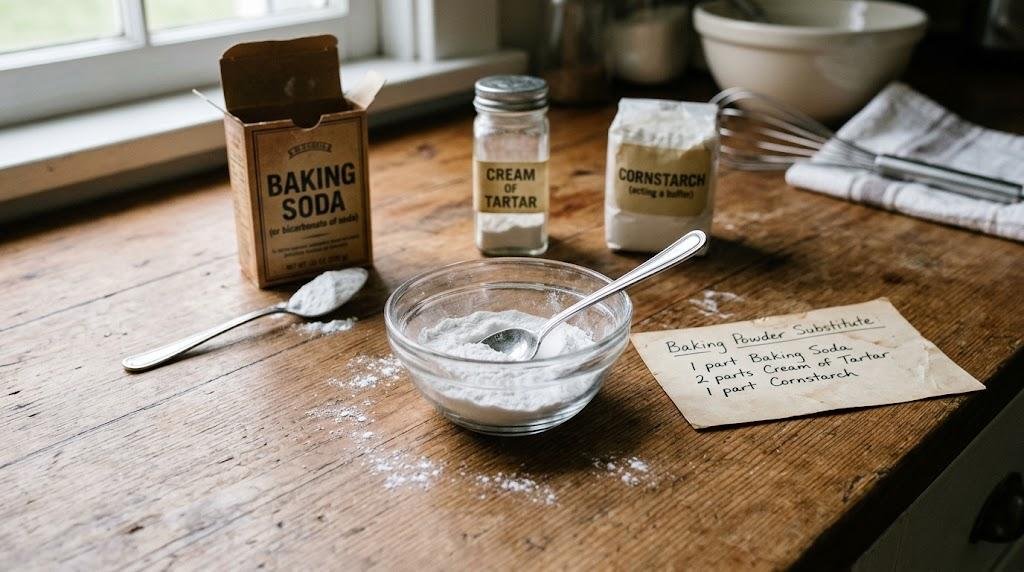

You’re halfway through mixing batter when you realize the baking powder tin is empty. Don’t panic and don’t scrap the recipe — a good baking powder substitute is probably already sitting in your kitchen. Below are the swaps that actually work, how to measure them, and when each one is the right call.
Why You Need a Baking Powder Substitute
Baking powder does one job: it releases carbon dioxide gas so your batter rises instead of sitting flat. Without it, pancakes turn dense, cakes sink, and biscuits refuse to puff. The good news is that the chemistry behind baking powder is simple enough to recreate with a couple of pantry staples. Once you understand what it’s actually doing, picking the right baking powder substitute becomes much less intimidating.
The Best Baking Powder Substitute: Baking Soda and Cream of Tartar
If you want a near-identical replacement, mix baking soda with cream of tartar. For every teaspoon of baking powder a recipe calls for, combine ¼ teaspoon of baking soda with ½ teaspoon of cream of tartar. This pairing mimics commercial baking powder almost exactly, because that’s essentially what it is — a base and an acid working together. If you’re unsure about ratios or want a deeper breakdown of how cream of tartar behaves in baking, Healthline’s guide to cream of tartar substitutes walks through the science clearly. This version of a baking powder substitute is best for recipes where flavor neutrality matters, like vanilla cakes or plain biscuits.
A Simple Baking Soda and Lemon Juice Substitute
No cream of tartar on hand? Lemon juice or vinegar can stand in as the acid instead. Use ¼ teaspoon of baking soda with ½ teaspoon of lemon juice or white vinegar per teaspoon of baking powder needed. Mix it in quickly, since the fizzing reaction starts the moment the two meet. This baking powder substitute works particularly well in recipes that already lean citrusy or tangy, such as lemon muffins or buttermilk pancakes, where a faint acidic note blends right in rather than standing out.
Using Buttermilk or Yogurt as a Baking Powder Substitute
Buttermilk and plain yogurt are both acidic enough to react with baking soda, which makes them a convenient baking powder substitute if you’re already adjusting the liquid in a recipe. Swap ½ cup of the milk in your recipe for ½ cup of buttermilk or yogurt, and replace each teaspoon of baking powder with ¼ teaspoon of baking soda. Because this changes the moisture and tang of the final batter, it works best in pancakes, cornbread, and quick breads rather than delicate sponge cakes. For readers curious about dairy-based baking swaps more broadly, our guide to common baking substitutions on this site covers a few more combinations worth trying.
Self-Rising Flour as a Quick Baking Powder Substitute
If your recipe calls for both flour and baking powder, self-rising flour solves both problems at once. It already contains baking powder and a bit of salt, so you can simply use it in place of your regular flour and skip the baking powder entirely. Just remember to leave out any added salt the recipe specifies, since self-rising flour already includes it. This isn’t a baking powder substitute you measure out separately — it’s a swap at the flour stage, which makes it one of the easiest options when you’re short on time. It’s especially handy for biscuits, scones, and simple cakes where precision matters less than convenience.
Whipped Egg Whites for Lift Without Chemical Leaveners
For recipes where a lighter, chemical-free rise is the goal, whipped egg whites folded into the batter can replace the lift that baking powder normally provides. This method won’t work for every bake, but it suits soufflés, light sponge cakes, and some pancake recipes well. It’s a slower baking powder substitute to prepare, since whipping egg whites to stiff peaks takes a few extra minutes, but the texture it creates is airy rather than dense, which some bakers actually prefer over a chemical leavener.
Tips for Using Any Baking Powder Substitute Successfully
Whichever option you choose, mix your substitute into the dry ingredients first, then combine with wet ingredients right before baking. Acids and bases start reacting on contact, so delaying the oven too long can cause your batter to lose its rise before it even bakes. Taste your batter if you can — some substitutes, like vinegar or lemon juice, can leave a faint tang if overused. Start with the smaller end of any measurement range, then adjust next time based on how the bake turned out. A reliable baking powder substitute is really about matching the right acid to the right recipe, not memorizing a single fixed formula.
Final Thoughts on Choosing a Baking Powder Substitute
Running out of baking powder doesn’t have to mean a ruined bake or a trip to the store. Baking soda paired with cream of tartar, lemon juice, buttermilk, or yogurt, along with options like self-rising flour or whipped egg whites, all give you a workable path forward. Keep a couple of these pantry staples on hand, and you’ll never have to pause a recipe halfway through again — and over time, you’ll develop a feel for which baking powder substitute suits your favorite bakes best.


