

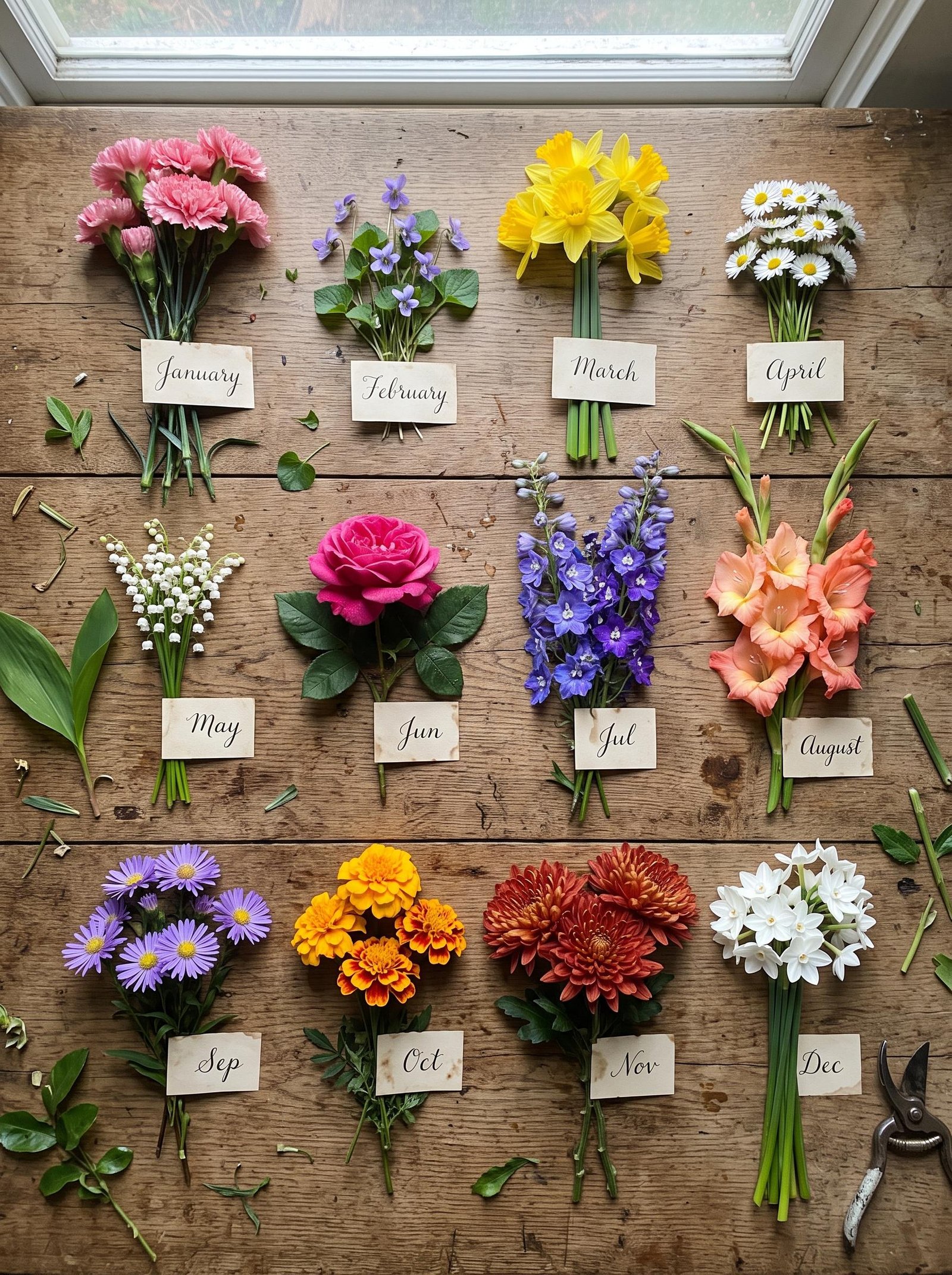

Every month of the year has a flower associated with it, much like birthstones. These month flowers carry their own history, symbolism, and emotional weight, and people have used them for centuries to mark birthdays, anniversaries, and other meaningful dates. If you’ve ever received a bouquet that felt oddly personal, there’s a good chance someone chose it based on your birth month rather than just picking whatever looked nice at the shop.
The tradition of month flowers borrows from older customs around herbalism and folklore, where certain plants were believed to reflect the character of the season they bloomed in. Over time, this evolved into the calendar of month flowers many people recognize today, similar to how the Farmers’ Almanac explains birth flower traditions in detail.
Why Month Flowers Make Thoughtful Gifts
Choosing a gift based on month flowers adds a layer of meaning that a generic bouquet simply can’t match. Instead of grabbing whatever is in season at the grocery store, you’re picking something tied directly to the recipient’s birth month, which shows a bit more thought went into it.
This is especially true for people who already love flowers or gardening. Gifting someone their month flowers, rather than an arbitrary arrangement, turns a simple present into something that feels personal and considered. It’s a small detail, but it tends to be the kind of thing people remember and mention again later.
If you run a flower shop or gift site, highlighting month flowers on product pages is also a practical way to help customers decide what to buy when they’re stuck. You can link shoppers directly to your birthday gift guide so they can browse month flowers alongside other ideas without leaving the page.
January to June Month Flowers
The first half of the year brings some of the most recognizable month flowers. January’s flower is the carnation, valued for its long vase life and association with admiration. February follows with the violet, a flower tied to loyalty and modesty. March brings the daffodil, a cheerful sign that spring is near.
April’s month flower is the daisy, often linked to innocence and new beginnings, while May claims the lily of the valley, prized for its delicate scent. June closes out the first half of the year with the rose, arguably the most famous of all month flowers and a natural choice for weddings held during the warmer months.
July to December Month Flowers
The second half of the calendar has its own set of month flowers, each with a distinct personality. July’s flower is the larkspur, known for its tall, colorful spikes. August brings the gladiolus, a flower associated with strength and remembrance. September’s month flower, the aster, symbolizes patience and a love of variety.
October claims the marigold, a bold, sun-colored bloom tied to warmth and creativity. November’s flower is the chrysanthemum, which represents joy and long life in many cultures. Finally, December rounds out the year with the narcissus, often linked to hope, making it a fitting choice for the final month flowers of the calendar.
How to Choose the Right Month Flowers
If you’re buying for someone else, the easiest approach is to look up their birth month and go from there. Most florists can arrange month flowers either on their own or mixed with complementary blooms if you want something larger or more colorful than a single variety.
It also helps to think about the occasion. A birthday might call for a bouquet built entirely around someone’s month flowers, while a sympathy arrangement might use the symbolism more subtly, pairing a single stem of the right month flowers with other traditional choices like lilies or roses.
For a deeper breakdown of symbolism by flower rather than by month, the Royal Horticultural Society’s flower meanings resource is a solid reference if you want to double-check what a specific bloom represents before you buy.
Caring for Your Month Flowers
Once you’ve got your month flowers home, a little care goes a long way toward keeping them fresh. Trim the stems at an angle before placing them in water, change the water every two days, and keep the arrangement away from direct sunlight or heat vents, which speed up wilting.
Some month flowers, like carnations and chrysanthemums, naturally last longer than more delicate varieties such as lily of the valley or violets. If you’re not sure how long a particular stem should last, it’s worth checking care instructions for that specific flower rather than assuming all month flowers behave the same way in a vase.
Whether you’re buying for yourself or someone else, month flowers offer a simple way to add meaning to an otherwise ordinary bouquet. Once you know the flower tied to a birth month, it’s hard to look at a plain arrangement the same way again.


