

Almonds Benefits: 9 Reasons to Eat This Nut Every Day

If you’ve ever grabbed a handful of almonds on your way out the door, you already know they’re satisfying. What you might not know is just how many almonds benefits are packed into that small, crunchy snack. From your heart to your skin to your energy levels, almonds benefits touch nearly every part of your body. Let’s walk through what makes this simple nut worth keeping in your pantry.
The Heart Health Almonds Benefits You Shouldn’t Ignore
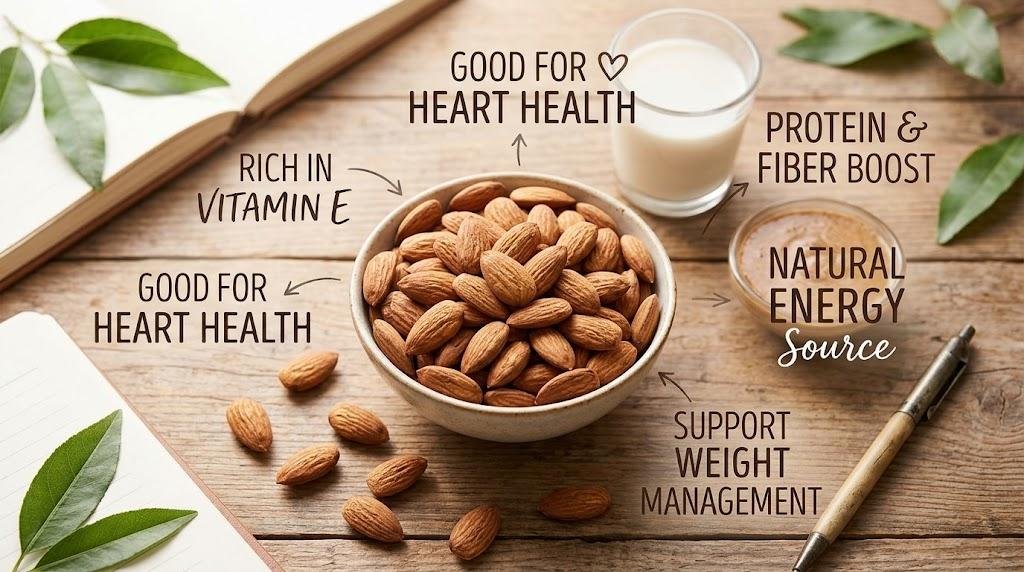
One of the most well-documented almonds benefits is their effect on heart health. Almonds are rich in monounsaturated fats, the same “good fat” found in olive oil, which can help lower LDL cholesterol while leaving the beneficial HDL cholesterol untouched. Several nutrition studies, including research summarized by Harvard T.H. Chan School of Public Health, have linked regular nut consumption to a lower risk of heart disease. A daily handful of almonds, eaten in place of less healthy snacks, is a simple habit with a real payoff for your cardiovascular system.
Weight Management and Almonds Benefits
It might seem counterintuitive, but one of the lesser-known almonds benefits is support for healthy weight management. Almonds are high in fiber and protein, two nutrients that help you feel full longer and curb mindless snacking later in the day. The fat in almonds is also partly “trapped” in the nut’s fibrous structure, meaning your body doesn’t absorb every calorie you eat. If you’re building a snack routine around whole foods, check out our guide to simple healthy snack swaps for more ideas that pair well with almonds.
Skin and Anti-Aging Almonds Benefits
Almonds are loaded with vitamin E, a powerful antioxidant, and this is where some of the most visible almonds benefits show up. Vitamin E helps protect skin cells from oxidative stress caused by sun exposure and pollution, which can slow down the visible signs of aging. Almond oil is also commonly used in skincare products for its moisturizing properties. According to Medical News Today, the vitamin E in almonds supports skin barrier function and helps retain moisture, giving skin a healthier glow over time.
Brain and Energy-Boosting Almonds Benefits
Feeling sluggish in the afternoon? One of the more practical almonds benefits is a steady, lasting energy boost without the sugar crash that comes from candy or soda. Almonds contain riboflavin and L-carnitine, two nutrients that have been studied for their role in brain health and may help reduce age-related decline in cognitive function. The combination of healthy fats, protein, and micronutrients makes almonds a smart choice when you need to stay sharp through a long workday. For more on building an energy-friendly eating pattern, see our article on all-day energy foods.
Blood Sugar Control: Another Key Almonds Benefit
People managing blood sugar levels often ask about almonds benefits specifically related to diabetes prevention and management. Almonds have a low glycemic index and contain magnesium, a mineral that plays a role in insulin sensitivity. Research published through the National Institutes of Health has suggested that regular almond consumption may help improve blood sugar control, particularly when almonds replace refined carbohydrate snacks. This makes almonds a practical choice for anyone watching their blood sugar without giving up satisfying snacks.
Bone and Muscle Support
Beyond the more commonly discussed almonds benefits, this nut also supports bone and muscle health. Almonds contain calcium, magnesium, and phosphorus, all of which contribute to bone density. The protein content also supports muscle repair, making almonds a solid post-workout snack when paired with a piece of fruit. Over time, these nutrients work together quietly in the background, supporting the structural health of your body.
How to Get the Most Almonds Benefits From Your Diet
To actually experience these almonds benefits, portion and preparation matter. A standard serving is about a small handful, roughly 23 almonds, which keeps calorie intake reasonable while still delivering the nutritional punch. Raw or dry-roasted almonds without added salt or sugar are the best option if you’re aiming for maximum health benefits. You can toss them into oatmeal, blend them into smoothies, or simply eat them on their own. If you’re looking for more whole-food recipe ideas, browse our healthy eating resource hub for inspiration.
A Simple Nut With Real Impact
At the end of the day, almonds benefits aren’t hype — they’re backed by genuine nutritional science covering heart health, skin, brain function, blood sugar, and more. Adding a small daily serving of almonds to your diet is an easy, low-effort way to support your overall wellbeing. Whether you’re snacking between meetings or topping your morning yogurt, the almonds benefits add up one handful at a time.


