

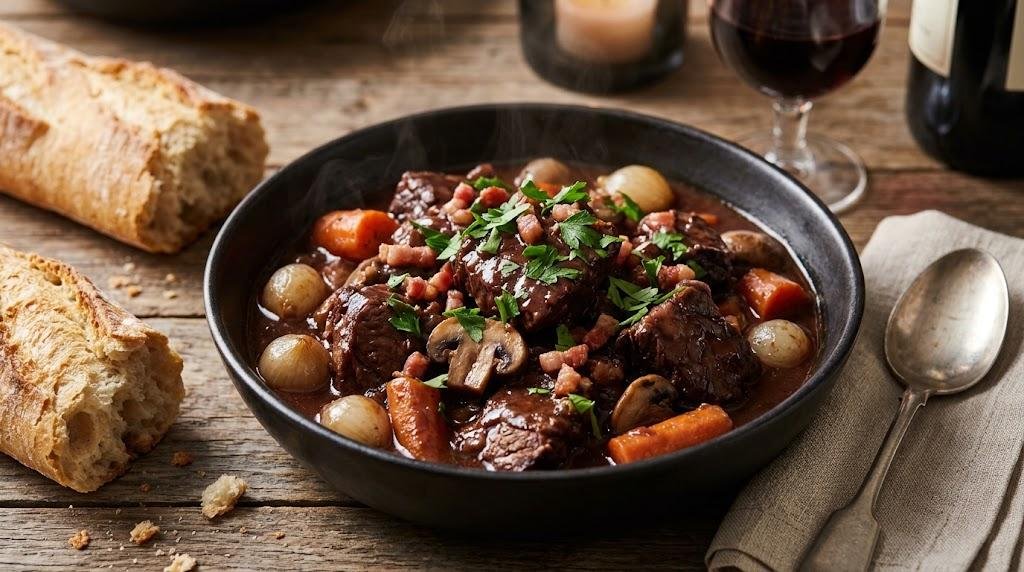

What Is Boeuf Bourguignon?
Boeuf bourguignon is a French beef stew that comes from the Burgundy region, where red wine is part of nearly everything on the table. The dish braises beef slowly in wine, broth, and herbs until the meat turns tender enough to cut with a spoon. Julia Child made boeuf bourguignon famous outside France, and home cooks have been chasing that same rich flavor ever since. If you love slow-cooked beef dishes, this one belongs at the top of your list.
Why Boeuf Bourguignon Tastes So Rich
The depth of flavor in boeuf bourguignon comes from layering steps rather than rushing them. You brown the beef first to build a crust, then cook the vegetables in the same pot to soak up those browned bits. Red wine deglazes everything and pulls the flavor together. Beef stock, tomato paste, and a bouquet of herbs round out the sauce. Patience matters more than any single ingredient here, and boeuf bourguignon rewards cooks who let it simmer undisturbed for hours.
Ingredients You’ll Need
A proper boeuf bourguignon starts with a few key players: beef chuck, bacon or pancetta, pearl onions, carrots, mushrooms, garlic, red wine, and beef stock. Chuck works best because its marbling melts into the sauce during a long braise. Choose a dry red wine like Pinot Noir or Burgundy itself, since the wine’s character carries through the final dish. Fresh thyme and a bay leaf tie the aromatics together without overpowering the beef.
How to Make Boeuf Bourguignon Step by Step
Start by patting the beef dry and searing it in batches so each piece browns properly. Crowding the pan steams the meat instead of browning it, and that step is non-negotiable for good boeuf bourguignon. Remove the beef, then cook the bacon until crisp and use the rendered fat to soften onions and carrots.
Return the beef to the pot, sprinkle in flour, and stir until coated. Pour in the wine and scrape the bottom to lift every bit of flavor stuck there. Add stock, tomato paste, garlic, and herbs, then bring everything to a gentle simmer. Cover the pot and let it cook low and slow, either on the stovetop or in the oven at a low temperature, for about three hours.
In the final thirty minutes, stir in sautéed mushrooms and pearl onions so they keep their shape. The sauce should thicken naturally and coat the back of a spoon. If it feels thin, simmer uncovered a bit longer rather than adding more flour.
Tips for Perfect Boeuf Bourguignon
Good boeuf bourguignon depends on a few small habits. Dry the beef thoroughly before searing, since wet meat won’t brown. Use a heavy pot with a tight lid, like a Dutch oven, to hold steady heat throughout the braise. Taste the sauce near the end and adjust salt only after it has reduced, because flavors concentrate as liquid evaporates.
Many cooks agree that boeuf bourguignon tastes even better the next day. The flavors settle and deepen overnight in the fridge, so making it a day ahead isn’t just convenient — it actually improves the dish. Reheat it gently on the stove rather than in the microwave to keep the beef from drying out.
What to Serve with Boeuf Bourguignon
Classic pairings keep things simple. Buttered egg noodles or creamy mashed potatoes soak up the sauce beautifully. Crusty bread works too, especially for scraping the pot clean. A simple green salad with a sharp vinaigrette balances the richness of the stew. Pour a glass of the same red wine you cooked with, since that pairing rarely misses.
For more background on the region and technique behind this dish, Le Cordon Bleu’s overview of French culinary traditions is worth a read.
Storing and Reheating Boeuf Bourguignon
Store leftover boeuf bourguignon in an airtight container in the fridge for up to four days. It also freezes well for up to three months, which makes it a smart make-ahead meal. Thaw it overnight in the fridge before reheating slowly on the stove over low heat. Add a splash of stock if the sauce has thickened too much after freezing.
Final Thoughts on Boeuf Bourguignon
Boeuf bourguignon takes time, but very little of that time is hands-on work. Most of the magic happens while the pot simmers quietly and the kitchen fills with the smell of wine and herbs. Once you’ve made it a few times, the process becomes second nature, and you’ll likely find yourself making boeuf bourguignon on repeat during the colder months.


