

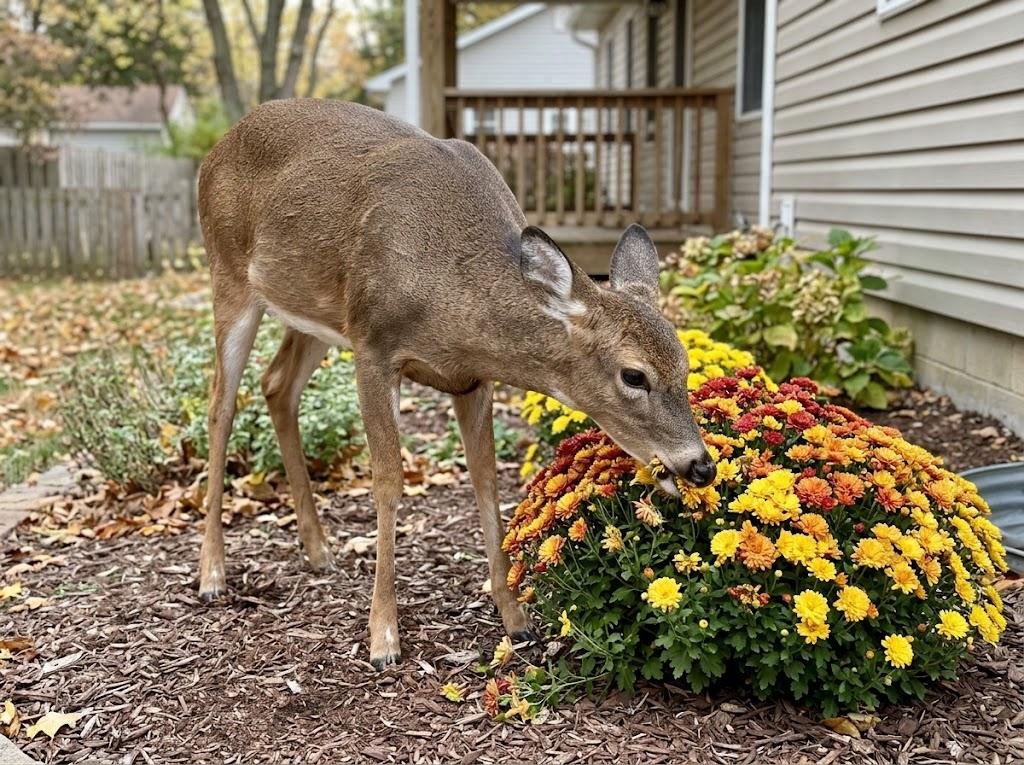

Do Deer Eat Mums? The Short Answer
If you’ve ever woken up to find your beautiful fall display chewed down to stubs, you’ve probably already asked yourself: do deer eat mums? The answer is yes. Chrysanthemums, known to most gardeners simply as mums, are not on the list of plants deer avoid. In fact, mums are one of the more commonly targeted flowers once the weather cools and other food sources start to disappear. Deer aren’t picky eaters when they’re hungry, and a fresh bed of mums right by your front porch is an easy, convenient snack.
Why Deer Find Mums Tempting
Understanding why deer eat mums helps explain why this keeps happening every autumn. Mums bloom at exactly the time of year when deer are looking for extra calories before winter. Their natural food sources, like acorns, grasses, and wild plants, start thinning out, so they turn to garden plants instead. Mums are soft, tender, and easy to reach, which makes them appealing compared to woodier or spinier plants. If you live near a wooded area or anywhere deer regularly pass through, you’re far more likely to deal with deer eating your mums than someone in a dense urban neighborhood.
Signs Deer Have Been Eating Your Mums
Before assuming deer are the culprit, it helps to know what the damage actually looks like. Deer don’t have upper front teeth, so instead of a clean cut, they tend to tear leaves and stems, leaving a jagged, ripped edge. If your mums look shredded rather than neatly clipped, that’s a strong clue deer are eating them. You might also notice damage happens mostly overnight or early in the morning, since deer are most active during those quiet hours. Hoofprints in soft soil nearby are another giveaway that deer have been visiting your garden.
How to Stop Deer From Eating Mums
Once you’ve confirmed deer are the problem, the next step is figuring out how to keep them away. Physical barriers tend to be the most reliable option. A fence at least seven feet tall can keep deer out of a garden bed entirely, though that isn’t practical for everyone. For smaller areas, netting or chicken wire placed around individual mum clusters can work just as well. If you’re short on space or don’t want to fence off your whole yard, a [placeholder: link to your guide on protecting fall flowers] can walk you through some lower-effort alternatives that still get the job done.
Timing also matters. Deer tend to establish patterns, so if you notice them visiting at a certain time, setting up deterrents right before that window can make a real difference.
Natural Deer Repellents That Work
If fencing isn’t an option, repellents are the next best line of defense. Many gardeners have success with scent-based deterrents, since deer rely heavily on smell to judge whether an area feels safe. Commercial sprays made from garlic, pepper, or predator urine can make mums less appealing without harming the plant. According to Penn State Extension, reapplying these repellents regularly, especially after rain, is key to keeping them effective. Homemade mixtures using ingredients like soap, egg, or hot pepper can offer a similar effect, though they usually need to be reapplied more often than store-bought options.
Motion-activated sprinklers or lights are another option worth trying, since the sudden movement and noise tend to startle deer away before they settle in to eat. Planting mums near stronger-smelling companion plants, like lavender or alliums, can also help mask their scent and make them less noticeable to passing deer.
Can You Still Grow Mums If You Have Deer?
A lot of gardeners assume that if deer eat mums in their area, they should give up on growing them altogether. That’s not necessary. Many people successfully grow mums every year despite having deer nearby, as long as they combine a few strategies rather than relying on just one. Pairing a physical barrier with a rotating repellent schedule tends to be far more effective than either method alone. If you want more ideas on which flowers hold up best against local wildlife, this [placeholder: link to your deer-resistant plants page] breaks down some solid alternatives and companion options to plant alongside your mums.
Final Thoughts on Do Deer Eat Mums
So, do deer eat mums? Without question, yes, and often enthusiastically. Mums are soft, flavorful, and available right when deer are searching for extra food heading into colder months. The good news is that deer damage isn’t something you have to accept as inevitable. With the right combination of barriers, repellents, and a bit of awareness about when deer are most active in your area, you can enjoy a full, colorful display of mums all season without losing them overnight. A little prevention goes a long way toward making sure your hard work in the garden actually gets to bloom.


