


Why Knowing How to Wash Lettuce Properly Matters
If you’ve ever bitten into a salad and crunched down on a bit of grit, you already know why learning how to wash lettuce correctly is worth five extra minutes. Lettuce grows close to the soil, which means dirt, sand, and sometimes tiny insects can hide between the leaves. Beyond the crunch factor, unwashed lettuce can carry bacteria from soil, water, or handling during transport. Whether you’re making a quick lunch salad or prepping a big bowl for a dinner party, washing it properly keeps your food safer and tastier.
What You Need Before You Wash Lettuce
You don’t need fancy equipment to wash lettuce well. A large bowl or clean sink, cool running water, and a salad spinner (optional but handy) are really all it takes. Some people also like a mild vegetable wash or a splash of vinegar diluted in water, though plain cool water works fine for most heads of lettuce. Having a clean kitchen towel or paper towels nearby also helps when you don’t have a spinner, since drying the leaves afterward matters just as much as the washing itself.
Step-by-Step: How to Wash Lettuce the Right Way
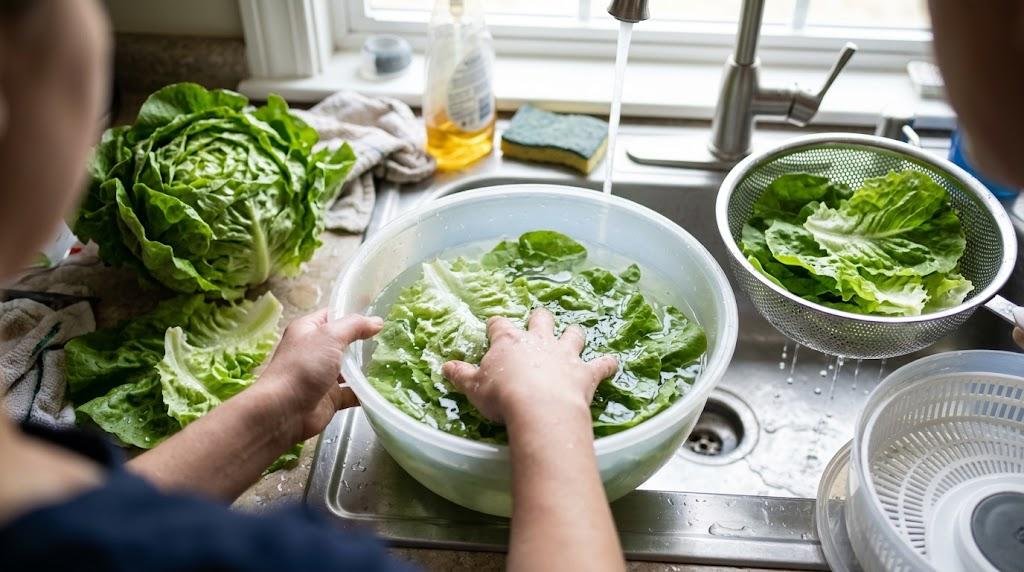
The most reliable way to wash lettuce starts with separating the leaves. Pull the lettuce apart leaf by leaf rather than washing the whole head at once — this lets water reach every hidden fold where dirt tends to collect. Next, fill a large bowl or clean sink with cool water and submerge the leaves, swishing them gently with your hands for about thirty seconds. This loosens dirt and lets it sink to the bottom instead of clinging to the leaves.
After swishing, lift the lettuce out of the water rather than draining the sink and pouring the lettuce through it — this way, any grit stays behind in the bowl instead of washing back over the leaves. If the lettuce was very dirty, repeat the process with fresh water. Once you’re confident the leaves are clean, give them a final rinse under cool running water, then dry them thoroughly in a salad spinner or by patting them with a towel. Drying matters because wet lettuce wilts faster and dressing won’t stick to damp leaves.
How to Wash Lettuce From Your Own Garden
Garden-grown lettuce usually needs a little more attention than store-bought heads, since it hasn’t gone through any commercial cleaning. When learning how to wash lettuce straight from the garden, start by shaking off loose soil outdoors before bringing it inside. Then follow the same leaf-by-leaf soak-and-swish method, but expect to repeat it two or three times. Garden lettuce can also harbor small bugs, so take a moment to check both sides of each leaf as you separate them.
How to Wash Lettuce Differently for Salads vs. Sandwiches
The way you wash lettuce can shift slightly depending on how you plan to use it. For salads, you’ll often want to tear or chop the leaves after washing and drying, since pre-cut lettuce holds onto water and gets soggy faster. For sandwiches or wraps, keep the leaves whole through the washing and drying process, then trim them to size right before assembling, so they stay crisp instead of wilting against bread or tortillas.
Common Mistakes People Make When They Wash Lettuce
One of the biggest mistakes is skipping the separation step and rinsing a whole head under the faucet — water simply can’t reach every hidden pocket of dirt that way. Another common error is skipping the drying step entirely; wet lettuce not only wilts faster, it also dilutes dressings and makes sandwiches soggy. Some people also reach for hot water, assuming it cleans better, but cool water is actually gentler on the leaves and just as effective at loosening dirt. Finally, washing lettuce too far in advance without drying and storing it properly can lead to premature wilting before you even get to eat it.
How to Store Lettuce After You Wash It
Once you’ve learned how to wash lettuce properly, storing it right keeps that effort from going to waste. Dry the leaves completely, then wrap them loosely in a paper towel and place them in a container or bag with a bit of airflow. Stored this way in the refrigerator, washed lettuce typically stays crisp for three to five days. Avoid sealing it in an airtight container while still damp, since trapped moisture speeds up wilting and spoilage. For more on keeping produce fresh longer, check out our guide to storing fruits and vegetables on the site.
Final Thoughts on How to Wash Lettuce
Learning how to wash lettuce properly is a small habit that makes a real difference — fewer gritty bites, safer meals, and lettuce that stays fresh longer in the fridge. The method is simple: separate the leaves, soak and swish in cool water, lift them out rather than draining through, and dry thoroughly before storing or serving. For more detail on general produce safety standards, the FDA’s guide to selecting and serving produce safely is a solid reference. Once this becomes routine, it takes barely any extra time — and your salads will taste noticeably better for it.


