

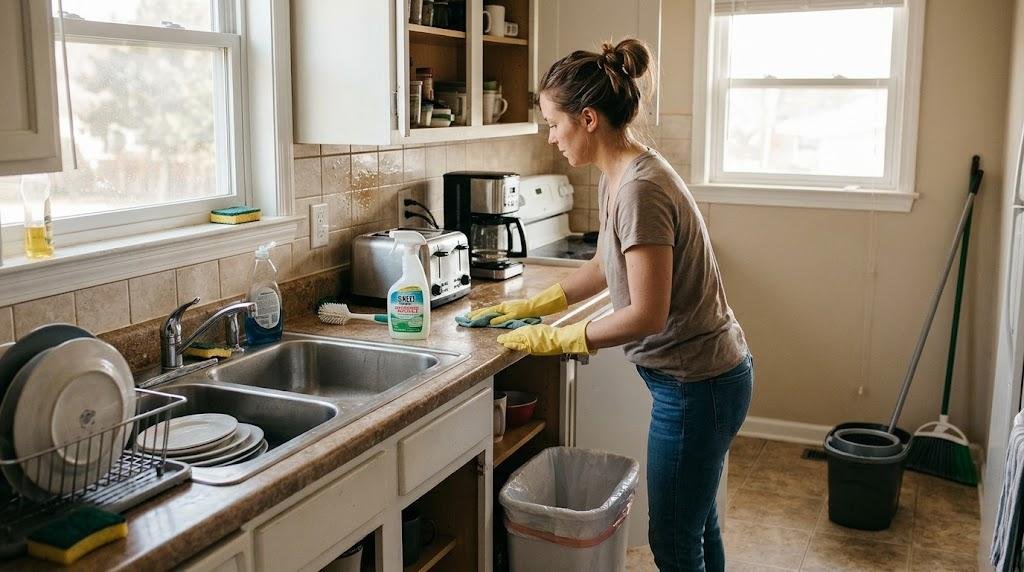

Knowing how to clean kitchen areas properly makes everyday cooking easier and your home feel more welcoming. A messy kitchen doesn’t just look bad — it can also become a breeding ground for bacteria, especially around the sink and cutting boards. This guide walks you through how to clean kitchen counters, appliances, cabinets, and floors so you always have a fresh space to cook in. If you want more cleaning routines like this one, check out our [guide to a weekly house cleaning checklist] (internal link) once you’re done here.
The good news is that learning how to clean kitchen spaces doesn’t require fancy products or hours of scrubbing. Most of the work comes down to consistency — a few minutes each day instead of one exhausting deep clean every month. According to the CDC’s food safety guidelines, regularly sanitizing kitchen surfaces is one of the simplest ways to prevent foodborne illness at home.
How to Clean Kitchen Counters and Surfaces
Counters take the most daily abuse, from flour spills to raw meat juices. Start by clearing everything off the surface, then wipe away loose crumbs with a dry cloth. Next, spray an all-purpose cleaner or a mix of water and vinegar, and let it sit for a minute before wiping it down. This is the first habit anyone learning how to clean kitchen surfaces should master, because bacteria spreads fastest on the counters you touch most often.
For stone or quartz counters, avoid harsh acidic cleaners, since they can dull the finish over time. A soft microfiber cloth with mild soap works just as well. If you’re unsure which cleaner suits your countertop material, our [countertop care and maintenance guide] (internal link) breaks down the safest options for every surface type.
How to Clean Kitchen Sink So It Shines
The sink is often the dirtiest spot in the entire house, even more than the toilet seat, according to several hygiene studies. Learning how to clean kitchen sinks properly starts with removing standing water and food debris, then scrubbing with baking soda and a bit of dish soap. Rinse thoroughly and finish with a disinfectant spray to kill lingering bacteria.
Don’t forget the faucet handles and the rim around the drain, since grime builds up quickly in those tight spaces. Doing this once a day keeps the sink smelling fresh and prevents the buildup that leads to clogged drains later on.
How to Clean Kitchen Appliances Without Damaging Them
Appliances need a slightly different approach, since each one has its own quirks. For the microwave, heat a bowl of water with lemon slices for a few minutes — the steam loosens dried food so it wipes away effortlessly. For the oven, a paste of baking soda and water left overnight works wonders on baked-on grease.
The refrigerator deserves special attention too. Take out shelves and drawers, wash them separately, and wipe the interior with a vinegar-water solution to eliminate odors. Anyone researching how to clean kitchen appliances should also remember the exterior — fingerprints and smudges on stainless steel respond well to a few drops of olive oil buffed in with a soft cloth.
How to Clean Kitchen Cabinets and Pantry Shelves
Cabinets collect dust and grease even if you rarely notice it. Wipe down the exterior doors with a damp cloth and mild soap, paying extra attention to the handles, which carry a surprising amount of bacteria. Inside, empty one shelf at a time, wipe the surface, and check for expired pantry items while you’re at it.
This part of how to clean kitchen storage areas is easy to skip, but doing it every few months prevents pests and keeps your food fresher for longer. The EPA’s guidance on safer cleaning products is a helpful resource if you want to choose cabinet cleaners that are gentler on both your home and the environment.
How to Clean Kitchen Floors the Right Way
Floors need a two-step approach: sweeping or vacuuming first, then mopping. Skipping the sweep just means you’re pushing crumbs and grit around with a wet mop, which can scratch tile or hardwood. Use a cleaner suited to your flooring material, and always dry the floor afterward to avoid streaks or water damage.
If you’re dealing with tile grout, a baking soda paste scrubbed in with an old toothbrush restores it beautifully. Mastering how to clean kitchen floors properly also means paying attention to the corners near cabinets and appliances, where spills tend to collect unnoticed.
Building a Simple Weekly Routine
Once you understand how to clean kitchen zones individually, the next step is turning it into a routine. Wipe counters and the sink daily, sweep floors every other day, and set aside twenty minutes once a week for appliances and cabinet fronts. A monthly deep clean covering the fridge interior, oven, and pantry rounds out the schedule nicely.
Writing this down on a calendar or a simple checklist app helps the habit stick. Many readers tell us that once they know how to clean kitchen spaces on a schedule, the whole task feels far less overwhelming than one big weekend cleanup.
Final Thoughts on Keeping Your Kitchen Spotless
At the end of the day, how to clean kitchen areas comes down to small, repeated habits rather than one perfect cleaning session. A quick wipe here and a sink scrub there add up to a kitchen that’s genuinely pleasant to cook in. Start with one habit from this guide today, and build the rest in over the coming weeks.


