

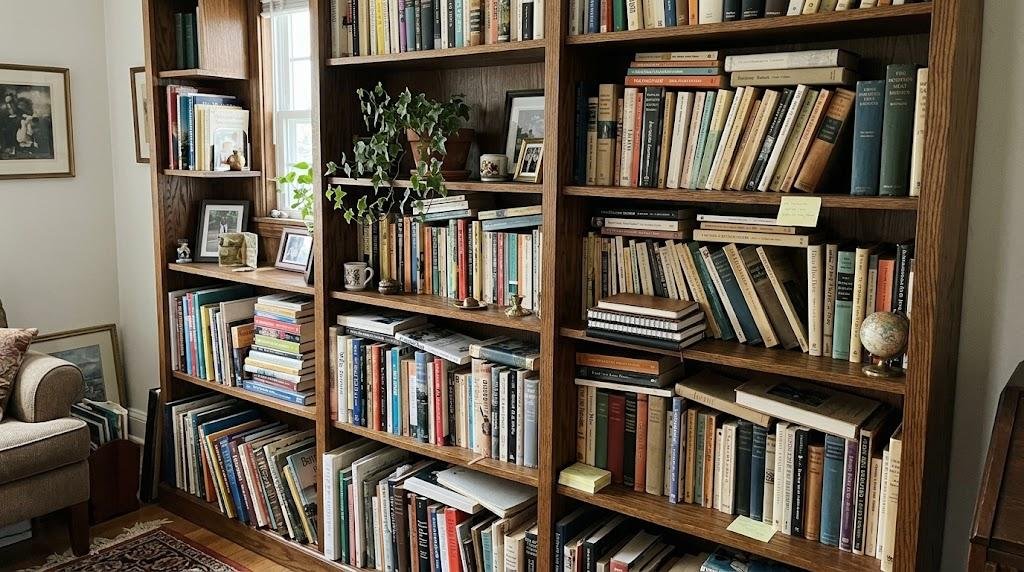

Why Your Bookshelf Says More Than You Think
A bookshelf isn’t just somewhere to dump your paperbacks. It’s one of the first things people notice when they walk into a room, and it quietly tells a story about who you are. A crowded bookshelf stuffed with dog-eared novels feels different from a minimalist bookshelf with three curated objects and a single plant. Before you buy one, it helps to think about what you actually want your bookshelf to do for you — hold books, display memories, or both.
Most people buy a bookshelf the way they buy most furniture: quickly, based on whatever fits through the door. Then six months later they’re annoyed that it’s too short, too flimsy, or clashing with everything else in the room. A little planning upfront saves you from that regret.
Measure Twice, Buy Once
This sounds obvious, but it’s the step almost everyone skips. Before you fall in love with a bookshelf online, measure the actual wall space you’re working with — width, height, and depth. Don’t forget to check the depth of your books too. Oversized art books and cookbooks often won’t fit on a shallow bookshelf, so if that’s most of your collection, look for something with at least 12 inches of shelf depth.
Also think about the ceiling height in the room. A tall bookshelf can make a small room feel more spacious by drawing the eye upward, while a low, wide bookshelf works better in a room with low ceilings or large windows you don’t want to block.
Picking Materials That Will Actually Last
Solid wood is the gold standard for a bookshelf, mostly because it doesn’t sag under the weight of a full load of hardcovers the way cheaper particleboard does over time. If you want a wood bookshelf without the full price tag, look for solid wood frames with veneer panels — a decent middle ground.
Metal bookshelves are worth considering too, especially for a more industrial or modern look. They tend to be sturdier than people expect and are a great option if you’re after an open, airy bookshelf that doesn’t visually dominate a room. If you’re curious about the structural differences between wood and metal furniture, This Old House has a solid breakdown of what to look for in durable furniture materials.
Matching Your Bookshelf to Your Space
An open bookshelf with no back panel can make a room feel bigger, since light passes through it and it doesn’t read as a solid block of furniture. This works well in smaller apartments or rooms that already feel a bit boxed in.
If you want more of a cozy, lived-in feel, a closed-back bookshelf with a few solid panels gives the room more visual weight and can anchor a space that feels too open or echoey. Corner bookshelves are another underused option — they make use of dead space that usually just collects dust, which is especially handy in smaller bedrooms or home offices.
Whatever style of bookshelf you land on, try to keep the finish consistent with at least one other major piece of furniture in the room. It doesn’t need to match exactly, but a shared wood tone or color family keeps the room from feeling thrown together.
Styling a Bookshelf So It Doesn’t Look Cluttered
This is where most people go wrong. A bookshelf packed edge-to-edge with books, no breathing room, starts to look chaotic no matter how nice the furniture itself is. A simple trick: group books by color or height on alternating shelves, and leave a few gaps for small decor pieces — a plant, a framed photo, a candle.
Stacking a few books horizontally with an object placed on top also breaks up the monotony of a wall of spines. If your bookshelf has adjustable shelves, don’t be afraid to leave one shelf mostly empty. A little negative space actually makes the rest of the bookshelf look more intentional, not less full.
If you’re working on other parts of your home at the same time, we’ve also put together a guide on [organizing small living spaces on your own site] that pairs well with picking the right bookshelf — worth a look if shelving is just one piece of a bigger room refresh.
Final Thoughts on Choosing a Bookshelf
A good bookshelf earns its place in a room instead of just filling a gap. Measure your space honestly, pick a material that will hold up to the weight of your actual collection, and resist the urge to overstuff it once it’s in place. Whether you go with a tall wood bookshelf, an open metal frame, or a compact corner unit, the right bookshelf will end up being one of the most-used pieces of furniture you own.


