

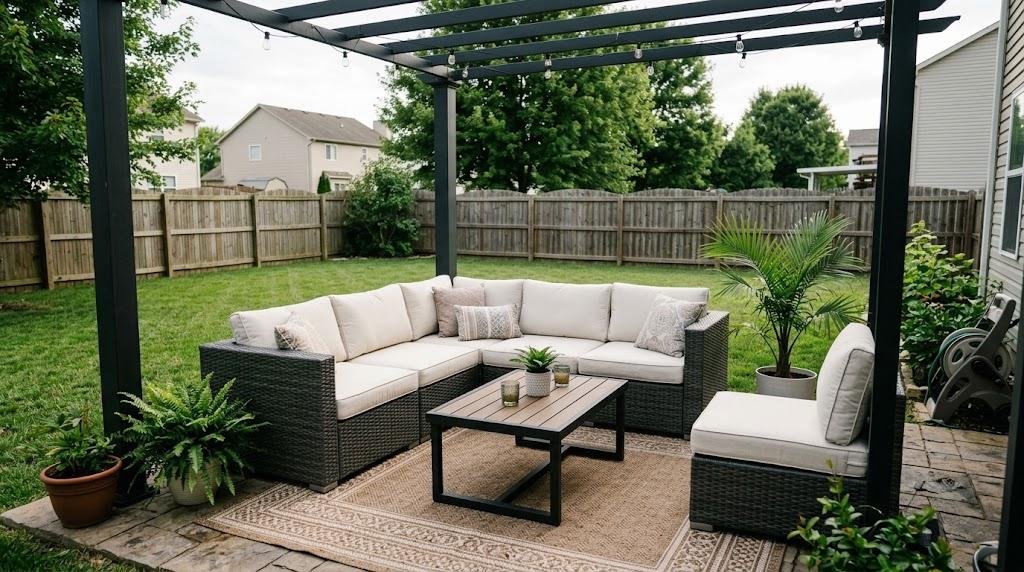

Why Patio Furniture Needs Different Rules Than Indoor Pieces
When you shop for a sofa, you’re mostly thinking about comfort and style. Patio furniture asks more of you. It has to survive sun, rain, humidity, and in some climates, frost, without falling apart after one summer. A chair that looks great in a showroom can warp, rust, or fade within months if it wasn’t built for the outdoors. Before you fall for a style, check what the piece is actually made to withstand. Our full backyard setup guide walks through climate-specific picks if you want to go deeper than this post.
Picking the Right Material for Your Patio Furniture
Material is the single biggest factor in how long patio furniture lasts. Teak and eucalyptus resist rot and insects naturally, and they age into a soft gray patina many people like. Aluminum is lightweight, won’t rust, and suits anyone who rearranges their patio often. Wrought iron is heavy and sturdy, but it needs a protective coating to avoid rust over time. Resin wicker handles rain well and mimics natural wicker without the maintenance. According to Consumer Reports’ outdoor furniture testing, materials rated for UV and moisture resistance consistently outperform untreated wood and basic metal frames in long-term durability tests. Whatever material you pick, match it to your actual climate rather than just the look.
Matching Patio Furniture to Your Space
A common mistake is buying patio furniture sized for a showroom floor rather than an actual patio. Measure your space first, then leave at least three feet of walking room around any table and chairs. For small balconies, look for folding or stackable patio furniture that can be put away when not in use. For larger patios, a sectional or a dining set can anchor the space without feeling cramped. If you’re unsure how to lay things out, our small-space patio layout ideas has sketches for balconies under 100 square feet.
Comfort Still Matters With Patio Furniture
Durability shouldn’t come at the cost of comfort. Cushions made with solution-dyed acrylic fabric resist fading and mildew far better than standard cotton blends, and quick-dry foam means you’re not sitting in a puddle after a rain shower. Deep-seated lounge chairs and sofas tend to get used more than upright dining chairs, so if lounging is the goal, prioritize seat depth and back angle when you’re choosing patio furniture. Don’t assume a cushion is weatherproof just because it’s sold alongside outdoor pieces — check the fabric label specifically.
Maintenance: The Part People Skip With Patio Furniture
Even the best patio furniture needs some upkeep. Wipe down metal frames after heavy rain to prevent water spots and corrosion. Wood pieces benefit from an annual oil treatment to stop cracking and graying, unless you prefer the weathered look. Store cushions indoors or in a weatherproof box during winter or extended rain, since prolonged moisture is what actually ruins most outdoor fabric. A little routine care adds years to a set that would otherwise need replacing every couple of seasons.
Budgeting for Patio Furniture Without Overspending
Patio furniture spans a huge price range, and the most expensive option isn’t always the smartest buy. A mid-range aluminum set with quality cushions often outlasts a cheap wood set that looked similar in photos. Instead of buying an entire matching set at once, consider starting with the pieces you’ll use most, like a dining set or a single lounge chair, and building out from there. Watch for end-of-season sales, which is typically when retailers discount patio furniture to clear inventory before fall.
Final Thoughts on Choosing Patio Furniture
The right patio furniture comes down to matching material, size, and comfort to how you actually use your outdoor space. Spend a little extra time checking construction and fabric quality before you buy, and your patio furniture should serve you well for years rather than needing a replacement every season.


