


Why your coffee table matters more than you think
A coffee table isn’t just a surface for your mug and the remote. It’s usually the piece your eyes land on first when you walk into a living room, and it quietly sets the tone for everything around it. Get the wrong coffee table and the room feels cramped or oddly empty. Get the right one, and suddenly the sofa, the rug, and the chairs all seem to click into place. If you’re furnishing a new space or just tired of bumping your shins on the current one, it’s worth slowing down and thinking this choice through properly.
Start with size, not style
Most people shop for a coffee table the way they shop for a lamp — they fall in love with a look first and worry about fit later. That’s backwards. Before you consider finishes or shapes, measure your space. A general rule is to leave at least 30 centimetres (about a foot) of walking room between the table and the sofa, so you’re not squeezing past it every time you sit down. The table’s height should roughly match the height of your sofa seat, give or take a few centimetres, so drinks and books sit within easy reach rather than up near your knees or down near the floor. A coffee table that looks great in a showroom can feel completely wrong once it’s wedged into your actual living room, so bring a tape measure before you bring your credit card.
Match the shape to how you actually live
Coffee tables come in rectangles, squares, ovals, and circles, and each shape works better for certain rooms and routines. A rectangular coffee table suits a long sofa and gives you plenty of surface area for trays, remotes, and the occasional laptop. A round or oval coffee table softens a room with a lot of straight lines and is a safer pick if you have young kids, since there are no sharp corners to collide with. Square coffee tables work well in front of sectional sofas or in square-shaped rooms where symmetry matters. If you entertain often, a slightly larger coffee table with room for snacks and drinks will serve you better than a small, purely decorative one.
Pick a material that fits your lifestyle
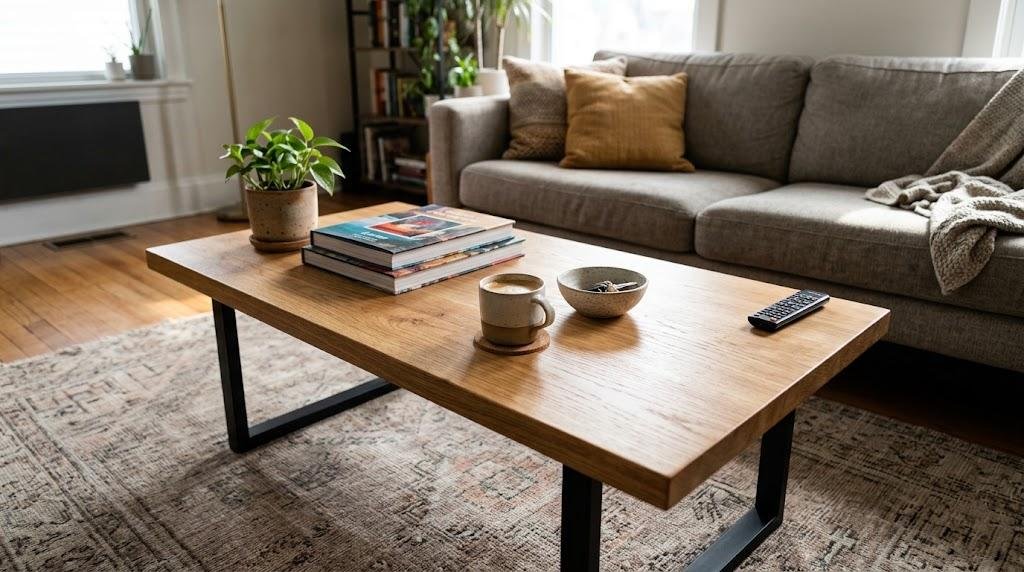
Wood is the classic choice for a coffee table, and it’s forgiving, warm, and easy to match with other furniture, though solid wood can scratch and needs the occasional polish. Glass-topped coffee tables make a small room feel more open because they don’t visually “weigh down” the space, but they show fingerprints and smudges fast, so they’re not the best fit for households with toddlers or very active pets. Metal and stone coffee tables lean more industrial or modern and tend to be the most durable option, though they can feel cold or heavy in a cozy, traditional room. There’s no universally “best” material — it depends on how hard the table will actually be used day to day.
Think about storage before you buy
If your living room doubles as a catch-all for remotes, chargers, magazines, and toys, a coffee table with a shelf, drawer, or lift-top surface earns its keep fast. A lift-top coffee table is especially handy if you eat meals or work from the sofa, since it raises up to a more comfortable working height without needing a separate desk. Open shelving underneath is great for storing baskets or books, but it does mean everything stored there is on display, so it’s not ideal if you’re not naturally tidy. A coffee table with hidden storage, like a drawer or a hinged top, keeps the surface clear while tucking clutter out of sight.
Don’t forget how it will be styled
Once the practical decisions are made, it’s worth picturing how you’ll actually style the coffee table day to day. A coffee table that’s too small will look cluttered the moment you add a tray, a candle, and a stack of books. One that’s too large can swallow up decor and leave the room looking unfinished. A good trick is to leave roughly a third of the surface empty, so the table has breathing room even when you’re using it for drinks or a laptop. According to The Spruce’s guide to coffee table styling, grouping items in odd numbers and varying their heights makes even a simple coffee table look intentional rather than accidental.
The bottom line
Choosing a coffee table is really a handful of small decisions — size, shape, material, and storage — that add up to how comfortable and pulled-together your living room feels. Take the time to measure your space, think honestly about how you live day to day, and resist buying the first coffee table that catches your eye online. A coffee table you’ve chosen carefully will earn its place in the room for years, rather than becoming the piece you regret within a few months.
If you’re also refreshing other parts of your living room, take a look at our living room furniture guide for more tips on pulling the whole space together.


