

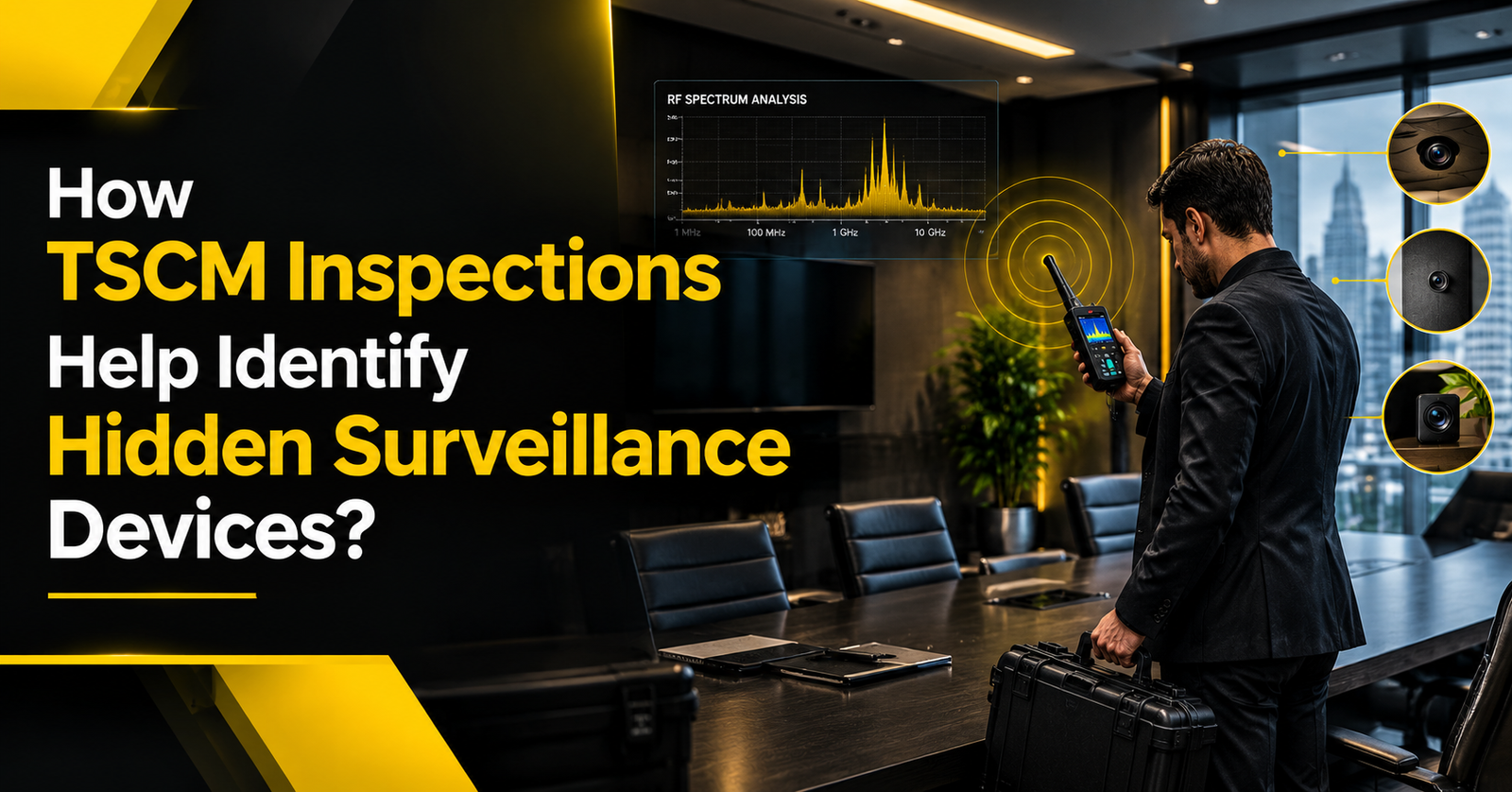

Privacy is an important consideration in residential, corporate, and professional environments. Whether it involves confidential business discussions, private meetings, sensitive negotiations, or personal spaces, the possibility of unauthorized electronic surveillance can raise serious concerns.
Hidden cameras, listening devices, wireless transmitters, and unauthorized tracking equipment are among the technologies that may be used to monitor activities without appropriate consent. Identifying such equipment is not always straightforward, particularly when devices are small, discreetly installed, or designed to operate without attracting attention.
This is where Technical Surveillance Countermeasures (TSCM) inspections become relevant. TSCM involves a systematic approach to identifying potential electronic surveillance threats through specialized detection equipment, technical assessment, and physical inspection methods.
For individuals and organizations seeking professional debugging and bug-sweeping services in Mumbai, understanding how TSCM inspections work can help them make informed decisions about privacy assessments.
What Is a TSCM Inspection?
Technical Surveillance Countermeasures, commonly known as TSCM, refers to professional technical inspections designed to identify potential surveillance devices and electronic monitoring threats.
Unlike a basic visual check, a professional TSCM inspection combines appropriate technical equipment with systematic examination of the environment.
Depending on the location and assessment requirements, an inspection may focus on:
- Hidden cameras and unauthorized video-recording equipment.
- Concealed microphones and listening devices.
- Wireless audio and video transmitters.
- Suspicious electronic equipment or unexplained installations.
- Unauthorized GPS tracking devices.
- Potential electronic monitoring vulnerabilities.
The purpose is to identify relevant indicators, investigate suspicious findings, and assess whether potential surveillance equipment is present.
It is important to understand that no single detection method can identify every possible device. Inspection techniques must be selected according to the suspected technology and environment.
- Identifying Hidden Cameras Through Physical and Technical Inspection
Hidden cameras can be installed in different objects, fixtures, and electronic equipment. Some may transmit footage wirelessly, while others may store recordings locally.
A professional inspection may involve examining areas where recording equipment could reasonably be concealed.
This can include:
- Electrical fittings and fixtures.
- Decorative objects and furnishings.
- Electronic appliances and equipment.
- Unusual or unexplained installations.
- Objects positioned with an unusual viewing angle.
Specialized optical inspection tools and appropriate electronic detection equipment may also be used, depending on the suspected camera technology.
The objective is not simply to locate unusual objects but to assess whether any equipment or installation presents a credible indication of unauthorized recording.
- Detecting Listening Devices and Hidden Audio Equipment
Listening devices can create significant privacy concerns in boardrooms, executive offices, meeting rooms, and residential environments.
Some devices may transmit audio signals, while others may record information locally for later retrieval. These differences influence how an inspection should be conducted.
Professional TSCM inspections may incorporate:
RF Signal Analysis: Radio frequency analysis can help identify unusual or unexplained transmissions within relevant frequency ranges.
Physical Inspection: A systematic examination of accessible areas and equipment may help identify suspicious electronic components or installations.
Electronic Assessment: Appropriate technical instruments can assist in evaluating suspected electronic devices and potential surveillance indicators.
Combining technical analysis with physical inspection is important because not all listening devices transmit continuously or use conventional wireless frequencies.
- Understanding the Role of RF Spectrum Analyzers
RF analysis is an important component of many professional TSCM inspections.
Radio frequency spectrum analyzers help specialists observe signals across selected frequency ranges and assess unusual transmission activity.
During an inspection, specialists may examine:
- Unexplained RF signal activity.
- Unusual transmission patterns.
- Signals requiring further technical assessment.
- Potential wireless audio or video transmission sources.
- Changes in the RF environment that warrant investigation.
However, the presence of an RF signal does not automatically indicate surveillance. Wi-Fi networks, Bluetooth devices, mobile phones, and other everyday electronics also generate radio frequency activity.
Professional interpretation is therefore essential. The objective is to distinguish ordinary electronic activity from signals that may require further examination.
- Inspecting Vehicles for Unauthorized Tracking Devices
Vehicle privacy is another area where professional debugging and inspection services may be relevant.
Unauthorized GPS trackers or electronic monitoring equipment can raise concerns about location privacy and movement monitoring.
A professional vehicle inspection may involve examining accessible areas, electrical installations, and other suitable locations where tracking equipment could potentially be placed.
Depending on the suspected device, appropriate electronic detection methods may also be considered.
It is important to recognize that different tracking technologies operate differently. Some use cellular connectivity, others rely on different communication methods, and certain devices may store location information locally.
Consequently, vehicle debugging requires an appropriate inspection strategy rather than relying on a single detection instrument.
- Why Physical Inspection Alone May Not Be Enough
A common misconception is that hidden surveillance devices can always be identified through a simple visual examination.
Although physical inspection is valuable, some electronic devices may be concealed within existing equipment or may not be actively transmitting during the inspection.
Similarly, electronic detection equipment has technical limitations and may not identify every type of device.
A comprehensive TSCM approach may therefore combine:
- Systematic physical examination.
- RF spectrum analysis.
- Appropriate electronic detection instruments.
- Assessment of suspicious installations.
- Technical evaluation of relevant findings.
- Documented inspection observations.
The combination of these methods provides a more informed assessment than depending on visual checks or consumer-grade detection gadgets alone.
- Which Locations May Benefit from TSCM Inspections?
Different environments have different privacy requirements. Professional TSCM assessments may be considered for locations where confidential conversations, sensitive information, or personal activities take place.
Common inspection environments include:
Corporate Offices: Executive offices, conference rooms, boardrooms, and areas used for confidential business discussions.
Residential Properties: Bedrooms, living areas, private offices, and other personal spaces where specific privacy concerns have arisen.
Hotels and Guest Accommodation: Temporary accommodation where guests have reasonable concerns about unauthorized recording devices.
Vehicles: Cars and other vehicles where there are specific concerns about unauthorized tracking or electronic monitoring.
Commercial Premises: Sensitive operational areas where confidential discussions or business information require appropriate privacy assessments.
The scope and methods of an inspection should always reflect the location, the client's concerns, and the relevant technical requirements.
- Why Professional TSCM Expertise Matters
Choosing a professional TSCM service provider involves more than purchasing or using electronic detection equipment.
The quality of an inspection depends on the investigator's technical understanding, familiarity with different surveillance technologies, appropriate equipment selection, and ability to interpret findings.
Consider these factors when selecting a professional debugging and bug-sweeping agency:
- Relevant Experience: Understanding of electronic surveillance technologies and inspection requirements.
- Suitable Equipment: Access to appropriate technical instruments for the assignment.
- Systematic Methodology: A structured inspection process rather than random checking.
- Discretion: Responsible handling of sensitive locations and client information.
- Clear Documentation: Organized reporting of observations, findings, and limitations.
- Professional Conduct: Investigations conducted within applicable legal and ethical boundaries.
A credible service provider should also explain what an inspection can establish and where technical limitations may exist.
Professional TSCM and Debugging Services in Mumbai by Spy Detective Agency
For individuals, businesses, and organizations concerned about potential electronic surveillance, professional inspection can provide a more structured way to assess privacy-related risks.
Spy Detective Agency offers professional debugging and bug-sweeping services in Mumbai, focusing on the technical inspection of environments where unauthorized surveillance may be a concern.
The inspection approach may involve suitable detection instruments, physical examination, RF signal analysis, and other relevant TSCM techniques, depending on the assignment.
Services may be relevant for:
- Residential bug sweeping and privacy inspections.
- Corporate office and boardroom TSCM inspections.
- Hidden camera detection assessments.
- Listening device detection.
- Vehicle debugging and GPS tracker inspections.
- Electronic surveillance detection and technical privacy assessments.
Each assignment should be evaluated according to its specific requirements. The objective is to identify potential surveillance indicators, assess relevant findings, and provide clients with a clearer understanding of their privacy concerns.
Confidentiality, discretion, appropriate inspection methods, and clear communication remain important considerations throughout the process.
Conclusion: Take a Professional Approach to Electronic Privacy
Hidden surveillance devices are not always easy to identify through ordinary observation. Different technologies require different inspection methods, and effective detection depends on understanding how those technologies operate.
TSCM inspections bring together technical equipment, systematic physical examination, RF analysis, and professional assessment to identify potential electronic surveillance concerns.
For businesses handling confidential information and individuals concerned about personal privacy, professional debugging and bug-sweeping inspections can be an important consideration.
Rather than relying entirely on assumptions or basic detection gadgets, consider a structured technical assessment from an experienced service provider.
Have Concerns About Electronic Surveillance?
Take a proactive approach to privacy with professional TSCM, debugging, and bug-sweeping services from Us.


