

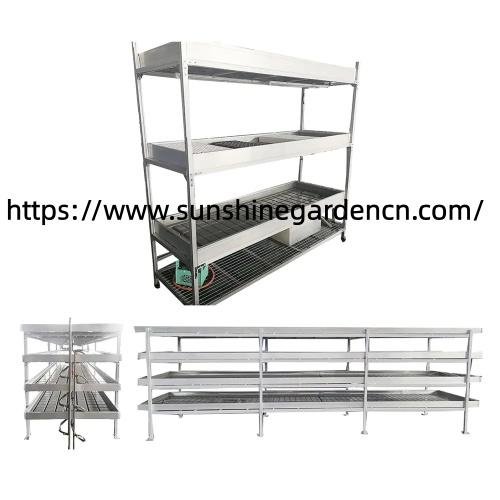

Rolling Tray systems have become an interesting subject for greenhouse operators looking to improve workspace organization and daily cultivation routines. As commercial nurseries expand their planting activities, managing available floor space becomes an important part of facility planning. Fixed cultivation surfaces may limit access in certain layouts, while movable structures offer another approach to arranging plants and organizing working areas. Understanding their design and practical applications can help buyers make informed purchasing decisions.
A greenhouse is a working environment where many activities happen simultaneously. Employees may need to water plants, inspect leaves, move containers, remove growing media, and prepare seedlings for transplanting. When planting areas are difficult to access, these routine tasks can become less convenient. A flexible arrangement allows operators to consider how different sections can be reached and maintained throughout the working day.
One interesting aspect of movable cultivation equipment is its influence on space utilization. Traditional greenhouse layouts often include permanent aisles between planting sections. These pathways provide access but also occupy valuable floor area. Depending on the facility design, movable structures may allow operators to adjust working positions and organize access routes according to their operational needs. This approach can be particularly useful for nurseries handling different plant varieties or changing production schedules.
Material selection deserves careful attention during purchasing. The supporting frame and planting surface may use different materials according to their intended functions. Aluminum structures are commonly considered for their lightweight characteristics and resistance to corrosion. Steel components may be selected where a different structural arrangement is required. Plastic surfaces can offer practical cleaning characteristics and accommodate drainage designs. Buyers should examine the material combination rather than judging each component separately.
The construction of the moving mechanism is another important consideration. Wheels, tracks, connecting parts, and supporting sections work together to determine how the structure moves. Their arrangement should correspond with the greenhouse floor and the expected working conditions. Buyers should consider whether the movement is smooth, whether the structure remains stable during use, and whether routine inspection can be carried out conveniently.
Drainage is equally relevant in cultivation environments. Water from irrigation activities may collect on planting surfaces if the design does not provide suitable drainage arrangements. A properly considered surface structure can help guide excess water toward designated outlets. This is useful for facilities that follow organized watering routines or use hydroponic cultivation methods. Before purchasing, growers should confirm that the drainage design matches their irrigation approach.
Another factor that influences everyday use is the accessibility of plants. Greenhouse workers need sufficient room to inspect foliage, remove damaged leaves, check growing media, and carry out routine maintenance. A movable arrangement can provide access to different sections without requiring workers to reach across an entire planting area. This can make daily operations easier to organize, particularly in facilities where planting density and workflow change over time.
Cleaning and maintenance should also be included in the purchasing process. Moisture, fertilizer residue, dust, and growing media can gradually accumulate around equipment. Surfaces that are easy to clean can simplify routine maintenance, while accessible mechanical components make inspection more convenient. Buyers should ask about cleaning recommendations and the maintenance requirements of moving parts before selecting a suitable product.
Customization is another consideration for commercial greenhouse projects. Different facilities may have different floor arrangements, planting methods, and working preferences. Some buyers may need specific frame structures, surface materials, drainage positions, or movement configurations. Communicating these requirements with a manufacturer before production can help ensure that the proposed arrangement matches the intended application.
Sunshine focuses on greenhouse and hydroponic cultivation equipment, offering movable growing systems and related products for different horticultural environments. Its product range can support nurseries and commercial growers planning changes to their workspace arrangements. Buyers can discuss structural preferences, material choices, drainage requirements, and installation conditions according to their individual projects.
The decision to introduce movable cultivation equipment should be based on the actual workflow of the greenhouse. Floor organization, plant accessibility, material characteristics, drainage, and maintenance all deserve attention. A suitable arrangement can help operators manage their working environment while accommodating changing cultivation activities. For distributors, greenhouse contractors, and nursery operators considering equipment for upcoming projects, Sunshine provides related product options and sourcing support. Visit https://www.sunshinegardencn.com/product/ to review the available product categories and consider suitable solutions for your greenhouse requirements.


