

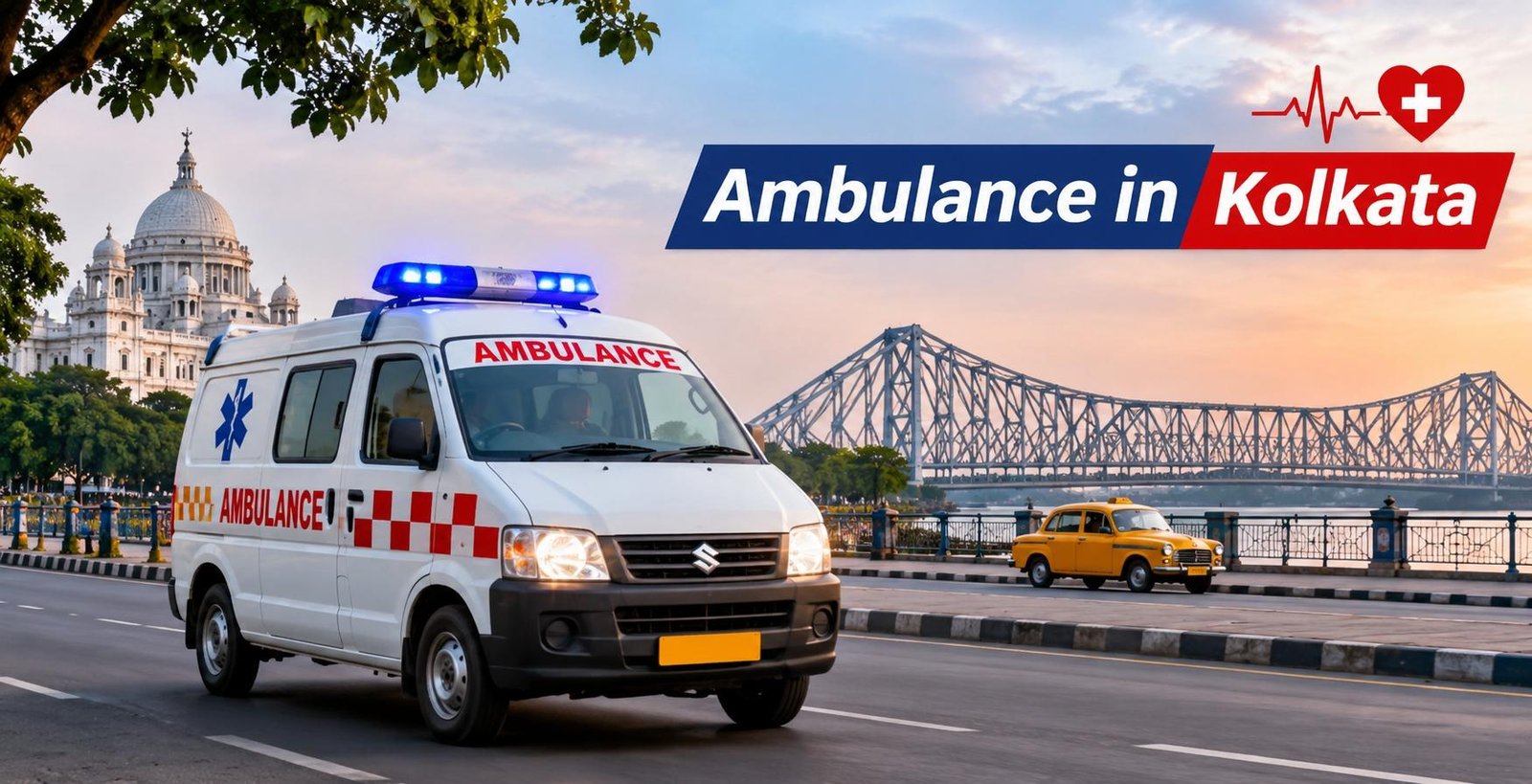
Why Keeping an Emergency Ambulance Number Is Important for Kolkata Families

Medical emergencies can happen without warning, whether at home, on the road, or while travelling. During such situations, families often have very little time to arrange medical assistance and transportation. Searching for an ambulance contact while managing a patient's condition can create unnecessary stress and delays. Keeping an emergency ambulance number Kolkata families can access quickly is therefore an important part of household emergency preparation.
Having reliable emergency contact details saved in advance helps family members know whom to contact when urgent transportation is needed. It is particularly useful for households with elderly people, children, patients with limited mobility, or family members who may need regular hospital visits.
1. Why Every Family Should Keep an Ambulance Number
During a medical emergency, family members may become anxious and struggle to make quick decisions. Searching online for an ambulance provider, checking phone numbers, and comparing transportation options can take valuable time.
Keeping an ambulance helpline number readily available makes it easier to contact the appropriate service without starting the search from the beginning.
An emergency ambulance contact can be useful when:
- Someone experiences a sudden medical emergency at home.
- A patient needs urgent hospital transportation.
- An elderly family member requires medical assistance.
- A road accident results in an injured person needing transportation.
- A patient needs to be shifted between hospitals.
- A medical condition suddenly becomes worse.
Families should understand that an ambulance number is only one part of emergency preparation. Knowing the patient's medical history, nearby hospital options, and basic emergency information is also helpful.
2. Know Which Emergency Numbers to Contact in Kolkata
Families should save official emergency numbers as well as verified contact details of suitable local ambulance providers.
Some important numbers listed by government sources include:
|
Emergency service |
Contact number |
|
Integrated emergency response (police, fire and health services) |
112 |
|
National Ambulance Service |
102 |
India's official emergency response system uses 112 as an integrated emergency number. The Government of India's helpline directory also lists 102 for the National Ambulance Service. Availability and the exact ambulance arrangements may vary by location and service. <Cite refs={["turn211993search0","turn211993search2","turn211993search1"]}/>
For a serious or life-threatening emergency, families can call 112 and explain that medical assistance or an ambulance is required. They should also keep verified local ambulance provider numbers available for planned patient transfers and other transportation needs.
Do not depend on an old number found in an outdated online directory. Check contact details through official sources or directly with the service provider.
3. Why Quick Access to an Emergency Ambulance Matters
When someone develops a serious medical problem, arranging appropriate medical assistance promptly is important. Delays caused by searching for contact details or repeatedly calling unverified numbers can make an already difficult situation more stressful.
A saved emergency ambulance number Kolkata residents can access quickly helps families begin the process of requesting assistance without unnecessary searching.
Quick access can be particularly useful during:
- Sudden chest pain or breathing difficulties.
- Serious falls or injuries.
- Road accidents.
- Loss of consciousness.
- Sudden deterioration in an existing medical condition.
These symptoms may require immediate medical attention. Families should contact emergency services promptly rather than waiting to see whether the condition improves.
4. Keep a 24-Hour Ambulance Contact Available
Medical emergencies are not limited to daytime hours. A patient may need transportation late at night, early in the morning, or during holidays.
Keeping a verified 24 hour ambulance contact can help families arrange transportation outside regular working hours.
However, 24-hour booking availability does not guarantee that every ambulance category will be immediately available at every location. Arrival time can depend on vehicle availability, distance, traffic, and the type of medical support required.
Before saving a private provider's number, confirm:
- Whether calls are accepted throughout the day and night.
- Which areas of Kolkata are covered.
- What ambulance categories are available.
- Whether emergency and planned bookings are accepted.
- Whether medical equipment and staff can be arranged when required.
Having these details ready makes it easier to understand the available options during an emergency.
5. Save More Than One Emergency Contact
Depending on a single phone number may not be practical in every situation. A number may be unreachable, a particular vehicle may be unavailable, or the required ambulance category may not be accessible at that time.
Families should maintain a small, organised list of emergency contacts.
Consider saving:
- Official emergency response number.
- National ambulance service number.
- Verified local ambulance provider.
- Nearest hospital emergency department.
- Treating doctor's contact details, where appropriate.
- A family member responsible for coordinating emergencies.
Keep this information on more than one accessible phone when possible. A printed copy near the home telephone or in a commonly used family area can also help when a mobile phone is unavailable.
6. Understand What Information to Share When Calling
Having an ambulance number is useful, but providing accurate information during the call is equally important. Clear communication helps the service understand the situation and identify the appropriate response.
When calling an ambulance helpline number or provider, be prepared to share:
- Exact pickup address.
- Nearby landmark or building name.
- Patient's age.
- Current symptoms or medical condition.
- Whether the patient is conscious and responsive.
- Whether the patient can walk or needs stretcher assistance.
- Any known oxygen or medical support requirements.
- Destination hospital, if already decided.
- A reachable contact number.
Speak clearly and answer the operator's questions. If the patient is in a building with stairs, restricted entry, or limited parking, mention this during the call.
Do not guess or exaggerate the patient's medical condition. Accurate information helps the ambulance team understand the transportation requirements.
7. Choose the Ambulance According to the Patient's Needs
Not every medical situation requires the same type of ambulance. Families should understand the basic differences before an emergency occurs.
Basic Life Support (BLS) Ambulance
A BLS ambulance may be suitable for patients who need basic medical assistance during transportation but do not require advanced critical-care support.
Advanced Life Support (ALS) Ambulance
An ALS ambulance may be considered when a patient needs a higher level of medical monitoring or support during the journey.
ICU Ambulance
An ICU ambulance may be required for patients who need specialised critical-care support, such as continuous monitoring or respiratory assistance, depending on their condition.
The treating doctor should help determine the appropriate ambulance category. Families should confirm the actual equipment and medical personnel available in the vehicle rather than relying only on its name.
8. Keep Emergency Contact Details Updated
Saving a phone number once is not enough. Contact details can change, services may update their booking arrangements, and private providers may change their operating areas.
Families should review their emergency contact list periodically.
Useful steps include:
- Calling saved private provider numbers occasionally to verify them.
- Removing duplicate or outdated contacts.
- Checking official government emergency information.
- Updating hospital and doctor contact details when necessary.
- Sharing the updated list with other household members.
It is also useful to label contacts clearly, such as Emergency 112, Ambulance 102, Local Ambulance, and Nearest Hospital. Clear labels make important numbers easier to identify under pressure.
9. Prepare Elderly People and Children for Emergencies
Every household member should know where emergency contact details are stored. This is especially important when elderly family members live alone or children may need to seek help while another adult is unavailable.
Families can prepare by:
- Keeping important numbers in an accessible location.
- Teaching older children how to contact emergency services.
- Explaining the home address and nearby landmarks.
- Keeping medical documents organised.
- Informing trusted relatives or neighbours about emergency arrangements.
For elderly patients and people with existing medical needs, maintaining a short summary of important medical information can also help during an emergency call.
10. Create a Simple Family Emergency Plan
A basic emergency plan helps everyone understand what to do when a medical problem occurs.
Decide who will contact emergency services, who will stay with the patient, and who will collect medical documents. Keep the patient's prescriptions, recent reports, and hospital details in an organised place.
During an emergency, follow the instructions given by the emergency operator or medical professionals. Do not move a seriously injured person unless there is an immediate danger or emergency personnel instruct you to do so.
For severe or rapidly worsening symptoms, do not delay emergency medical assistance while searching for a preferred private provider or comparing prices.
Conclusion
Keeping an emergency ambulance number Kolkata families can access quickly is a simple but important step towards better emergency preparation. It helps reduce the time spent searching for contact details and makes it easier to request medical transportation when an urgent situation occurs.
Families should save official emergency numbers, maintain verified local ambulance contacts, keep their emergency contact details updated, and understand how to communicate patient information during a call. Preparing these details in advance can make emergency coordination more organised and help families respond with greater confidence when medical assistance is needed.


