

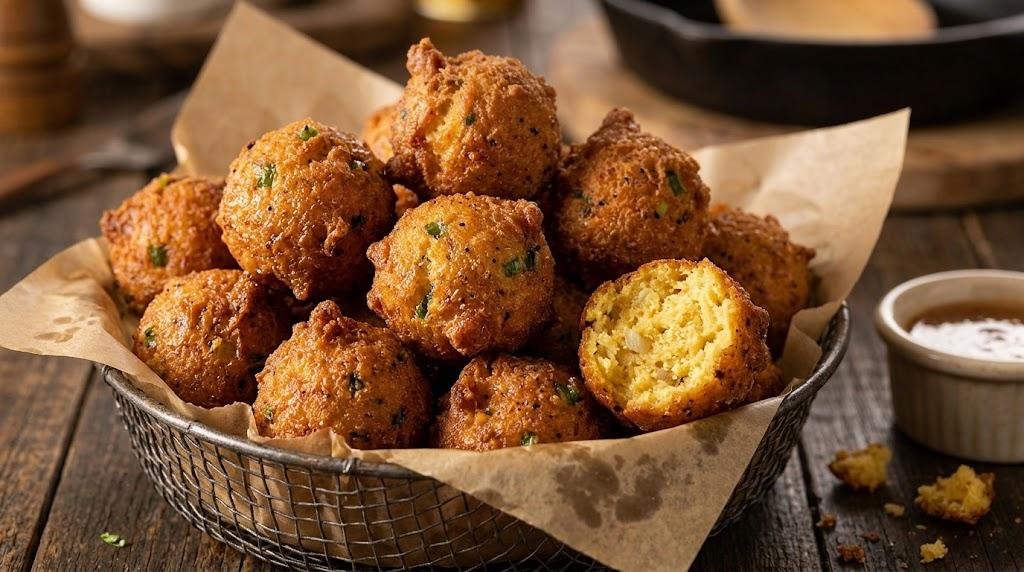

What Are Hush Puppies?
Hush puppies are small, golden balls of fried cornmeal batter, crisp on the outside and soft in the middle. They sit somewhere between a dinner roll and a fritter, and they show up most often alongside fried fish or barbecue. If you grew up anywhere near the American South, hush puppies probably feel like a familiar face at the dinner table. For everyone else, they’re an easy dish to fall in love with on the first bite. Their appeal is simple: a crunchy shell, a warm cornbread-like center, and just enough sweetness to balance a savory meal. That contrast is exactly why hush puppies have stuck around for generations.
The History Behind Hush Puppies
The origin of hush puppies is part fact, part folklore. One popular story claims cooks tossed fried cornmeal scraps to barking dogs to “hush” them during fish fries, which is where the name supposedly comes from. Food historians note the tale may be more legend than literal truth, but it captures the spirit of the dish: humble, resourceful, and born out of Southern kitchens making the most of simple ingredients. Over time, hush puppies moved from campfire fish fries to restaurant menus across the region. Today they’re a staple at seafood shacks, barbecue joints, and home kitchens alike. For a deeper look at Southern food traditions, Southern Living’s guide to regional cooking is a great place to start.
How to Make Hush Puppies at Home
Making hush puppies at home is easier than most people expect. You only need a handful of pantry staples: cornmeal, flour, buttermilk, egg, baking powder, a touch of sugar, and diced onion. Mix the dry ingredients first, then fold in the wet ones until the batter holds together but still feels loose enough to scoop. Drop spoonfuls into hot oil, around 350°F, and fry until each one turns deep golden brown, usually three to four minutes per batch. Let them drain on paper towels before serving. The biggest mistake people make with hush puppies is overcrowding the pot, which drops the oil temperature and leaves them greasy instead of crisp. Fry in small batches and give each one room to cook evenly. If you want a full ingredient breakdown, check out [our cornbread recipe guide] for a batter base that works well as a starting point.
Best Dishes to Pair with Hush Puppies
Hush puppies rarely appear on their own. They’re a side dish built for pairing, and a few combinations have become classics for good reason. Fried catfish and hush puppies are practically inseparable at Southern fish camps. Barbecue plates often include hush puppies alongside coleslaw and baked beans. Shrimp boils sometimes add them to the mix for extra texture. Even a simple remoulade or honey butter can turn hush puppies into more than a side; they become something people specifically ask for. If you’re planning a full meal around them, our [seafood side dishes roundup] has more ideas for building out the plate.
Tips for Perfect Hush Puppies Every Time
A few small adjustments can make a noticeable difference in how your hush puppies turn out. First, don’t skip resting the batter for a few minutes before frying; it helps the cornmeal absorb moisture and fry up lighter. Second, keep your oil temperature steady with a thermometer rather than guessing, since inconsistent heat is the most common reason hush puppies come out unevenly cooked. Third, season the batter well; cornmeal can taste flat without enough salt, pepper, or a pinch of cayenne. Finally, serve them hot. Hush puppies lose their appeal fast once they cool, so fry them close to serving time rather than ahead of the meal.
Final Thoughts on Hush Puppies
Hush puppies have earned their place as a Southern comfort food staple, and it’s not hard to see why. They’re quick to make, inexpensive, and pair well with almost any fried or grilled main dish. Whether you’re recreating a fish camp memory or trying hush puppies for the first time, a good batch comes down to fresh batter, hot oil, and a little patience. Once you get the technique down, they’re the kind of side dish that tends to disappear from the table first.


