

Which Room Cooling Systems Best Address Turkey's Diverse Residential Requirements?

Turkey's residential cooling requirements are closely connected to its climatic diversity, urban housing conditions, and changing household expectations around indoor comfort. Hot summers across several parts of the country make air conditioning an important household appliance, particularly in locations where prolonged heat affects daily living conditions. The demand environment also reflects the country's established appliance distribution networks, residential construction activity, and increasing interest in energy-efficient cooling technologies.
According to a Vyansa Intelligence report, the Turkey Room Air Conditioners Market was valued at USD 2.24 Billion in 2025 and is projected to reach USD 2.47 Billion by 2032, registering a CAGR of 1.41% during 2026-2032. This measured expansion reflects an established product category where replacement purchases, new residential installations, technology upgrades, and commercial cooling requirements collectively influence demand.
Rising Cooling Requirements Strengthen Residential Demand
Turkey's climatic conditions create a sustained requirement for indoor temperature management. Warmer summer conditions, particularly across southern and western parts of the country, encourage households to consider dedicated cooling equipment. Residential buildings with substantial solar exposure, limited ventilation, and inadequate thermal insulation can experience indoor overheating, increasing the relevance of room air conditioners.
The Turkish State Meteorological Service's climate assessments provide an important indication of the country's changing temperature conditions. Its climate reporting documents significant temperature anomalies and warmer seasonal conditions, reinforcing the relevance of cooling infrastructure for residential and commercial buildings.
For households, room air conditioners provide localized temperature regulation without requiring extensive centralized HVAC installations. This makes them suitable for individual houses, apartments, condominiums, and vacation properties. According to this industry report, climatic requirements and household comfort considerations remain important foundations of demand across Turkey.
Inverter Technology and Energy Efficiency Influence Product Selection
Electricity consumption is a major consideration when purchasing and operating cooling equipment. Consumers increasingly evaluate the relationship between cooling performance, operating efficiency, and long-term appliance usability. This creates opportunities for manufacturers offering inverter-based systems and improved compressor technologies.
Inverter air conditioners regulate compressor speed according to indoor cooling requirements. Compared with conventional fixed-speed operation, this approach can support more consistent temperature management and reduce unnecessary energy consumption under appropriate operating conditions.
Product differentiation also increasingly incorporates intelligent temperature controls, programmable operating schedules, improved filtration, and quieter indoor units. These features appeal to households seeking equipment that combines thermal comfort with convenient operation.
Latest market analysis suggests that energy efficiency is becoming an important competitive consideration rather than simply an additional product feature. Turkey's national energy efficiency framework also reinforces the importance of efficient energy consumption across buildings and services. Its policy direction creates a supportive environment for technologies that improve building energy performance and equipment efficiency.
Split Systems Maintain Relevance Across Residential Applications
Product configuration plays an important role in purchasing decisions because residential buildings differ in their cooling requirements and installation possibilities.
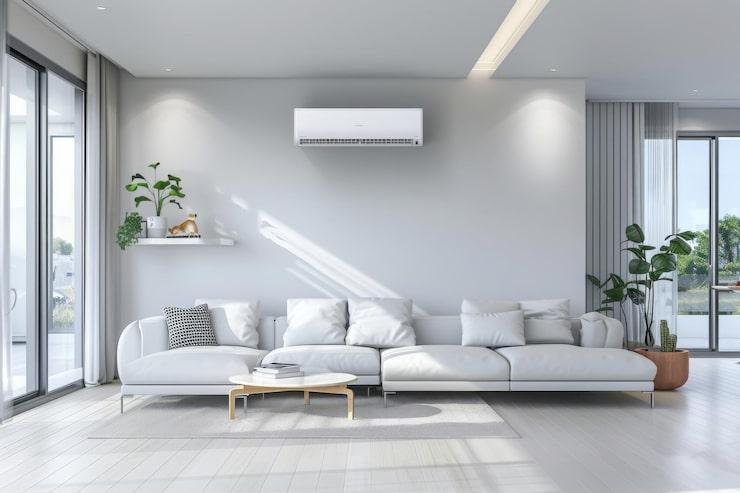
Split air conditioners are particularly relevant for permanent installations where households require dedicated cooling for bedrooms, living rooms, and other frequently occupied spaces. Their installation flexibility and suitability for regular operation support their position in residential applications.
Window air conditioners and other configurations address different installation requirements. However, their suitability depends on building design, available installation space, cooling capacity, and household preferences.
Technology selection also varies according to purchasing priorities. While inverter systems appeal to buyers emphasizing operating efficiency and temperature stability, non-inverter products can remain relevant among consumers prioritizing initial purchase affordability.
Industry analysis indicates that manufacturers need differentiated portfolios to address these requirements. Product positioning across cooling capacity, energy efficiency, installation configuration, and pricing can help suppliers serve households with different purchasing capabilities.
Residential Construction and Replacement Demand Create Opportunities
Housing transactions and residential modernization provide important opportunities for room-cooling equipment suppliers. Newly occupied properties require essential household appliances, while existing homeowners may upgrade older cooling systems to improve operating efficiency and indoor comfort.
Apartments and individual houses represent distinct demand environments. Apartment installations may require compact indoor units, flexible installation arrangements, and lower operating noise. Individual houses can accommodate multiple room-specific cooling systems depending on property layout and household requirements.
Vacation and secondary homes also represent a relevant application category. Properties used seasonally may require cooling equipment that can maintain comfortable indoor conditions during periods of occupancy without requiring centralized climate-control infrastructure.
Commercial applications further diversify demand. Offices, retail establishments, hospitality properties, healthcare facilities, and educational institutions require localized temperature management to maintain suitable indoor environments.
According to the detailed market insights, sales opportunities extend across residential and commercial end users, supported by retail online and offline distribution channels. Brand-owned websites, e-commerce marketplaces, specialist appliance retailers, and dealer networks provide different routes for product discovery, installation assistance, and after-sales services.
Refrigerant Transition Creates Technology and Compliance Priorities
Environmental considerations are increasingly influencing cooling equipment development. Refrigerant selection has become an important product-design consideration as manufacturers respond to international climate commitments and changing requirements for lower-impact cooling technologies.
Room air-conditioning manufacturers are evaluating refrigerants such as R-32, R-290, R-410A, and emerging alternatives according to equipment compatibility, safety requirements, cooling performance, and environmental characteristics.
The transition creates opportunities for suppliers capable of combining refrigerant innovation with reliable equipment engineering. However, manufacturers and distributors must also address installation procedures, servicing capabilities, technician training, and refrigerant-handling requirements.
Turkey's broader energy-efficiency priorities strengthen the relevance of efficient cooling technologies. The country's policy framework emphasizes improvements in building and equipment performance, making energy-conscious product development increasingly important.
Competitive Positioning Depends on Technology and Distribution
Competition in Turkey's room-cooling sector involves product performance, pricing, energy efficiency, installation support, and distribution accessibility. Manufacturers must address both premium purchasing requirements and affordability-sensitive household demand.
Smart connectivity, inverter compressors, improved filtration, and quieter operation provide opportunities for product differentiation. However, technical features alone may not determine purchasing decisions. Equipment reliability, warranty coverage, maintenance accessibility, and the availability of qualified installation services also influence supplier selection.
The Market research report perspective highlights the importance of aligning product portfolios with different household budgets, building configurations, and commercial requirements. Retail partnerships and effective dealer networks can further strengthen market access, particularly where customers require technical guidance before purchasing fixed-installation equipment.
Future Direction of Turkey's Room Cooling Industry
Turkey's room-cooling sector is supported by established residential demand, climatic requirements, housing-related appliance purchases, and continued interest in energy-efficient technologies. Although the industry is relatively mature, replacement demand and improvements in equipment functionality provide opportunities for manufacturers and distributors.
In this report, the industry's development reflects the interaction between climate conditions, household purchasing priorities, product innovation, and energy-efficiency considerations. Suppliers that combine accessible pricing with reliable performance, efficient operation, and effective after-sales support will be better positioned to address evolving requirements.
The Latest market analysis therefore points toward a gradual transition in purchasing priorities, with cooling performance increasingly evaluated alongside energy consumption, refrigerant characteristics, and installation flexibility. These factors will remain central to the competitive direction of Turkey's room air-conditioning industry.


