

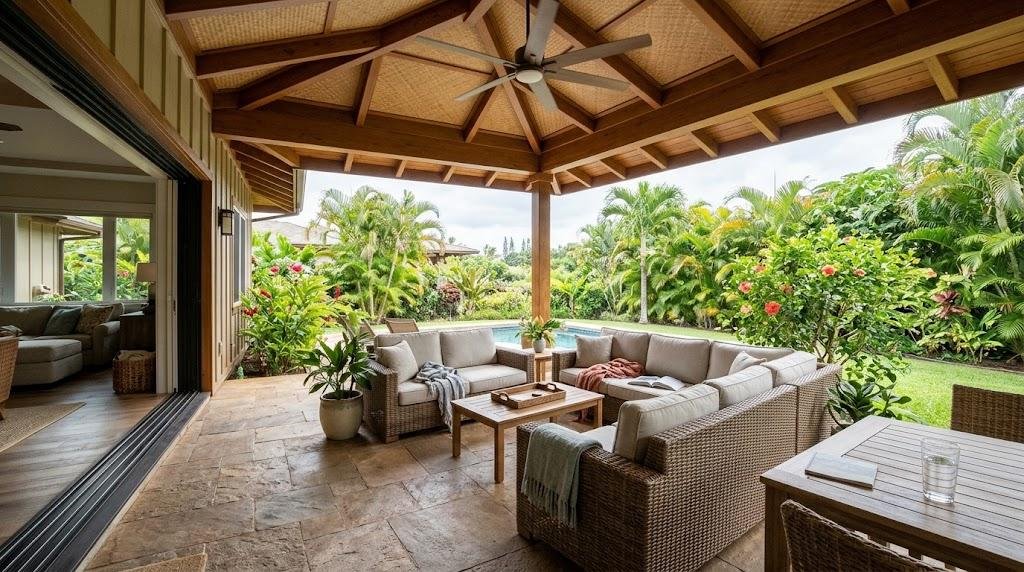

What Is a Lanai?
If you’ve ever scrolled through real estate listings in Florida, Hawaii, or Arizona, you’ve probably run into the word “lanai” and wondered what it actually means. The lanai meaning is simpler than it sounds: a lanai is a roofed, open-air space attached to a house, usually overlooking a garden, pool, or view. It’s part porch, part patio, but with its own distinct identity. Understanding the lanai meaning helps explain why so many homeowners in warm climates consider it one of the most valuable rooms in the house, even though it has no walls.
Where the Word Comes From
To really get the lanai meaning, it helps to look at its roots. “Lanai” comes from the Hawaiian language, where it originally referred to a veranda or porch area used for relaxing, eating, and entertaining. Over time, as Hawaiian architecture influenced building styles across the mainland United States, the word traveled with it. Today the lanai meaning has expanded slightly beyond its Hawaiian origin, but the core idea — an open, covered space connected to the home — has stayed remarkably consistent. You can read more about the word’s Hawaiian roots on Merriam-Webster, which traces its etymology directly back to the islands.
Lanai Meaning vs. Porch, Patio, and Balcony
People often ask how the lanai meaning differs from other outdoor spaces, and it’s a fair question since the terms get used loosely. A porch is typically located at the front of a house and is often uncovered or only partially sheltered. A patio sits at ground level, usually made of concrete, stone, or pavers, and may be fully exposed to the elements. A balcony is elevated and attached to an upper floor. The lanai meaning sits apart from all three because a true lanai is covered, ground-level or attached to living space, and designed specifically for lounging rather than just passing through. Some lanais are screened in to keep out insects, which is especially common in humid regions. For a deeper breakdown of outdoor structure types, This Old House has a solid comparison guide.
Why the Lanai Meaning Matters for Homebuyers
If you’re shopping for a home, knowing the lanai meaning can actually affect your decision. A home with a well-built lanai often adds real value, since it functions as extra living space without the cost of full indoor construction. Real estate agents in Florida and Hawaii frequently highlight a lanai as a selling point, and buyers who understand the lanai meaning can judge whether the space is truly usable year-round or just a marketing term for a small covered slab. Pay attention to whether the lanai is screened, insulated, or open to weather, because that detail changes how much daily use you’ll get out of it.
How a Lanai Is Typically Used
Once you grasp the lanai meaning, it’s easy to see why people love having one. Lanais are commonly used for morning coffee, outdoor dining, reading, or simply enjoying fresh air without direct sun exposure. Because they’re covered, lanais stay usable during light rain, which makes them more practical in tropical or subtropical climates than an open patio. Many homeowners furnish their lanai much like an indoor room, with seating, rugs, and even ceiling fans, reinforcing the idea that the lanai meaning isn’t just “outdoor space” but “outdoor living room.” If you want design inspiration for furnishing one, check out our guide to outdoor furniture layouts on this site for practical ideas.
Regional Differences in Lanai Meaning
Interestingly, the lanai meaning can shift slightly depending on where you are. In Hawaii, the term stays close to its traditional roots, referring to a simple covered veranda. In Florida, the lanai meaning often applies to screened-in enclosures attached to the back of a house, frequently surrounding a pool. In Arizona and other desert states, a lanai might be built with shade structures designed to block intense sun rather than rain. These regional twists show that while the lanai meaning has a consistent core, local climate and culture shape how the space is actually built and used.
Final Thoughts on Lanai Meaning
At its heart, the lanai meaning describes a covered, open-air extension of a home meant for relaxing and entertaining. It borrows its name and spirit from Hawaiian tradition but has adapted to fit different climates and lifestyles across the country. Whether you’re buying a home, planning a renovation, or just curious about the word you keep seeing in listings, now you have a clear answer. The next time someone mentions a lanai, you’ll know exactly what they mean — and maybe start picturing one for your own backyard.


