

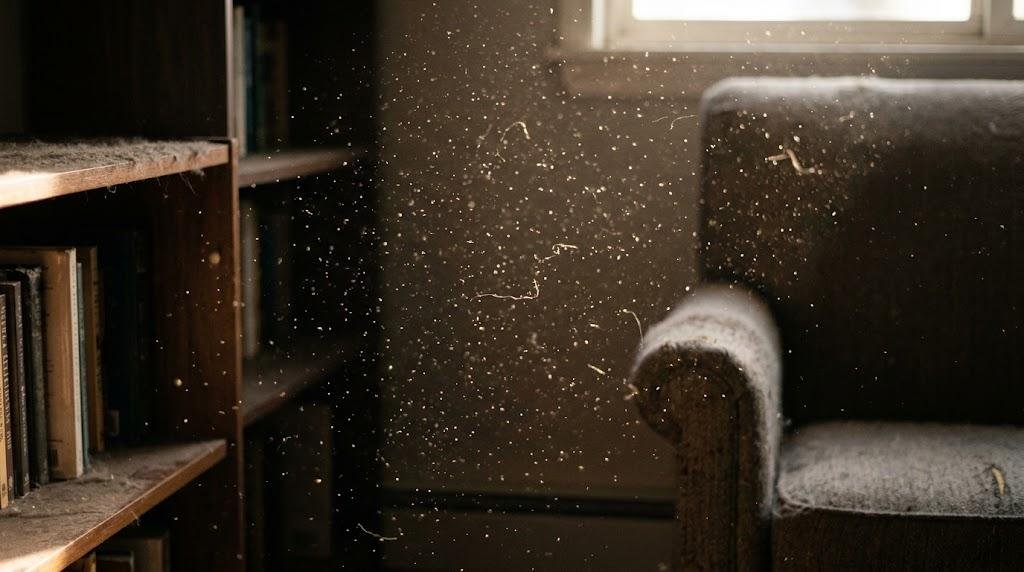

Many people ask what is dust the moment they notice a gray film sitting on their furniture. The short answer to what is dust is simple: it’s a mix of tiny solid particles that float in the air and settle on almost every surface in your home. You can’t always see individual pieces, but you can see what they become once enough of them pile up.
Most people never think about what is dust until allergy season hits or a sunbeam cuts through a dark room and lights up hundreds of floating specks. That visible swirl is a small sample of what is dust in real time, caught in the light instead of resting on a shelf.
What Is Dust Made Of?
If you want to know what is dust made of, picture a blend of several everyday sources. Dead skin cells, fabric fibers, pollen, pet hair, soil particles, and tiny bits of insects all combine to form the dust you wipe away each week. Outdoor pollution and sand can drift in through open windows too, adding even more to the mix.
Homes with pets usually collect dust faster, since fur and dander add extra material to the pile. This is one reason people with cats or dogs often wonder what is dust made of when they clean more often than friends without pets. The answer is largely the same everywhere, just with a slightly different ratio of ingredients.
Where Does Household Dust Come From?
Dust doesn’t appear from nowhere. Your own skin sheds thousands of cells every day, and much of that ends up as household dust on your floors and furniture. Clothes and bedding shed fibers constantly, carpets break down slowly over time, and shoes track in soil and pollen from outside.
Air currents from heating and cooling systems move these particles around your home nonstop. This is part of what is dust so persistent: it never really stops accumulating. Even a freshly cleaned room starts collecting new particles within hours. For a deeper look at tackling this cycle room by room, check out <a href="https://yourwebsite.com/cleaning-tips">our home cleaning tips guide</a>.
Why Understanding What Is Dust Matters for Your Health
Knowing what is dust matters beyond simple curiosity. Dust often contains dust mites, microscopic creatures that feed on dead skin cells and thrive in bedding, carpets, and upholstery. Their waste particles are a common trigger for allergies and asthma, according to the <a href="https://www.aafa.org/dust-mite-allergy/">Asthma and Allergy Foundation of America</a>.
People with respiratory conditions often notice symptoms worsen in dusty environments. This connection is well documented by health organizations such as the <a href="https://www.epa.gov/indoor-air-quality-iaq">Environmental Protection Agency</a>, which tracks how indoor air quality affects wellbeing. Reducing dust buildup can genuinely improve how you breathe at home, especially in bedrooms where mites concentrate most.
How to Reduce Dust in Your Home
Once you understand what is dust and where it comes from, cutting it down becomes much easier. Vacuum carpets and upholstery weekly using a vacuum with a HEPA filter, since this traps fine particles instead of scattering them back into the air. Wash bedding in hot water every one to two weeks to kill dust mites and remove their waste.
Damp-dust surfaces instead of using a dry cloth, because dry dusting just stirs particles into the air rather than removing them. Keep humidity between 30 and 50 percent, since dust mites struggle to survive in drier conditions. Replace HVAC filters regularly and consider an air purifier for rooms where you spend the most time. If you’re curious how indoor air quality ties into all this, our <a href="https://yourwebsite.com/air-quality">indoor air quality checklist</a> walks through a few more practical steps.
Common Myths About What Is Dust
A popular myth claims that most household dust is simply dead skin. While skin cells are part of the mix, they usually make up a smaller share than people assume. Soil, fabric fibers, and outdoor particles often contribute just as much, if not more.
Another myth suggests that dust only builds up in messy homes. In reality, even spotless houses collect dust constantly, since it comes from the air itself and from daily human activity. No amount of tidiness fully stops it, though regular cleaning slows the buildup considerably.
Understanding what is dust strips away a lot of this confusion. It isn’t dirt in the traditional sense — it’s a natural byproduct of simply living in a space. Once you know what is dust actually consists of, cleaning it feels less like a mystery and more like routine maintenance.


