

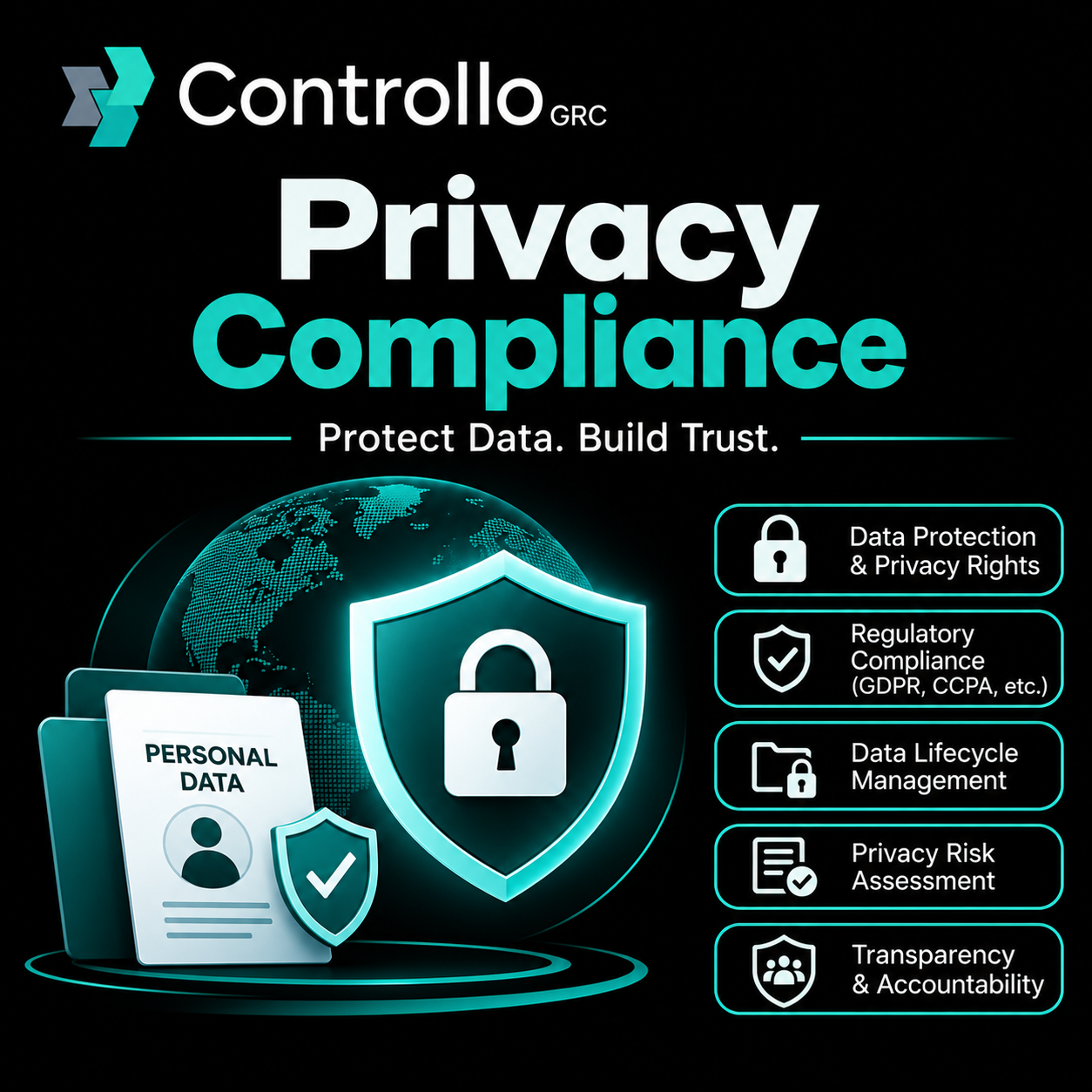

Top 10 Privacy Compliance Best Practices for Businesses in 2026
Privacy Compliance refers to the process of ensuring that organizations collect, process, store, and manage personal information according to applicable data protection laws, regulations, and privacy standards. It does not have a single creator or establishment date because it developed through various privacy laws and regulatory frameworks, including the EU General Data Protection Regulation (GDPR), introduced in 2016 and enforced in 2018, and the California Consumer Privacy Act (CCPA), enacted in 2018. It is also known as data privacy compliance or privacy regulatory compliance. Privacy compliance helps organizations protect sensitive information, reduce data breach risks, build customer trust, avoid regulatory penalties, and establish transparent data handling practices.
The following ten practices can help businesses structure privacy compliance in 2026: understand applicable privacy laws, map personal data, collect valid consent where required, limit data collection, strengthen security, support applicable access and rights requests, manage vendor risk, prepare for incidents, and monitor privacy controls. A formal privacy program can strengthen privacy protection and data accountability, but applicable duties and legal interpretation remain organization-specific.
- Understand Applicable Data Privacy Regulations: Determine the privacy laws and regulations impacting your business, customers, and places of operation. Some to consider are GDPR, CCPA/CPRA, HIPAA, and other U.S. state privacy laws. Keep up to date on new regulations to ensure your privacy practices and policies keep pace.
- Develop Clear Privacy Policies: Formulate detailed privacy policies and procedures outlining how you obtain, collect, use, store, share and delete personal data. Make these policies available to your customers, employees and other relevant personnel. Amend them whenever the company's operations change and as regulations change.
- Conduct Regular Privacy Risk Assessments: Understand your organisation's requirements and assess what risks to privacy exist. Carry out Data Protection Impact Assessments (DPIAs) where necessary or relevant in respect of processing that presents a high risk. Record findings and determine what actions to take to mitigate gaps.
- Implement Strong Data Access Controls: Limit access to sensitive information. Only provide access on a need-to-know basis, and consider establishing role-based access controls. In conjunction with multi-factor authentication and routine permission audits, this will help minimize who has access.
- Maintain Data Inventory and Classification: Bring together all personal information that your business collects, stores, processes, and shares. Categorise data by sensitivity, purpose, and regulation. Having an up-to-date information inventory is the key to knowing what the privacy requirements are around your data, throughout its lifecycle.
- Establish Consent Management Processes: Secure and record valid consent according to relevant privacy laws. Be open about the reasons for and methods of processing data. Have processes in place for privacy consent preferences and removal of data.
- Strengthen Data Breach Response Procedures: Create an incident response plan to help you and your team to quickly identify, investigate and respond to a potential data breach. Define who will do what, when to escalate, and how to notify, and by when. Test it regularly to help you respond faster to privacy incidents.
- Train Employees on Privacy Responsibilities: Offer employee training on privacy each year on how they should protect personal data, including: private information handling and disclosure, which access they can and cannot have, and reporting. An understanding of your employees' privacy practices will reinforce your organization's culture of privacy.
- Monitor Third-Party and Vendor Compliance: Assess and select vendors, suppliers and service providers. Review how they manage privacy in their organization, what they do to manage risks, what contractual requirements they are under and what third party certifications they hold. Regularly review their privacy management.


